This is not a film review; it is a raw, philosophical autopsy of how art helps us process the unthinkable. Tom van der Linden does something rare: he uses the technical mechanics of cinema to dissect the visceral terror of watching a loved one die, arguing that our obsession with storytelling is merely a desperate defense against the inevitability of our own end.
The Horizon of Grief
Van der Linden anchors his meditation in a specific moment from Steven Spielberg's The Fabelmans, where the protagonist stares into a mirror during a family crisis. He uses this cinematic device to frame his own experience in an emergency room, where his fiancée was fighting for her life. "Looking back now, it's strange how it at once feels like a giant blur yet also crystal clear," he writes, capturing the dissociative state of trauma. The author's choice to focus on the "horizon line" in film composition—how placing it at the top or bottom creates tension while the middle is "boring as hell"—becomes a metaphor for the instability of life when death is present.
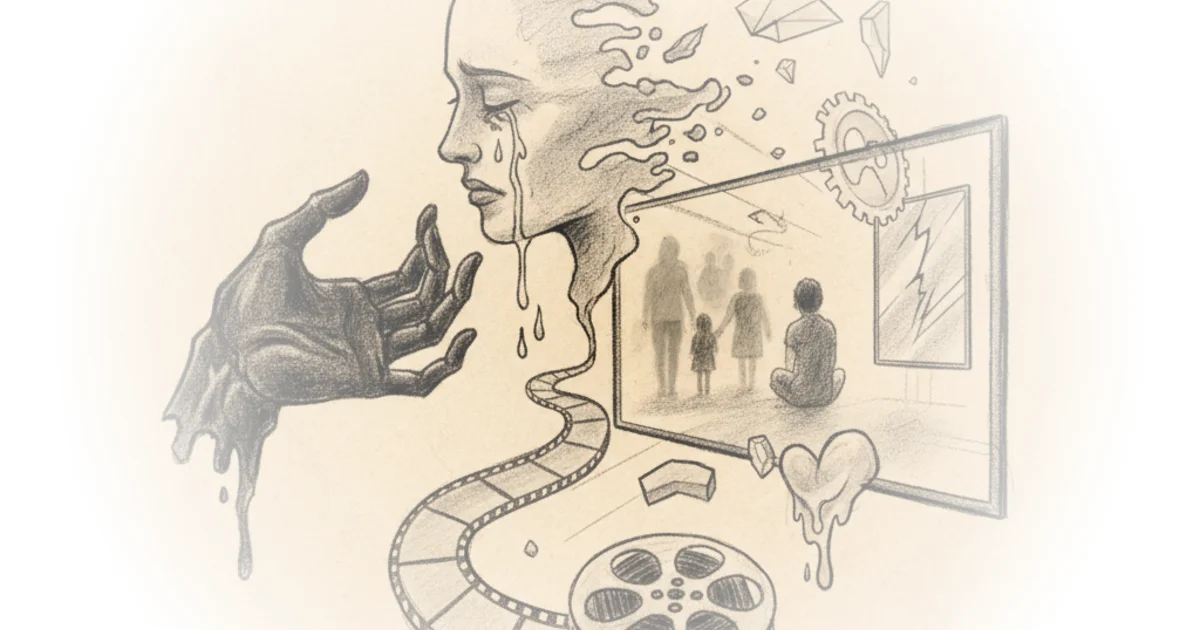
This framing is brilliant because it grounds an abstract emotional crisis in a tangible, visual language. By analyzing the "fundamental problem that any serious filmmaker is in some way responding to," van der Linden suggests that the art form itself is a reaction to mortality. He cites the author J.R.R. Tolkien, noting that "story is practically always about one thing: death. Inevitability of death." This connection between the mechanics of a shot and the mechanics of human fear is the piece's intellectual engine. It forces the reader to consider that every story we consume is a distraction from the silence that waits for us.
"There is no such thing as a natural death. Nothing that happens to man is ever natural, since his presence calls the whole world into question."
The Architecture of Denial
The essay shifts from film theory to the psychology of survival, drawing heavily on Ernest Becker's The Denial of Death. Van der Linden argues that our daily routines are not just habits but elaborate rituals to suppress the knowledge of our own mortality. He describes his own drive to the hospital, choosing a "country road" over a busy highway to avoid the stress of roundabouts, a mundane decision that masks a deeper need for control. "The plane that crashes is never the one you just boarded," he observes, highlighting the cognitive dissonance that allows us to function.
This section is particularly potent because it strips away the romanticism of grief. Van der Linden admits that his "eternal optimism" was not a virtue but a failure to comprehend reality. "I never truly considered the possibility that she could have died," he confesses, reframing optimism as a form of blindness. The author posits that we are "hurling towards death" yet "secretly believing we won't." This paradox is the core of the human condition. A counterargument worth considering is that this view might be too deterministic, ignoring the genuine capacity for hope and resilience that isn't rooted in denial. However, van der Linden's point is that even our resilience is a reaction to the fear of the void.
The Impossible Creature
As the narrative deepens, van der Linden turns to the existential horror of human consciousness itself. He quotes Becker's description of man as "the impossible creature," an animal capable of contemplating the universe while trapped in a decaying body. "Look at man, the impossible creature," van der Linden writes, channeling Becker's awe and terror. He describes the "Godlike in ourselves" that we are simultaneously "fascinated by and fearful of."
The author's use of this philosophical framework transforms a personal tragedy into a universal inquiry. He suggests that the awareness of death is a "tragic misstep in evolution," leaving us with a self-awareness that other animals do not possess. "We are things that labor under the illusion of having a self," he concludes, echoing the sentiment that our consciousness is both our greatest gift and our greatest curse. This is where the piece risks becoming too abstract, but van der Linden keeps it grounded by returning to the hospital hallway. He describes the "visceral reminder of the vulnerability, the pain, the general fry of human life" that he saw in other patients. The fear was not just for his fiancée, but for the realization that the "slow breakdown of your body" is the ultimate truth we all face.
Bottom Line
Tom van der Linden's piece is a masterclass in using specific, technical observations to unlock universal truths about the human condition. Its greatest strength is the seamless weaving of film theory, existential philosophy, and personal narrative to argue that our entire cultural output is a defense mechanism against death. The argument's vulnerability lies in its heavy reliance on a pessimistic view of human nature, potentially overlooking the redemptive power of connection that exists outside the shadow of mortality. Yet, for the reader willing to sit with the discomfort, it offers a profound clarity on why we tell stories at all.