In a lecture series designed for the modern era, Yale University delivers a startling correction to a century of Western propaganda: the Habsburg monarchy was not a "prison of nations," but a surprisingly liberal, multinational experiment that prefigured the European Union. This is not a dry recitation of dynastic dates; it is a strategic reframing of how empires interact with national identity, arguing that the very friction between great powers is what forged the modern Ukrainian nation. For listeners tracking the current conflict, understanding this historical architecture is not academic trivia—it is the key to understanding why Western Ukraine remembers an empire that vanished a century ago with such fondness.
The Habsburg Paradox
Yale University begins by dismantling the Anglophone stereotype of the Habsburgs as an "antique, cantankerous, doomed monarchy." Instead, the lecture posits that for a significant stretch of history, this dynasty was the most globally connected family on earth. "For about half a millennium it wasn't that the Habsburgs turned around the history of Europe; it was that the history of Europe turned around them," Yale University writes, emphasizing a scale of influence that dwarfed their contemporaries. This framing is crucial because it shifts the reader's perspective from viewing the Habsburgs as a relic to seeing them as a dynamic, expanding force that once governed Spain, Portugal, and the Netherlands.
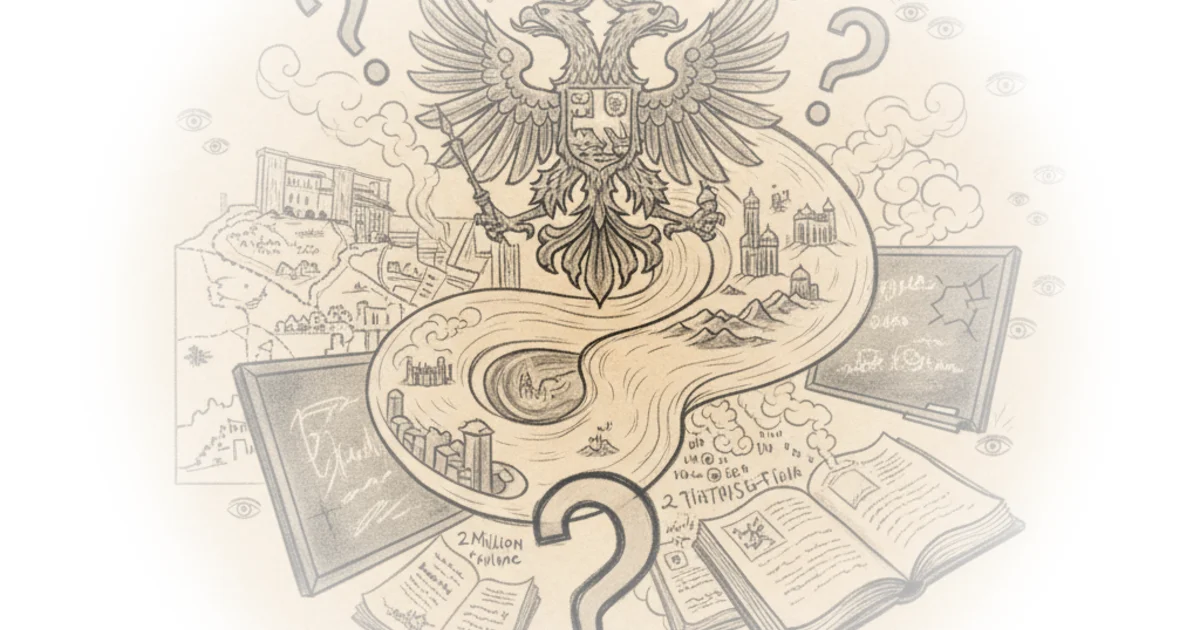
The argument gains traction when Yale University contrasts the Habsburgs with other empires of the era. While the Russian Empire broke out to the Pacific and the Atlantic, and the Ottoman Empire remained trapped in the Mediterranean, the Habsburgs managed a unique "middle case." They controlled the exploratory powers of the 16th century, effectively ruling the domains that would become the great maritime empires. "The Habsburgs ruled domains which break out into the world more powerfully, more spectacularly, than any other single family," the lecture asserts. This global reach, however, collapsed around 1700, forcing a pivot to Central and Eastern Europe—a pivot that would inadvertently set the stage for Ukrainian statehood.
"Individuals and families matter very much as well. This would be a very different war if someone besides Vladimir Zelensky were president of Ukraine; this would be a very different war if someone besides Joe Biden were president of the United States."
This emphasis on the agency of individuals over abstract structural forces is a bold methodological choice. While critics might argue that focusing on specific leaders risks downplaying the overwhelming weight of economics and geography, Yale University uses this to humanize the historical narrative. By anchoring the discussion in the specific choices of rulers, the lecture makes the vast sweep of imperial history feel immediate and contingent, suggesting that the current war is not an inevitable fate but the result of specific leadership decisions.
The Crucible of Galicia
The lecture then zooms in on the specific intersection of Habsburg power and Ukrainian identity: Galicia. Yale University explains that when Maria Theresa acquired this territory in 1772, she had no intention of creating a Ukrainian nation. "She is thinking many things but she is certainly not thinking about Ukraine," the text notes. Yet, this accidental overlap between a tiny slice of Ukrainian-speaking land and the Habsburg monarchy became the incubator for the nation. "That little tiny overlap which is called Galicia is going to turn out to be very, very important in the history of the Ukrainian nation," Yale University argues.
The significance of this period, roughly 1880s to the 1980s, is that it provided a space where Ukrainian identity could crystallize under a different set of rules than those in the Russian Empire. Yale University describes the Habsburgs of this era as a "multinational pluralistic liberal zone with very messy politics but a growing economy." This description challenges the notion that the empire was merely a backward prison. Instead, it presents a complex reality where compromise and representation were the norm, even if the politics were fractious.
"In many ways, the Habsburg monarchy was actually a more liberal country than the United States of America at the time when they were waging war [World War I]."
This comparison is the lecture's most provocative claim. Yale University points out that while President Woodrow Wilson was championing self-determination in a Congress with zero African-American representatives, the Habsburg parliament included representatives from all nationalities. This stark contrast forces the reader to reconsider the moral hierarchy of the early 20th century. It suggests that the "liberal" West was not always the most inclusive, while the "autocratic" East held a more diverse, albeit messy, political reality. Critics might note that this comparison risks idealizing a monarchy that still relied on dynastic authority, but the point stands: the Habsburg model of multinational coexistence offered a different path than the ethno-nationalist states that replaced it.
The Legacy of Friction
The lecture concludes by returning to the central thesis: that the contact between empires is the engine of nation-building. Yale University suggests that the Habsburg legacy is not just a historical footnote but a potential model for the future. "Is that model of being multinational and having cranky politics based on compromise among nationalities a thing of the past or is that maybe a thing of the present or the future?" the lecture asks. This question resonates deeply in a world grappling with the rise of nationalism and the fragility of international institutions.
By tracing the lineage from the Habsburgs to the modern European Union, Yale University implies that the messy, compromise-based politics of the Habsburgs were not a failure, but a sophisticated adaptation to diversity. The lecture argues that the "center of Ukrainian politics" has shifted from Galicia to the East, yet the cultural and political DNA formed in that Habsburg zone remains vital. "You can imagine there might be an essay question which would be something like if Galicia had not been part of the Habsburg monarchy what would have happened to Ukraine," Yale University writes, highlighting the contingency of history.
"The Habsburgs are going to turn out to be very important in the origins of Ukraine and yet when Maria Theresa takes part in the First Partition of Poland... she is certainly not thinking about Ukraine."
This irony underscores the lecture's main point: history is often driven by unintended consequences. The Habsburgs did not set out to create Ukraine, but their specific mode of governance allowed it to emerge. This reframes the current conflict not as a clash of ancient hatreds, but as the latest chapter in a long struggle over how diverse populations organize themselves under the shadow of great powers.
Bottom Line
Yale University's lecture succeeds in transforming the Habsburgs from a caricature of decay into a complex, relevant case study in multinational governance. Its strongest argument is the revelation that the Habsburg Empire was, in certain critical respects, more inclusive than its Western rivals, a fact that complicates the standard narrative of liberal democracy versus autocracy. However, the piece's greatest vulnerability lies in its tendency to romanticize the "messy politics" of the monarchy, potentially glossing over the genuine oppression and instability that also characterized the era. As the world watches the war in Ukraine, this historical perspective offers a vital reminder: the boundaries of nations are often drawn not by the people living there, but by the accidental overlaps of imperial ambition.