This piece cuts through the binary of 'McKinsey as hero' versus 'McKinsey as villain' to reveal a more unsettling truth: the firm is the perfect mirror of the post-WWII managerial class, reflecting both its utopian ambitions and its moral blind spots. The author, a former insider, argues that the firm's true engine isn't greed or altruism, but a desperate, elite desire for approval that allowed it to blur the lines between public and private power. For anyone trying to understand why modern institutions feel so detached from their stated values, this historical autopsy is essential.
The Managerial Revolution in Real Time
The author begins by dismantling the two dominant narratives surrounding the consultancy. On one side, there are the hagiographies like The McKinsey Way that portray consultants as saviors; on the other, the exposés like When McKinsey Comes to Town that paint them as the architects of modern decay. The author rejects both extremes, noting, "McKinsey is a quintessential institution of the post-World War II era. As such, the firm reflects all the successes of that era, as well as its blind spots, moral failings, and excesses."
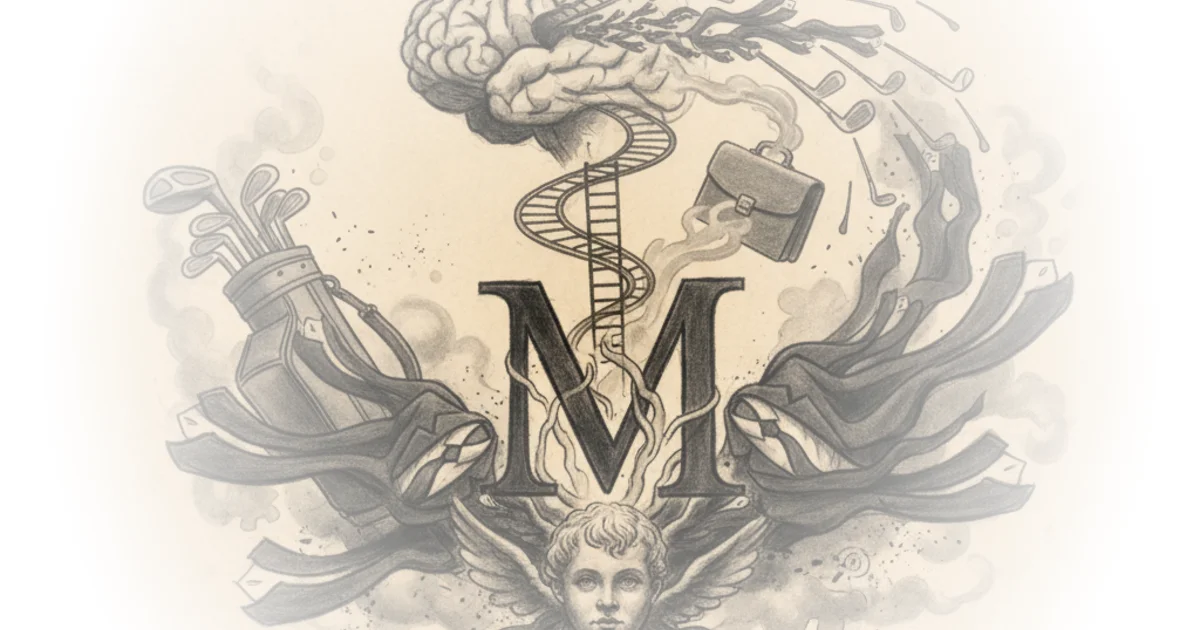
This framing is powerful because it shifts the blame from a single bad actor to a systemic cultural shift. The author connects the firm's rise to James Burnham's 1941 prophecy in The Managerial Revolution, which predicted a new ruling class of managers who would transcend traditional capitalist boundaries. The text argues that "McKinsey played an important role in this transition," effectively operationalizing Burnham's theory by placing its own people in positions of influence across both the private sector and the government.
"The managers, he predicted, would have a type of power that would transcend national boundaries, and they would come to flourish in all types of political regimes, whether nominally capitalist, socialist, authoritarian, monarchic, or democratic."
The author illustrates this with a stark example from the healthcare sector, where a major insurer's profits were dictated not by patient care but by lobbying Congress for tweaks to the Affordable Care Act. In this ecosystem, "McKinsey often sits on both sides of the table," advising the very agencies—such as the Food and Drug Administration and the Center for Medicare and Medicaid Services—that regulate the clients they also serve. Critics might argue that this regulatory capture is a feature of modern capitalism rather than a unique failure of one firm, but the author's insider perspective on the culture of this overlap adds a layer of nuance often missing from policy debates.
The Erosion of the Bower Ethic
The narrative takes a personal turn as the author recalls the firm's founding ethos, championed by Marvin Bower, who modeled McKinsey after elite law firms. Bower insisted on "placing client welfare ahead of our own interest," a standard that theoretically meant making the consultant "obsolete" once the client was transformed. The author contrasts this with a later culture driven by the pursuit of "core clients" and long-term revenue streams.
The piece uses a vivid anecdote from a company golf tournament to illustrate this moral drift. When a junior partner instructs the author to cheat by kicking a ball out of the rough to save the team from losing, the author realizes, "That's funny. No really... You need to hit from out here. I don't want to lose." This moment serves as a microcosm for the firm's broader shift: "If your primary goal is profit, you're going to be less eager to wean your clients off of consultants, for it doesn't pay to be 'obsolete.'"
This transition is linked to the firm's expansion into work for authoritarian regimes in China, Russia, and Saudi Arabia. The author suggests that the justification for this was a specific type of utopian optimism prevalent after the Cold War. As former partner Olivier Kayser noted, "There was a feeling that economic development would lead to democracy... The general direction of history was clear." The author argues that this belief system allowed the firm to rationalize serving corrupt governments as a "duty" to historical progress, a dangerous conflation of profit with moral righteousness.
"Neither greed nor selfless devotion to client service is the engine of McKinsey's dominance. You'll find plenty of both in the corridors of McKinsey, but the real driver of the firm's success is the desire for approval and recognition."
The author posits that the recruitment pool has shifted from well-rounded individuals with diverse work experience to a homogenous group of "overachievers" who have never held a real job before joining the firm. This lack of grounding, combined with an academic environment that views high ideals as mere masks for power, creates a workforce that is cynical yet driven by a need for status. The argument suggests that when you strip away the pretense of moral superiority, the firm is simply a machine for validating the status quo.
Bottom Line
The strongest element of this commentary is its refusal to reduce McKinsey's influence to simple corruption; instead, it identifies a more insidious driver: a utopian belief in the inevitability of global capitalism that blinded the firm to its own complicity in authoritarianism. The piece's greatest vulnerability is its reliance on a single insider's memory of a cultural shift, which may overlook the structural economic pressures that forced these changes regardless of individual intent. Readers should watch for how this "managerial class" continues to shape policy in an era where the faith in inevitable historical progress has largely evaporated.