In northeastern China, a fossil was discovered that may reshape everything we thought we knew about human evolution. The Dragon Man skull — found hidden in a well for 85 years — has ignited a fierce debate about whether our ancestors evolved in Asia, not Africa. New DNA analysis from these ancient bones is now challenging decades of accepted wisdom.", ## The Skull That Sparked a Debate
Deep in the Harbin province of northeastern China, construction workers discovered something extraordinary buried beneath a railway bridge in 1933 during the Japanese occupation. A worker uncovered a skull — large square eye sockets, enormous brow ridges, and a remarkably flat head. It was unmistakably human, yet unmistakably different from anything anyone had seen.
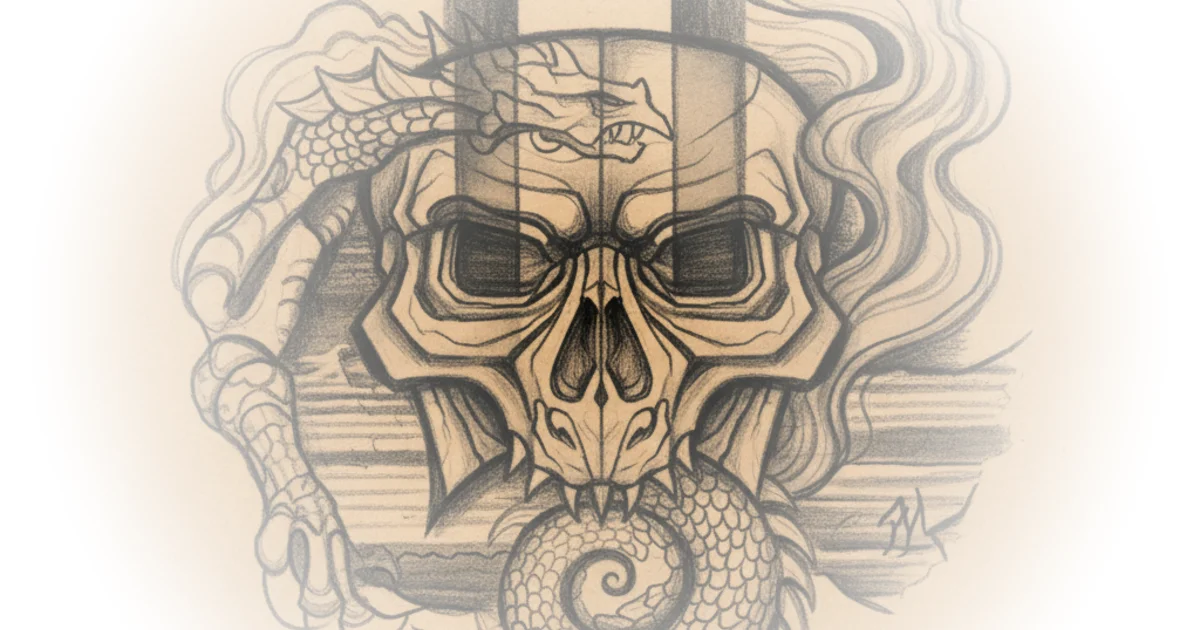
The locals called it Dragon Man, named after the Harbin province itself: Hilong Jiang means "Black Dragon River" in Chinese. The nickname stuck not for scientific reasons, but because the worker who found it feared revealing his involvement with Japanese occupators. So he hid the skull in a well — leaving it hidden for 85 years until an elderly man finally donated it to science in 2018.
That fossil became known as the Harbin cranium, or "Dragon Man." And it added fuel to one of anthropology's most intense debates: where do Chinese fossils fit in human evolution?
Asia's Ancient Skulls
Before anyone could answer that question, scientists had to establish how long humans had lived in East Asia. According to Professor Christopher Bay of the University of Hawaii at Manoa, the earliest hominin appearance in East Asia dates back roughly 2.43 million years ago — a site called Shiho in China's northern Shanshan province on the banks of the Yellow River.
The oldest human remains so far are Lantan Man, dating to an astonishing 1.63 million years ago. These early humans hunted bison and used stone tools — their faces recognizable as human despite existing over a million years before modern Homo sapiens were born.
They chopped up bison with pointy rocks, and they expanded across rivers and climates completely different from the African environment where humanity evolved.
The evidence doesn't rely on one site. Shang Chen dates to around 2.1 million years ago with simple stone tools — though these humble artifacts spark constant debate about whether they're truly human-made or just broken rocks.
The "Muddle in the Middle"
Here's where the real controversy begins. From roughly 300,000 years ago until about 50-100,000 years ago, China hosted several remarkable hominin fossils. Dragon Man from Harbin dates to around 130,000 years ago. There are others: Dalli, found in northern China and dating to between 200,000 and 300,000 years old — a fairly intact skull. Jin Shan fossil near the North Korean border.
But how do these relate to each other? And more importantly: what species do they belong to?
Anthropologists cannot agree. Are these all Homo erectus? Do some represent different lineages? Where do they fit on our evolutionary tree? This debate has a name: "the muddle in the middle."
Christopher Bay met with colleagues at Beijing's Institute of Vertebrate Paleontology and Paleoanthropology to discuss whether these fossils should be grouped into one category or separated into distinct groupings. The verdict was unanimous — Harbin, Dalli, and Jin Shan share enough characteristics to warrant grouping under Homo longgi, named after the province Hilong Jiang.
They're bigger than European Neanderthals, with more robust brow ridges and those characteristic low, long skulls that look prehistoric.
Reading the Code of Ancient Bones
The debate shifted dramatically when scientists finally extracted DNA from Dragon Man. That task had eluded researchers until recently — previous attempts produced only blank results.
But a breakthrough in protein analysis changed everything. Proteins survive far better than DNA, sometimes up to 2 million years even in tropical environments. This technology is now key to unraveling human evolution.
In 2019, a jawbone found at Bishia Cave on the Tibetan plateau was identified as Denisovan through protein analysis — confirmed from the heights of the plateau to depths of the Taiwan Strait. Then came the Dragon Man results: according to this study, the Harbin cranium groups with the early Denisovans found at Denisova Cave.
This suggests something remarkable: there may have been a population of Neanderthals hiding in China all along — right under our noses since 1958 when the first Chinese fossils were discovered.
Counterarguments
Critics might note that protein analysis, while powerful, provides only a broader brush than DNA. It cannot paint with the fine detail genetic sequencing can. Some anthropologists argue these Chinese skulls represent classic Homo erectus rather than distinct species — and that the diversity seen in the fossil record reflects normal variation within one population.
The dating of some sites remains genuinely uncertain. Shiho and Shang Chen stone tools are visually simple, making it difficult to distinguish them from naturally broken rocks.
Bottom Line
This piece's strongest argument is that Asian fossils — particularly Dragon Man — have been underappreciated in the human evolution narrative dominated by African finds. The protein studies on Denisovan ancestry represent the most compelling new evidence in years.
The vulnerability lies in the "muddle" itself: we simply do not know how to categorize these skulls or where they fit in our evolutionary tree. That uncertainty is not a weakness in the argument — it's the point. And that's precisely why this debate matters.