Hamilton Nolan cuts through the noise of modern political strategy with a provocative, counter-intuitive claim: that the only way to win back the working class in conservative strongholds is to refuse to play the culture war game at all. While conventional wisdom suggests that economic populism must be paired with social conservatism to succeed in red states, Nolan argues that this compromise is not only morally bankrupt but politically suicidal, branding candidates as insincere snakes rather than principled leaders.
The Trap of Conventional Wisdom
Nolan begins by dismantling the assumption that voters in deeply red states are immutable bigots who can only be reached by adopting their prejudices. He observes that the prevailing cynicism—that these voters are "racists/ bigots/ deluded/ brain poisoned by Fox News"—is a self-fulfilling prophecy. By writing off millions of people as unchangeable, the political establishment justifies a strategy of marginalization and deception rather than persuasion. As Nolan puts it, "If you believe that these voters cannot be persuaded into a better set of beliefs, you write them off, and the question then becomes how to marginalize them, to dissuade them from voting, to gerrymander their districts, to trick them, to lie to them."
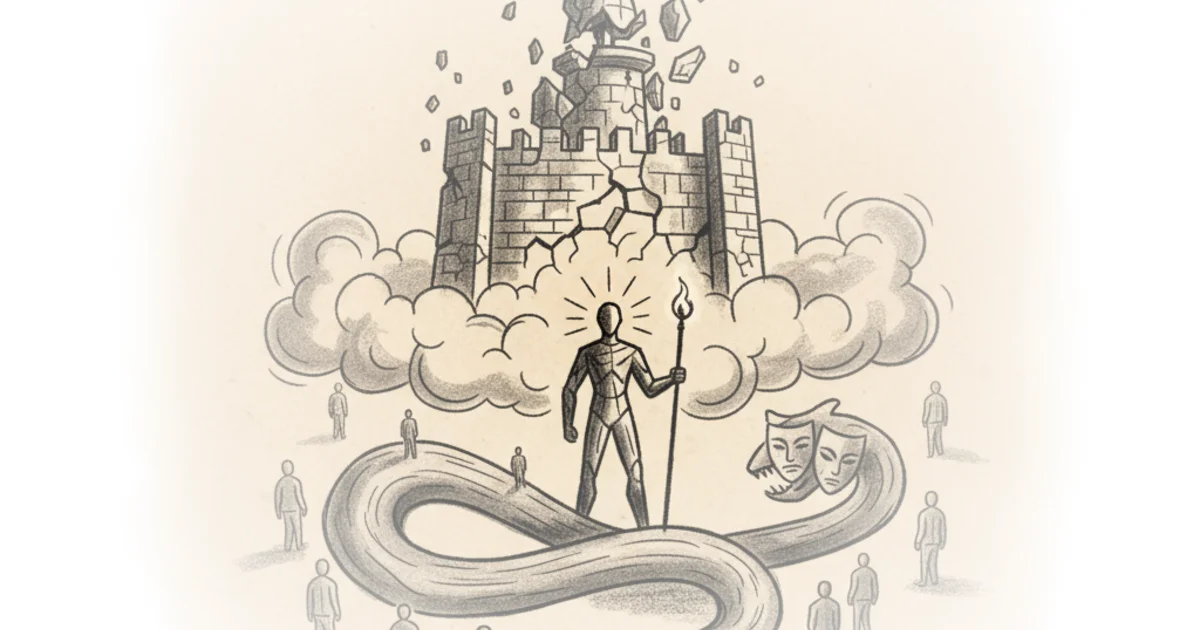
This framing is powerful because it shifts the blame from the voters to the strategists. It suggests that the failure to connect with working-class voters in the South and Midwest is not due to an inherent flaw in the voters' character, but a failure of imagination and principle among the political elite. Nolan draws on his two decades of reporting in the South to argue that the idea of a political lane for a working-class candidate who fights for everyone is not only possible but describes the "self-image of most of the population." The argument resonates because it appeals to the universal human desire for dignity and economic security, transcending the artificial divides of geography.
"You need not deny the reality of today to embrace the possibility of a better tomorrow."
Critics might note that this optimism underestimates the depth of cultural polarization and the genuine, visceral fear that drives many voters toward right-wing populism. However, Nolan's point is not that these fears are baseless, but that they are manufactured and exploited by elites to distract from material conditions.
The Mechanics of Solidarity
The core of Nolan's proposal is the concept of solidarity—not as a vague slogan, but as a rigid political principle that refuses to sacrifice any group for the sake of expediency. He envisions a candidate in a red state who explicitly links economic justice with social inclusion, arguing that the same forces oppressing the working class economically are the ones demonizing minorities to divide them. "We are, all of us, family, and we will help and love one another, and fight for one another," Nolan writes. "You ask me to throw my trans family under the bus? Fuck off! We do not throw people under the bus."
This is where Nolan's argument diverges sharply from the "Southern strategy" playbook that has dominated American politics for decades. Where that strategy relied on dog whistles and coded language to appeal to racial anxieties, Nolan advocates for a blunt, unapologetic defense of the marginalized. He suggests that the most effective way to counter culture war attacks is not to debate the minutiae of bathroom usage or school curricula, but to expose the bad faith of the attackers. "These bullshit issues are created in a lab and dropped into the political discourse like a chemical weapon!" he asserts. "By giving these things attention, you have allowed them to serve their purpose."
The historical parallel here is instructive. Just as the Solidarity trade union in Poland united workers across ideological lines to challenge a totalitarian regime, Nolan argues that American labor must unite workers across cultural divides to challenge economic oligarchy. The lesson from history is that solidarity is not a weakness; it is a source of immense power. By refusing to capitulate to prejudice, a candidate demonstrates a strength of character that voters respect, even if they disagree with the candidate's specific policies. As Nolan notes, "When someone has principles, you can disagree with them face to face. When they don't, they will stab you in the back."
The Strategy of Sincerity
Nolan concludes by addressing the nature of political sincerity. He acknowledges that the current political landscape is dominated by figures who project a pathological, self-deluded sincerity. Yet, he argues that genuine sincerity is still a viable and potent political tool. "The good news is that you can also create a sense of sincerity by believing in things and then doing them," he writes. The danger of compromising on culture war issues is that it reveals a candidate's lack of core values, making them appear weak and untrustworthy.
The argument is that voters have an "acute sense of insincerity." They can tell when a politician is selling them out for a momentary advantage. By standing firm on the principle of solidarity, a candidate can break through the cynicism that plagues modern politics. "To decide that these bad faith issues must be compromised on in the name of savvy politics is precisely wrong," Nolan states. "The compromise itself brands you as insincere, weak, a sellout."
"The compromise itself brands you as insincere, weak, a sellout. The compromise itself gives voters a good reason not to like you even if they never really thought about the underlying issue until two seconds ago."
A counterargument worth considering is that this approach requires a level of political courage and institutional support that may not currently exist within the Democratic Party or the labor movement. Running a candidate who refuses to engage in culture war battles in a red state could be a recipe for electoral disaster if the party establishment does not back them. However, Nolan's point is that the status quo is already a disaster, and the risk of trying something new is outweighed by the certainty of continued failure.
Bottom Line
Hamilton Nolan's argument is a refreshing and necessary challenge to the defeatist cynicism that has paralyzed progressive strategy. His strongest point is the realization that voters respect principles over pragmatism, and that the only way to defeat culture war tactics is to refuse to validate them. The biggest vulnerability of this approach lies in the practical difficulty of executing it within a polarized two-party system, but the moral and strategic clarity of his vision makes it impossible to ignore. The next step for the movement is not to debate whether this strategy will work, but to find the candidates brave enough to try it.