Rick Rubin, the legendary producer and co-founder of Beats, offers a rare, unvarnished look at how intuition, not just strategy, built a media empire. In this candid conversation, he reveals that his most successful ventures—from iTunes to Beats headphones—were born not from business plans, but from a deep, almost visceral sense of what felt "cool" and culturally relevant. For the busy professional navigating today's fragmented media landscape, Rubin's story is a masterclass in trusting your gut when the data is ambiguous.
The Currency of Belonging
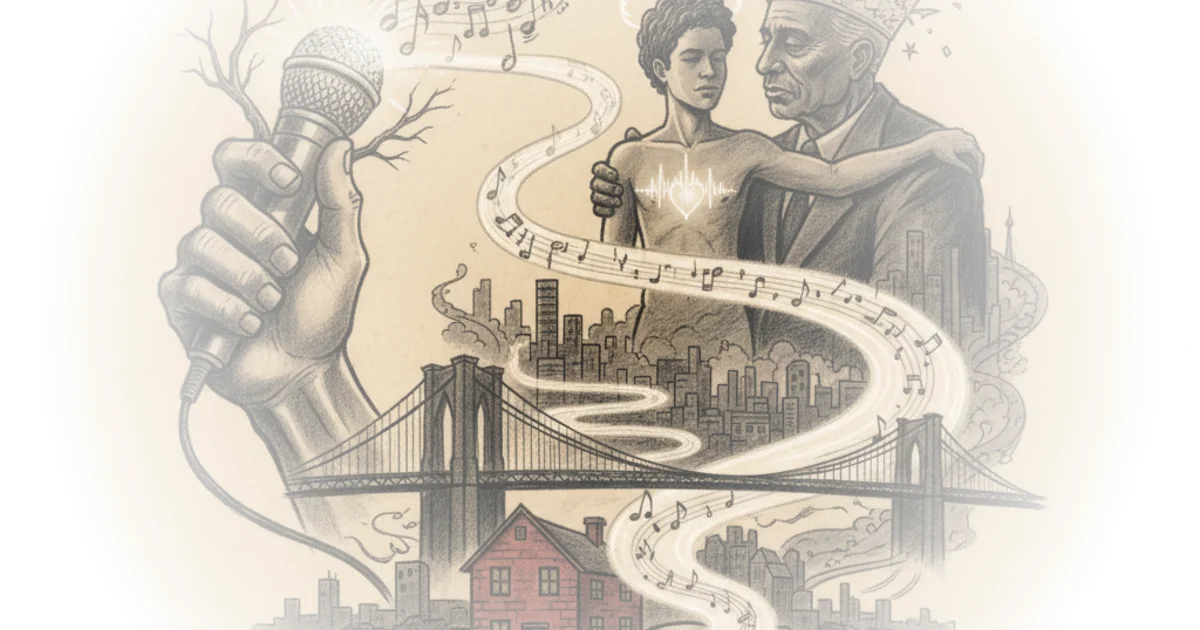
Rubin begins by dismantling the myth of the arrogant music mogul. He recounts his early days working with John Lennon, a moment that could have inflated his ego but instead grounded him. "I never got a weird ego because of it," Rubin says. "I just always felt like, oh, I belong here." This sense of belonging was not innate; it was forged in the fires of insecurity. Growing up in Red Hook, Brooklyn, Rubin felt out of place in a neighborhood where "the currency was athletics and physicality." He lacked the toughness that defined his peers, so he pivoted. "Then what happened was in '63, music became a currency and I went all in on that." This reframing of personal insecurity as professional fuel is compelling. It suggests that the drive to succeed often stems from a desire to find a tribe where one's specific talents are the new standard.
"The worst thing you can do in life, if you have some success, is breathe your own exhaust. It is so [ __ ] boring."
This metaphor is striking. Rubin argues that self-satisfaction is the enemy of progress. He admits that while he is confident in his work, he remains humble about his limitations. "I don't know how to [ __ ] do half the things. 90% of the things I do, I get people that know how to do them and I help them." This is a crucial distinction for leaders: confidence in vision does not require competence in execution. Critics might argue that this level of delegation can lead to a lack of technical oversight, but Rubin's track record suggests that knowing who to trust is a higher-order skill than knowing how to do the work.
The Apple Infatuation
The narrative shifts to the pivotal moment in 2003 when the music industry was crumbling under the weight of piracy and lawsuits. Rubin describes his meeting with Steve Jobs and the Apple team not as a business negotiation, but as a cultural awakening. He was captivated by the idea that a tech company could understand popular culture. "I got completely infatuated with the whole ecosystem of music to digital distribution," he recalls. He saw that Apple was not just selling a product, but a lifestyle. "I felt the party was at his house... it could be a really good direction." This observation highlights a critical gap in the industry at the time: record labels were fighting the future, while Apple was building it. Rubin's willingness to pivot from a traditional record executive to a tech collaborator was the key to his survival.
"I realized that music, not the music, but the whole thing of a record company was feeling dated and this was now cool. So I can recognize cool. I not I may not understand what they're doing, but I know it's cool."
Here, Rubin articulates a leadership philosophy that is difficult to teach but essential to master. He admits he wasn't sophisticated enough to build iTunes himself, but he recognized the value of the ecosystem. This is a powerful reminder that in rapidly changing markets, the ability to identify "cool"—or cultural relevance—is often more valuable than technical expertise. However, one could argue that this reliance on intuition is risky; not every "cool" trend is sustainable. Yet, Rubin's success with Apple proves that timing and cultural alignment can outweigh perfect execution.
From Earbuds to Empire
The genesis of Beats is perhaps the most famous part of this story, and Rubin's retelling strips away the corporate gloss. It started with a simple complaint from Dr. Dre about the terrible sound of the white earbuds included with the iPod. "My kids are listening to music on their computer and those earbuds... it sounds horrible," Dre told him. Rubin saw an opportunity where others saw a nuisance. He approached Steve Jobs with a proposal to build a headphone company. Jobs, surprisingly, was hesitant. "He said, 'I don't want to sell headphones.'" Jobs believed people wouldn't pay for premium audio. Rubin, however, saw a different angle. He didn't just want to sell speakers; he wanted to sell an experience.
"We made a commercial with Kevin Garnett... and he puts on his head. And that was it. Right. So that took us from go to sleep to No, no, no. You're not going to sleep. You're going to put on music and hear only what you want in the world."
Rubin's marketing strategy was brilliant in its simplicity. Instead of competing with Bose on noise cancellation (which was marketed as a tool for sleep), Beats marketed noise cancellation as a tool for focus and identity. "Hear What You Want" became a slogan that resonated with a generation. He leveraged the cultural capital of hip-hop and sports, placing headphones in music videos and on the heads of NBA players. "We didn't go to the people that own the Giants. We went to the equipment handlers and we put in everybody's locker." This grassroots infiltration of the NFL was a masterstroke of organic marketing. Critics might note that this approach relied heavily on celebrity endorsement, which can be fleeting. But Rubin's insight was that the product itself—the sound and the style—was strong enough to sustain the brand once the initial hype faded.
"I aimed my boat in that direction. And I remember Jay and I decided we're going to do headphones. Then we put the company and I went to Steve and I said, 'Steve, why don't we do Beats with you?'"
The story of Beats is a testament to the power of partnership and the ability to see potential where others see dead ends. Rubin's journey from a kid in Red Hook to a tech mogul is not just a success story; it's a blueprint for how to navigate uncertainty with confidence and cultural awareness.
Bottom Line
Rick Rubin's narrative is a powerful reminder that the most successful businesses are often built on a deep understanding of human desire rather than just market data. His ability to pivot from music production to tech hardware, driven by an intuitive sense of "cool," is the strongest part of his argument. The biggest vulnerability, however, lies in the replicability of his approach; not everyone has the unique cultural radar or the personal connections to Steve Jobs that Rubin possessed. For the modern leader, the lesson is clear: trust your instincts, but surround yourself with people who can execute the vision you can't see yourself.