BobbyBroccoli constructs a rapid-fire mosaic of pop culture and gaming history to argue a singular, counterintuitive thesis: that constraints are not the enemies of creativity, but its essential fuel. In a world often obsessed with infinite possibility, the piece posits that the most profound artistic breakthroughs occur when the playing field is deliberately narrowed, forcing innovation through sheer necessity.
The Architecture of Limits
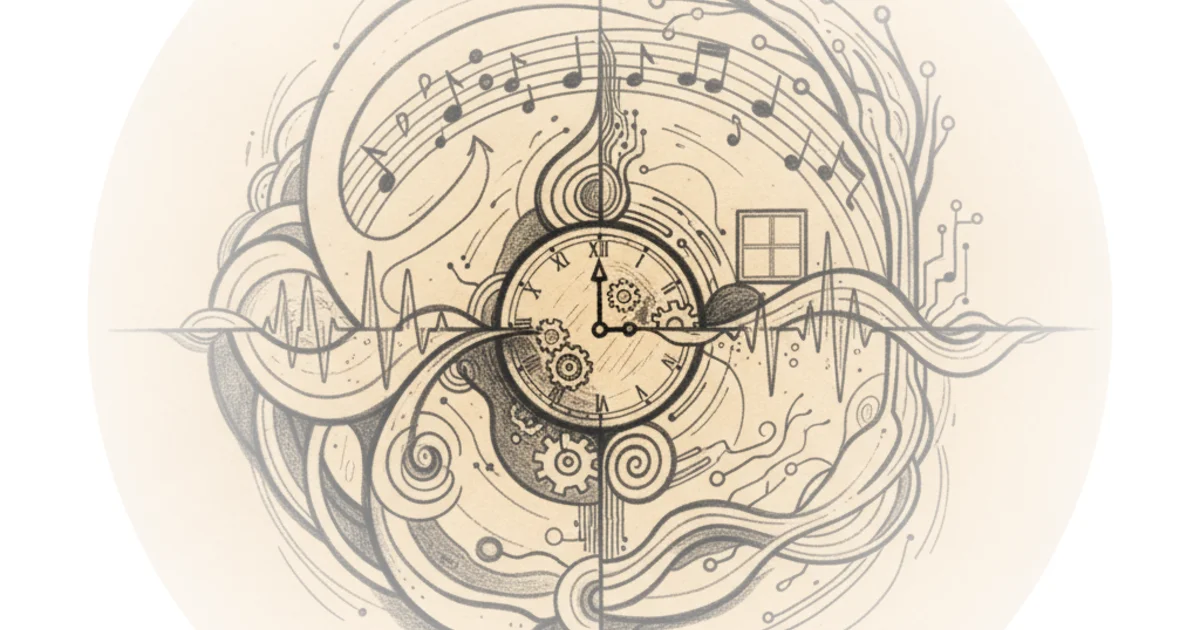
The commentary opens with a striking historical anecdote about musician Brian Eno, who was tasked with creating a sound that was "bold, futuristic, sentimental, emotional, optimistic and exactly three and a quarter seconds long." BobbyBroccoli notes that within this "tight restriction," Eno composed the Windows 95 startup jingle, a piece of audio that "inspired a generation of pc users." The author's framing is precise here: the limitation did not stifle the output; it defined it. As BobbyBroccoli writes, "it is limitation not possibility that stimulates creativity." This observation serves as the thematic backbone for the entire piece, suggesting that the anxiety of the blank page is often cured by the comfort of a rulebook.
This logic extends to the world of improvisational comedy, where the goal is often misunderstood. BobbyBroccoli clarifies that the objective is not individual brilliance but collective success. "Your job on stage is not to be as successful as possible," the author argues, "it's to make the person next to you as successful as possible." This reframing of performance from ego to altruism is a powerful insight, transforming the terrifying prospect of public speaking into a collaborative safety net. The piece suggests that when performers focus on "giving gifts" to their partners, the fear of failure evaporates because the burden is shared. Critics might note that this idealized view of teamwork glosses over the reality of competitive industries where individual recognition is the primary currency, yet the emotional truth of the argument remains potent.
The first is something you have to do by yourself. The second is something you can do as a team.
Speed, Chaos, and the Loss of Control
The narrative then pivots to the realm of competitive chess, specifically the "bullet" variant where players have only sixty seconds for an entire game. BobbyBroccoli describes this as a shift from "long and calculating battles of wit" to "unadulterated chaos." Without the luxury of deep planning, players are forced to rely on "pattern recognition and flash instinct." The author vividly captures the physical toll of this constraint, noting that players "fumble pieces, knocking them over and slamming them sloppily on the board." This section illustrates how extreme time pressure can fundamentally alter the nature of a discipline, turning a game of strategy into a form of "peak physical comedy."
Similarly, the piece examines the "Boss Key" feature in 1980s PC games, a function designed to instantly hide a game behind a fake spreadsheet when a supervisor approached. BobbyBroccoli observes that this feature "died out with the rise of windows" because it was a solution for single-task operating systems, yet the underlying desire for secrecy remains. The author connects this to modern digital life, suggesting that the "ultimate system level boss key" is simply the ability to switch contexts instantly, a testament to how user behavior drives software evolution even when the specific tools change.
Identity, Aesthetics, and the Human Element
The commentary delves deeper into character analysis with Final Fantasy VI, focusing on the character Gogo, a "mimic" whose identity is defined by ambiguity. BobbyBroccoli argues that the fandom's obsession with determining Gogo's gender reveals more about the audience than the character. "Gender is a performance that is perceived by the audience," the author writes, suggesting that the character's lack of a defined identity allowed fans to project their own ideas, inadvertently creating a "pretty cool gender non-conforming character." This analysis highlights how constraints in character design—such as limited dialogue or a masked appearance—can paradoxically expand the space for audience interpretation.
The piece also critiques the visual reimagining of Final Fantasy VI, contrasting the "sheer hopelessness" of the original's dark, industrial aesthetic with the "lifeless character sprites" of modern ports. BobbyBroccoli warns that "another reimagining is as scary to those like me who see ff6 as a visual triumph," emphasizing that the original's power lay in its specific, desaturated tone. The author's defense of the original art style is a plea for preserving the emotional context of a work, arguing that changing the visual language can strip a story of its intended weight.
The Value of the Pointless
Perhaps the most poignant argument concerns the inclusion of "pointless" mechanics in video games. BobbyBroccoli champions actions that serve no strategic purpose, such as pressing a button to make Mario yell in Luigi's Mansion or the "fart button" in Oddworld. "Not everything we do in life is practical," the author asserts, "sometimes goofy little meanderings are what make us human." This defense of the frivolous is a direct challenge to the utilitarian mindset that often dominates game design and, by extension, modern productivity culture. The piece suggests that these "fruitless" options are what make digital worlds feel relatable and alive.
The argument extends to the evolution of the Sonic the Hedgehog comic book, which transitioned from slapstick comedy to a "superpower based action" series after the cancellation of its cartoon counterpart. BobbyBroccoli points to a four-page fist fight in issue 50 where "all the dialogue was removed and its emotional weight leaned fully on the action." This shift cemented the series' transition, proving that removing the safety net of dialogue could heighten the emotional impact. The author also touches on the Daicon films, amateur animations that launched Studio Gainax, noting that they represent "the moment when the fans start taking over." These works were fueled not by professional mandates but by a "lifelong love of the art form itself."
Not everything we do in life is practical. Sometimes goofy little meanderings are what make us human.
The Redefinition of Family
The final section of the commentary explores the concept of family through the lens of The Tigger Movie and Hey Arnold! The Jungle Movie. BobbyBroccoli contrasts the protagonists' quests to find their biological parents with the realization that their chosen friends are their true family. In The Tigger Movie, the character nearly dies in a blizzard while searching for other Tiggers, only to be rescued by friends who profess, "we are your family." The author critiques the Hey Arnold! film for its "cowardly" resolution where the parents are found alive, arguing that the narrative should have reinforced the power of the found family. This critique underscores a recurring theme: that the structures we build for ourselves are often more resilient and meaningful than the biological ones we are born into.
The piece concludes with a look at BoJack Horseman, where the characters Todd and Emily navigate a complex relationship involving asexuality and ethical non-monogamy. BobbyBroccoli suggests that their solution—Todd building a sex robot for Emily while they maintain a romantic bond—is a testament to the flexibility of human connection. "If Emily has plenty of sex but no romance and Todd is interested in her romantically but not sexually," the author posits, "then a romantic relationship that is sexually open within negotiated boundaries just might fit the bill." This nuanced take on relationships challenges traditional norms, suggesting that the "perfect" solution is often a creative adaptation to specific human needs.
Bottom Line
BobbyBroccoli's piece succeeds by weaving together disparate examples of pop culture to reveal a unified truth: constraints, whether temporal, physical, or narrative, are the crucibles of creativity. The strongest part of the argument is its refusal to view limitations as failures, instead framing them as the necessary conditions for innovation. The biggest vulnerability lies in the rapid-fire nature of the examples, which occasionally sacrifices depth for breadth, but the cumulative effect is a compelling case for embracing the boundaries that shape our world. Readers should watch for how these principles of constraint and adaptation apply to their own creative and professional challenges, recognizing that the rules of the game are often what make the game worth playing.