The Optimizer Who Could Not Optimize His Way Out
Tim Ferriss has built a career on the premise that nearly everything in life can be hacked, optimized, and systematized. His books on four-hour workweeks, four-hour bodies, and four-hour chefs have sold millions of copies. His podcast has logged hundreds of interviews with the world's highest performers. Yet in a chapter of Tools of Titans, Ferriss reveals a period when no amount of optimization could save him from himself.
The disclosure is striking precisely because of who is making it. This is not someone predisposed to vulnerability in public. Ferriss built his brand on control, on measurement, on the relentless pursuit of efficiency. That he chose to share this story at all says something about the particular gravity of suicidal depression -- that it breaks through even the most carefully constructed personas.
The Perfect Storm at Princeton
The crisis began with what Ferriss himself acknowledges sounds almost absurdly small: a failing senior thesis. He had fought his way to Princeton from modest beginnings, only to find himself unable to process hundreds of pages of original Japanese research in time. His thesis advisor was openly hostile. His girlfriend left him. His friends graduated while he sat alone in an off-campus apartment.
Ferriss is bracingly honest about the gap between how these events felt at the time and how they appear in retrospect:
In hindsight, it's incredible how trivial some of it seems. At the time, though, it was the perfect storm. I include wording like "impossible situation," which was reflective of my thinking at the time, not objective reality.
That distinction matters. Depression does not require proportionate cause. It manufactures its own logic, airtight and persuasive, from whatever raw material is at hand.
By the time Ferriss wandered into a bookstore and found a book on suicide, he had already moved past deliberation and into planning:
It's important to mention that, by this point, I was past deciding. The decision was obvious to me. I'd somehow failed, painted myself into this ridiculous corner, wasted a fortune on a school that didn't care about me, so what would be the point of doing otherwise?
A Library Postcard Saves a Life
What pulled Ferriss back from the edge was not willpower, not a breakthrough insight, not any of the tactics he would later catalog in his books. It was a bureaucratic accident. He had ordered the suicide book through the Princeton library system but forgotten that his address on file was still his parents' home. When the book became available, a postcard went to his mother. She called immediately.
I am snapped out of my own delusion by a one-in-a-million accident. It was only then that I realize something: My death wouldn't just be about me. It would completely destroy the lives of those I cared about most.
There is something both reassuring and deeply unsettling about this. Reassuring because it worked. Unsettling because it was pure chance. Had Ferriss updated his library address, that postcard would have gone to an empty apartment. The margin between survival and catastrophe was a forgotten form field.
The Body as Escape Hatch
After that phone call, Ferriss took several months away from his thesis to focus on physical health. The strategy was almost anti-intellectual -- stop thinking, start moving. It worked.
Months later, after focusing on my body instead of sitting around trapped in my head, things are much clearer. Everything seems more manageable. The "hopeless" situation seems like shitty luck but nothing permanent.
This tracks with a substantial body of research on exercise and depression, though it is worth noting that Ferriss presents physical activity as something close to a silver bullet. For many people suffering from severe depression, the inability to get out of bed -- let alone get to a gym -- is itself a primary symptom. The advice to "move for at least 30 minutes" is sound for those who can act on it, but it risks understating the paralysis that defines the worst episodes.
Suicide as Explosion
Ferriss reserves some of his strongest language for describing the collateral damage of suicide. His metaphor is blunt and deliberately uncomfortable:
Killing yourself can spiritually kill other people. Your death is not perfectly isolated. It can destroy a lot, whether your family (who will blame themselves), other loved ones, or simply the law enforcement officers or coroners who have to haul your death mask-wearing carcass out of an apartment or the woods.
He also addresses the social contagion problem directly, noting that copycat suicides -- often among young people -- are a documented consequence of publicized deaths. This is an important point, though some mental health professionals would add a caveat: framing suicide primarily as a selfish act can inadvertently increase shame in those who are already struggling, making them less likely to seek help. The line between deterrence and stigma is thinner than it appears.
Building Fires Against the Dark
The practical tools Ferriss offers are characteristically direct. Make a non-suicide pact with a friend. Exercise. Do small kindnesses for strangers. These are not revolutionary ideas, but Ferriss frames them with a pragmatism that cuts through the usual therapeutic language:
As silly as it might sound, it's sometimes easier to focus on keeping your word, and avoiding hurting someone, than preserving your own life. And that's totally okay. Use what works first, and you can fix the rest later.
That last sentence is quietly radical. It gives permission to use imperfect coping mechanisms -- to survive first and understand later. In a culture that often demands people process their trauma according to a prescribed sequence, this is a useful corrective.
On the power of small acts of generosity, Ferriss writes:
If you can't seem to make yourself happy, do little things to make other people happy. This is a very effective magic trick. Focus on others instead of yourself.
The chapter closes with an image that captures the central argument well:
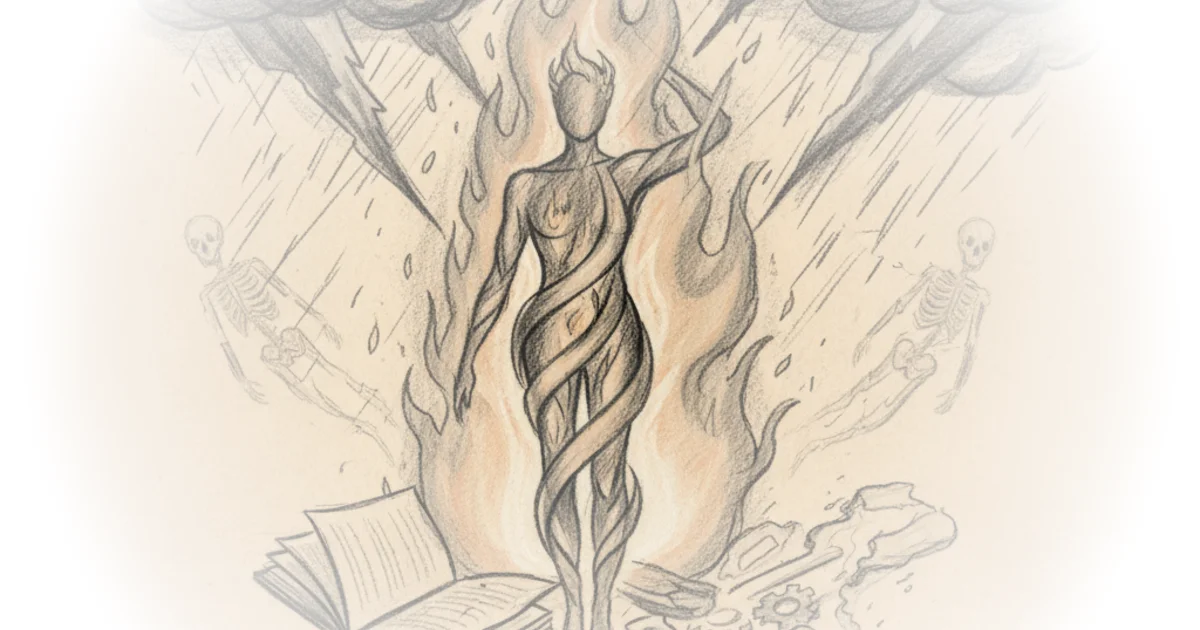
My "perfect storm" was nothing permanent. But, of course, it's far from the last storm I'll face. There will be many more. The key is building fires where you can warm yourself as you wait for the tempest to pass.
Bottom Line
This is not a clinical guide to depression. Ferriss is not a therapist, and he does not pretend to be one. What he offers instead is something rarer from a public figure of his stature: an unvarnished account of nearly dying by his own hand, told without self-pity or false resolution.
The chapter works best as testimony -- one person's record of how the machinery of despair operates and how, in his case, it was interrupted by a forgotten mailing address. The practical advice that follows is useful but secondary. The real value is in the disclosure itself, in Ferriss demonstrating that the person who would go on to write bestsellers and interview billionaires was once a young man who could not see a single reason to keep living.
For anyone in crisis, the piece does what it should: it points toward the National Suicide Prevention Lifeline and professional resources before offering personal strategies. The storms will come. The question is whether there are fires already built, or people willing to help build them.