In an era obsessed with polished outputs and algorithmic perfection, Jeannine Ouellette offers a radical alternative: the creative act is not about getting it right, but about showing up messy. This piece reframes the daunting prospect of a 100-day creative challenge not as a test of discipline, but as an invitation to embrace the "necessarily imperfect" nature of making itself.
The Beauty of the Glitch
Ouellette anchors her argument in the very real, unglamorous chaos of launching this project from a sun-drenched terrace in Paris. She admits that technical failures were not just obstacles but essential metaphors for the work ahead. "First of all, I wanted to share music... but forgot to have my screen share set up in advance," she writes, detailing how the glare on her new, smaller laptop made it impossible to see settings while trying to record a session for nearly 200 people.
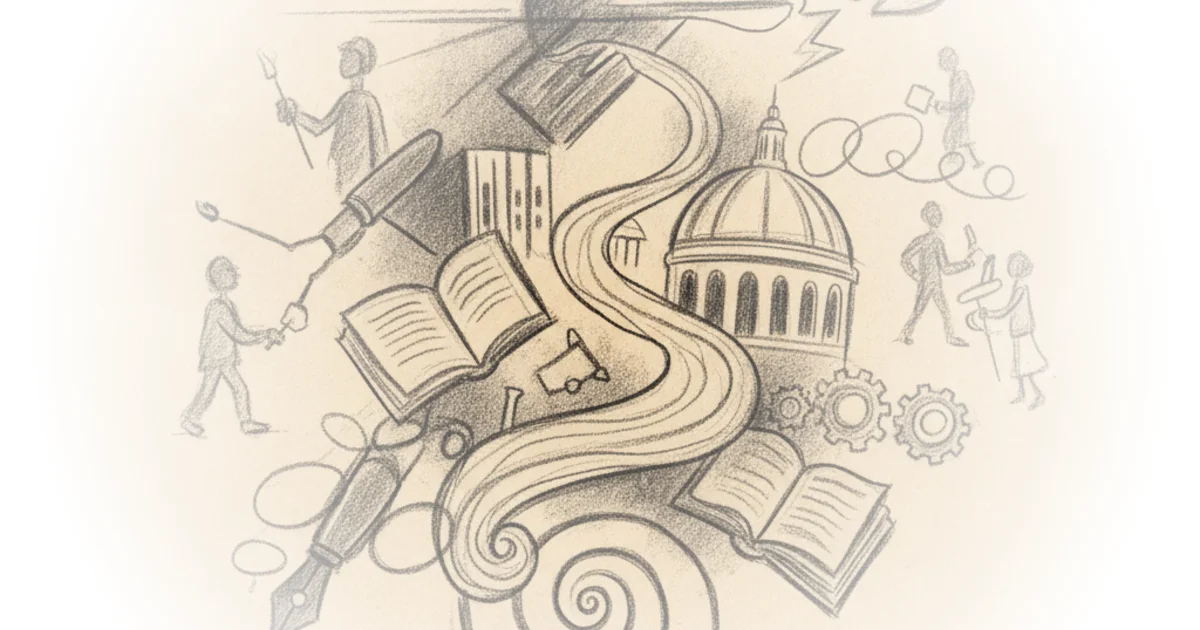
This admission is not merely self-deprecating; it is strategic. By exposing the friction of the medium—the screeching audio, the inability to find the "mute all" button—she dismantles the illusion that creativity requires a pristine environment. As Ouellette puts it, "Please let it be messy, real, organic, strange, breakable and broken." The argument lands with force because it validates the reader's own struggles with technology and timing as part of the process, not evidence of failure. It suggests that the friction itself is where the life of the work resides.
Please let it be a scratch-and-dent invitation to yourself to be more open, more curious, more fallible, more inventive, more willing to take risks.
Critics might argue that this approach romanticizes disorganization or lacks the rigor needed for serious artistic development. However, Ouellette counters this by framing "play" as a prerequisite for risk-taking, which is essential for genuine innovation. She argues that without the safety net of self-forgiveness, the creative spirit remains stifled by the fear of judgment.
The Architecture of Memory and Space
The core of the project's philosophy rests on a specific understanding of memory: it is not a static archive but an active construction. Ouellette draws heavily on André Aciman to support this, noting that "Writing alters, reshuffles, intrudes on everything." She uses Aciman's metaphor of his mother rearranging furniture after marital arguments to illustrate how we reconfigure our pasts to make them livable.
This perspective shifts the goal of the 100-day challenge from "recording" history to actively building a new relationship with it. The structure of the project reflects this, moving through ten distinct chapters that range from "Making from Memory" to "Making Art Badly." Ouellette emphasizes that memory is an act of survival and growth, not just retrieval. "Every time we reach into the past and pull something forward into language, we are making something," she writes. This aligns with broader discussions on how narrative shapes identity, echoing themes found in deep dives on digital archives like the Mac's evolution from tool to cultural artifact.
To facilitate this internal work, Ouellette recommends a specific physical practice: leaving the left-hand page of a notebook blank. Citing Katherine May, she warns that "a beautiful notebook can exert too much pressure on us," suggesting instead that the blank space is for future selves to return and reconsider past entries. This creates a dialogue across time, allowing the writer to evolve without erasing their previous attempts.
The Permission to Break Rules
Perhaps the most liberating aspect of Ouellette's framework is the explicit permission to deviate from the plan. She states clearly that her invitations are "only suggestions" and that participants can break any rule they wish. This is a direct challenge to the rigid, metric-driven culture of productivity that often plagues creative endeavors.
The project is structured into ten-day chapters, each with a theme like "Making for Someone Else" or "Making Outside," yet Ouellette insists that "the only promise you're making is that you show up and make the thing." Even then, she notes, "we are allowed to falter, we are allowed to stop and start." This flexibility mirrors the concept of the "End Poem" in gaming culture, where the narrative acknowledges the player's agency to interpret the journey differently than intended. The focus is on the act of creation itself, not the adherence to a syllabus.
We want a second chance, we want the other version of our life, the one that thrills us, the one that happened to the people we really are, not to those we just happened to be once.
Bottom Line
Ouellette's strongest argument is her refusal to separate the creator from the conditions of their creation; the sun glare and the technical glitches are not distractions but integral parts of the story. The piece's biggest vulnerability lies in its reliance on individual discipline, which may feel abstract to those without the time or energy to engage in daily reflection. However, by centering self-compassion over output metrics, this framework offers a sustainable path for anyone looking to reclaim their creative agency.