Scott Alexander dismantles a pervasive fear: that the only way to regulate artificial intelligence is to surrender to a global surveillance state. In a landscape dominated by apocalyptic rhetoric, he offers a startlingly mundane alternative, arguing that the proposed controls on AI chips resemble nothing more exotic than the decades-old bureaucracy governing prescription drugs or milk quotas. For busy readers tracking the geopolitical stakes of compute power, this reframing is essential—it shifts the debate from science fiction dystopia to the gritty reality of industrial policy.
The Mundanity of Control
The core of Alexander's argument rests on a sharp contrast between the imagined horror of regulation and the boring reality of existing frameworks. He writes, "I'm reminded of a story... from a DC insider who said it was enraging to work with Silicon Valley, because he would bring up what he thought was the obvious regulatory framework, the tech people would launch into jeremiads on how it could only be enforced by world dictatorship." This anecdote effectively exposes the tech industry's tendency to conflate standard oversight with totalitarianism. Alexander counters this by detailing Plan A's actual provisions: factories register, customers register, and data centers undergo inspections. He notes that "factories that produce them need to register with the government and submit to inspections," a process he argues is far less invasive than the panic suggests.
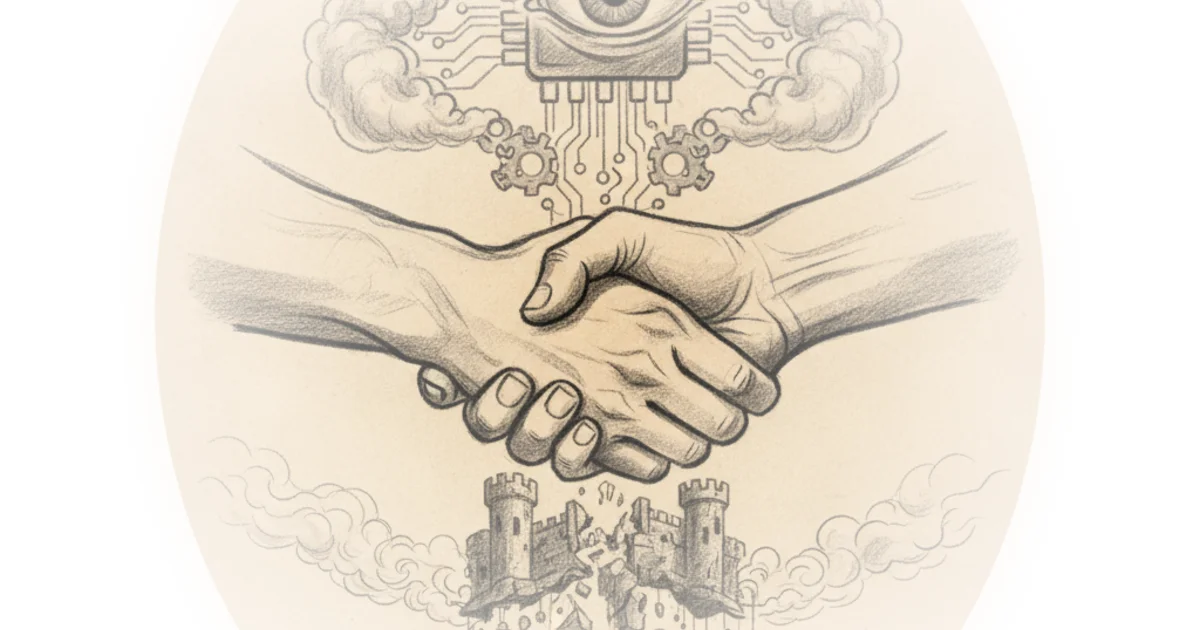
To ground this, Alexander draws a direct parallel to the regulation of controlled substances like Xanax. He points out that "factories that produce them need to register with the government and submit to inspections," and that pharmacies must log every transaction in a database accessible to doctors. The result, he argues, is not a panopticon but a system of "annoyance." He writes, "By the alternative metric of how much doctor and patient aggravation they produce, extremely burdensome - we have to fill out more forms, argue with more pharmacists, frequently miss prescriptions because something went wrong." This comparison is powerful because it acknowledges the friction of regulation without inflating it into an existential threat to liberty. Critics might note that the pharmaceutical industry is less concentrated than the AI sector, where a handful of hyperscalers dominate, potentially making the enforcement dynamic different. However, Alexander anticipates this, arguing that regulating a few massive chipmakers is actually easier than regulating millions of individual pharmacies.
The government exerted some pre-existing state capacity to yoke Xanax factories to its will, and most people who weren't Xanax factories weren't affected in any way.
The Consumer Hardware Myth
A significant portion of the public anxiety centers on the fear that personal devices will be seized or locked down. Alexander addresses this head-on, asserting that "nobody would take your current laptop or cell phone away from you." He explains the technical and economic barriers to using consumer hardware for training frontier models, noting that "latency and memory issues make each small chip far less useful than its raw compute numbers would suggest." Even if a bad actor tried to link millions of devices together, Alexander estimates it would require "5-10% of all the phones and computers in the world today," a feat impossible to execute secretly.
Looking ahead, he suggests that if consumer hardware production explodes, the solution won't be licensing individuals but rather redesigning chips or implementing cap-and-trade systems. He writes, "More likely, a world on track to reach this point would modify its cell phone / laptop chips so they couldn't train AI, and then there would be no taxes or limits at all." This technical specificity serves as a strong counter to the vague fears of a "global panopticon." It suggests that the future of AI regulation is about managing industrial supply chains, not policing bedrooms. The argument holds water, though it relies on the assumption that geopolitical rivals will agree on these technical standards—a non-trivial hurdle given current tensions.
The Cost of Open Weights
The most controversial aspect of Plan A is the ban on training new open-weight models after 2030. Alexander admits this is a "genuine cost to freedom," but he frames it as a necessary trade-off to prevent a monopoly on superintelligence. He argues that the current trajectory of open models is unsustainable, noting that "the most recent open-weights models today (2026) cost $100+ million to train." He questions whether companies will continue to give away billion-dollar products for free when the costs rise to $10 billion.
Instead of open weights, the plan proposes "open-algorithms," requiring companies to release the research behind their models so that any entity with sufficient compute can replicate the results. Alexander writes, "A company that trains an AI doesn't have to release its final weights, but it does have to release the research that went into producing it." This aims to diffuse power, creating a landscape where "there are 3-5 countries and 10-15 companies, all with approximately equally good AIs, and nobody can get a runaway advantage over anyone else." This vision of a multi-polar AI world is a stark departure from the winner-takes-all dynamic currently driving the industry. However, the feasibility of this relies on the assumption that governments will enforce the "open-algorithms" mandate as strictly as the "open-weights" ban. A less idealistic government could simply pass the power-concentrating parts of Plan A and ignore the diffusing ones.
Instead of companies developing superintelligence secretly and employing it before the public and the non-security branches of the government have a chance to respond, it gets developed in a fully transparent manner over a decade years.
Bottom Line
Scott Alexander's most compelling contribution is his refusal to treat AI regulation as a unique, unprecedented crisis, instead anchoring it in the proven, if annoying, precedents of drug and agricultural policy. The argument's greatest strength is its demystification of the enforcement mechanism, stripping away the sci-fi horror to reveal a bureaucratic reality. Its biggest vulnerability lies in the geopolitical optimism required to make a "trustless" agreement between the US and China stick, and the assumption that the "open-algorithms" compromise will be politically viable. Readers should watch for how the industry reacts to the first signs of these registration requirements, as that will be the true test of whether the "annoyance" remains manageable or spirals into the dystopia critics fear.