This week's political landscape in Moldova is defined not by a single event, but by a collision of fiscal austerity, abrupt personnel changes, and a security crisis that stretches from the Dniester River to the Middle East. David Smith's roundup for Moldova Matters cuts through the noise of a new administration to expose a government struggling to establish credibility while navigating a minefield of corruption scandals and external threats. The most striking element is the stark contrast between the new Prime Minister's demand for fiscal discipline and the chaotic reality of a minister resigning in disgrace after just three days.
The Belt-Tightening Mandate
David Smith frames the new administration's entry into office with a clear directive: fiscal restraint. Prime Minister Vasile Tofan, immediately following his swearing-in, instructed his cabinet to "tighten their belts," specifically targeting what he described as excessive official travel. Smith notes that Tofan found "travel budgets are quite large" and characterized some of these trips as "touristic in nature." This is a significant rhetorical shift from previous leadership styles, signaling an attempt to restore public trust through visible austerity.
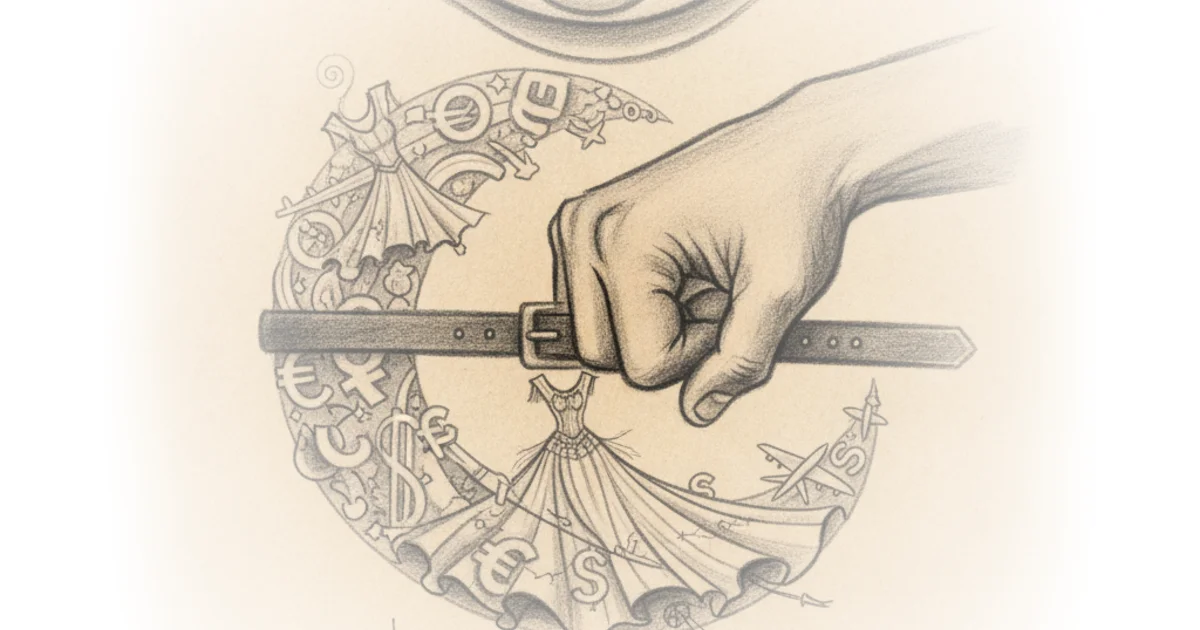
The author highlights Tofan's frustration with the lack of control over public spending, stating, "I learned today that the Prime Minister approves all visits outside the country. (...) I want to tell you that I will be much more demanding in approving these visits." This centralization of approval power is a direct response to the perception of unchecked privilege within the executive branch. Smith effectively contrasts this with the predecessor's approach, who, upon leaving office, praised a failed tax reform and dismissed critics as "amateur league" football players. Tofan's admission that the previous attempt was a failure, while committing to a new draft by August 6th, suggests a more pragmatic, if risky, engagement with the Ministry of Finance.
"The first attempt to bring the tax reform to fruition was not successful, to put it delicately. In fact, it was a failure."
However, critics might note that while austerity sounds good in a press conference, the immediate need for a new wage law to codify salaries and bonuses suggests deep structural rot that cannot be fixed by simply cutting travel budgets. The challenge will be whether the administration can deliver on the promised "order" without paralyzing the public sector.
The Three-Day Tenure and the Cost of Lies
The fragility of the new government was tested almost immediately by the scandal surrounding Radu Musteață, the newly appointed Minister of Agriculture. Smith details a rapid unraveling: Musteață was accused of having ties to the Democratic Party (PDM) during the height of Vladimir Plahotniuc's state capture—a period where the party effectively controlled the state apparatus. While Musteață initially denied the allegations with categorical force, claiming "I have never led any territorial organization of a political party and I have not been a member of the Democratic Party," the evidence quickly mounted.
Smith observes that the resignation came after the successor party, PSDE, produced a signed membership application, forcing Musteață to admit he lied. He resigned to "protect the team and maintain trust," yet his admission that he "did not have the courage to tell the whole truth" undermines the very trust he sought to preserve. This episode marks one of the shortest ministerial tenures in Moldovan history. Smith's coverage underscores a critical point: in a post-state-capture environment, the inability to be transparent about past political affiliations is fatal to a minister's career.
The context here is vital. As noted in related deep dives on state capture, the PDM's influence was pervasive, and many officials have murky pasts. Yet, the speed of Musteață's fall suggests the new administration is drawing a hard line, even if the initial reaction from Prime Minister Tofan was to offer "full support" before the proof emerged. This oscillation between support and resignation reveals the precarious balance the new government must strike between loyalty and accountability.
Corruption, Security, and the Shadow of War
Beyond the cabinet drama, Smith weaves a narrative of systemic corruption and escalating security threats. The anti-corruption police (CNA) detained three individuals in relation to the MoldATSA scandal, uncovering a pattern of "unjustified salaries and bonuses" and a staggering 9 million lei spent on staff training in just five months—including 106,000 lei for a beginner English course in the UK. This specific detail serves as a microcosm for the broader issue of public funds being misappropriated for trivialities while the country faces genuine crises.
The security situation is equally dire. Smith reports on a 30-day state of alert for energy and water security, driven by diesel stockpiles falling to less than seven days and record-low water levels in the Novodnestrovsk reservoir. The human cost of these shortages is implicit but severe, threatening water access for Chisinau and fuel availability for a population already grappling with prices 50% higher than pre-war levels.
Perhaps the most complex story involves the smuggling of weapons from Ukraine to Israel via Moldova. Smith details the sentencing of Eugeniu Pralea, a courier who claims he was told he was transporting humanitarian aid, only to discover he was moving RPG launchers and anti-tank missiles. The investigation points to Rabbi Pinhas Zaltzman as the organizer. Smith carefully navigates the controversy surrounding Zaltzman's title, noting that while he calls himself the "Chief Rabbi of the Republic of Moldova," the Jewish Community of Moldova states he has never been elected or confirmed to any leadership position. This distinction is crucial; it separates the religious institution from the individual accused of orchestrating an international arms pipeline.
"The shipment included 8 RPG-30 anti-tank grenade launchers, a launch tube for a 9K333 Verba anti-aircraft missile system... and an entire Geran 2 drone."
The involvement of a religious figure in such a scheme raises questions about the oversight of non-state actors in a region already destabilized by the war in Ukraine. While the Romanian air force has successfully shot down Russian drones, the internal smuggling network suggests that Moldova's borders remain porous to illicit activities that could draw the country into wider conflicts.
Bottom Line
David Smith's coverage provides a sobering assessment of a government attempting to reset the nation's trajectory while its foundations are still shifting. The strongest part of the argument is the juxtaposition of Tofan's rhetorical commitment to "order" against the immediate reality of a minister resigning for lying and a security apparatus struggling to contain smuggling and resource shortages. The biggest vulnerability lies in the administration's ability to sustain momentum; the resignation of the Agriculture Minister and the ongoing corruption investigations risk eroding public confidence before the promised tax reforms can take effect. The reader must watch whether the new cabinet can move from tightening belts to delivering tangible results, or if the weight of the past will drag the new government down before it finds its footing.