Sara Ahmed transforms the concept of 'use' from a metric of efficiency into a radical lens for understanding colonial violence and institutional exhaustion. In a world obsessed with productivity, Ahmed argues that the very definition of what is 'useful' has been weaponized to justify the theft of land and the erasure of people, a claim that demands we re-evaluate the foundations of our daily labor and political existence.
The Politics of Uselessness
Ahmed begins by tracing the origins of her own writing, noting that urgency often dictates form. She recalls writing her earlier manifesto while fighting against the normalization of sexual harassment, stating, "Writing takes a different shape when it comes from urgency. It is never too urgent to write, but when the situation is urgent, time can slip through your fingers." This framing is crucial; it suggests that the current global crises, particularly the ongoing genocide in Gaza, are not distractions from theory but the very fuel that should drive it. As Ahmed puts it, "If the urgency of the times we are in, the need to say no to business as usual, because Israel is conducting a genocide in Gaza now, does not stop us from writing, urgency travels into the writing."
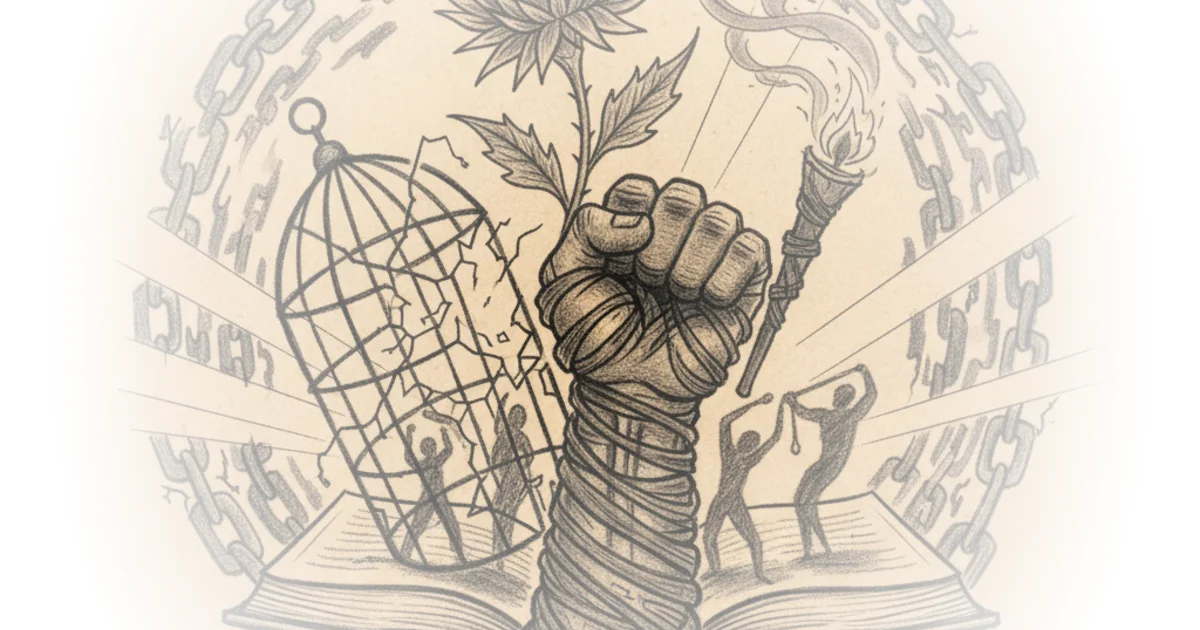
The piece draws heavily on the work of Edward Said to expose how colonial powers have historically justified occupation by labeling territories as "unused." Ahmed writes, "Imperialism was the theory, colonialism the practice, of changing the uselessly occupied territories of the world, into the useful new versions of European metropolitan society." This is a devastatingly clear articulation of how language serves power. By declaring a place "empty" or "unappreciated," the colonizer creates a moral pretext for intervention. Ahmed notes that Said described Palestine as being rendered "a whole territory essentially unused, unappreciated, misunderstood . . . to be made useful, appreciated, understandable." The argument holds immense weight because it reveals that the claim of "care" is often a mask for theft. Critics might argue that this focuses too heavily on historical rhetoric, but Ahmed's point is that these narratives actively shape current policy and the continued erasure of indigenous presence.
Theft and destruction turned into care.
Revaluing the Labor of Maintenance
Moving from the geopolitical to the domestic, Ahmed challenges the hierarchy that separates mental labor from manual work. She proposes a radical principle: "Everyone who can do housework should do housework." This is not merely a suggestion about chores; it is a structural critique of how institutions rely on the invisible labor of marginalized groups to function. Ahmed argues that "Organisations also require housework: and too often that work is undervalued and is done by only some (often those who embody diversity), in order to free up the time for others." This observation lands with particular force in the context of modern academia and corporate structures, where diversity initiatives often burden the very people they claim to support with the emotional and administrative labor of fixing systemic bias. The author insists that we must recognize that "products of 'the mind,' always depend on manual labour, the physical work of using things that shapes things." This reframing is essential for anyone trying to dismantle the exhaustion that plagues social justice movements.
The Ethics of Degradation and Breaks
Perhaps the most counter-intuitive argument Ahmed presents is the rejection of preservation as an ultimate good. She writes, "We would recognise we have different relations to what we use; that to value something can mean for some to use it less, for others, to use it more." This challenges the museum-like impulse to freeze history or culture in a state of stasis. Ahmed suggests that "The politics of preservation so often means some assume their rights to appropriate what is of use to others, because they assume they alone have the technologies needed to preserve things." She goes further to argue that degradation is a natural part of life, stating, "Degradation is part of life and death: it can be how something matters and becomes matter." This is a profound shift in perspective: allowing things to break, to return to the soil, or to cease existing can be an act of resistance against the colonial desire to control and possess. A counterargument worth considering is whether this acceptance of degradation could be misused to justify neglect of vulnerable communities, but Ahmed's context is specifically about the violence of forced preservation and the right to let things end.
To begin with the exhaustion of what has already been is to ask for other ways of working, to find forms that are more sustainable, to bring life back into forms.
Bottom Line
Ahmed's manifesto succeeds by refusing to separate the personal act of cleaning a kitchen from the geopolitical act of occupying land, revealing both as struggles over who gets to define what is "useful." While the argument's reliance on specific theoretical frameworks may require patience from readers unfamiliar with cultural studies, its core insight—that utility is a political weapon—is indispensable for understanding current conflicts. The strongest takeaway is the call to embrace breaks and degradation as necessary acts of survival against a system designed to exhaust us.