Naomi Kanakia dissects a provocative claim: that the modern novel is not the product of a solitary genius, but the output of a corporate machine. This isn't just industry gossip; it is a structural argument suggesting that the very DNA of contemporary literature was altered when publishing shifted from family-run firms to conglomerates between 1960 and 2000. For anyone trying to understand why the books on bestseller lists feel so calculated, or why the path to publication has become a bureaucratic gauntlet, this analysis offers a necessary, if unsettling, map of the terrain.
The Death of the Independent Editor
Kanakia introduces Dan Sinykin's Big Fiction by contrasting the publishing landscape of the 1960s with the corporate behemoths of today. The argument hinges on a shift in incentives. In the past, profitability was achievable with modest sales, allowing editors to take risks on unique voices. Sinykin notes that in 1963, an editor like Jason Epstein believed he only needed to sell "six or seven thousand copies" to put a book in the black. The infrastructure supported this: "There are only 1,804 bookstores in America, of which only a few hundred really count," Epstein wrote, suggesting a book could organically become a bestseller through word-of-mouth and critical reviews.
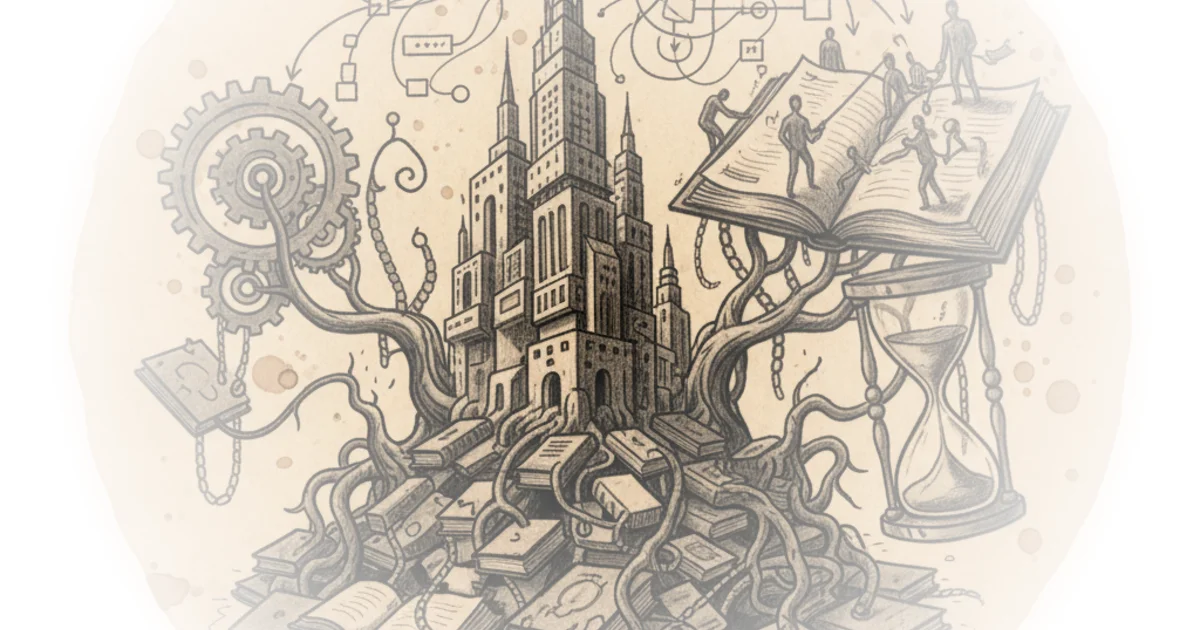
However, Kanakia explains how this ecosystem collapsed under the weight of consolidation. The rise of mall chains like Waldenbooks and B. Dalton, followed by the dominance of big-box retailers like Barnes & Noble, centralized buying power. Suddenly, a single corporate buyer could decide a book's fate. This was compounded by the rise of distribution giants like Ingram, which allowed hardback publishers to adopt mass-market strategies previously reserved for paperbacks. As Kanakia summarizes Sinykin's view, trade publishers realized they could "reach much larger audiences than previously, adopting the mass-market model and focusing on a small number of titles distributed widely for strong returns on investment."
This is a crucial pivot point. The industry stopped trying to serve a diverse literary culture and started trying to manufacture hits. The logic became clear: if you have the capital to ship millions of copies and pay for premium shelf space, you can create the demand that justifies the shipment. The system no longer rewarded the book that was good; it rewarded the book that looked like it would sell.
"Success depended on recognition by something like a system, so much so that fiction itself, when published by conglomerates, came to display, seen as a whole, a systematic intelligence, a systematic authorship."
The Myth of the Solitary Author
Here, Kanakia tackles the book's most controversial thesis: that the concept of the individual author has been eroded by the conglomerate structure. Sinykin argues that power dispersed from the author and editor into a network of marketers, agents, publicists, and chain buyers. Kanakia writes, "The exact formula to determine who held sway differed at each house and with each book," but the result was the same. The book became a product designed to satisfy a system, not just a story told by a writer.
This leads to the provocative assertion that even canonical figures like Toni Morrison and Cormac McCarthy are, in a sense, co-authored by the corporate machine. Kanakia notes that Sinykin implies "it is improper to speak of authors, because really books have a collective authorship: they're authored by the conglomerate itself." This is a jarring claim for literary purists. It suggests that the themes, pacing, and even the emotional resonance of a novel are filtered through the lens of what a marketing department can sell to a chain buyer.
Critics might argue that this view dangerously reduces the agency of the writer, ignoring the internal creative struggle that remains regardless of the publisher's size. After all, a writer still sits alone with a page. Yet, Kanakia points out that Sinykin is careful to note that authors didn't necessarily write with these questions in mind; rather, the system selected for books that fit the mold. As she paraphrases Sinykin: "I do not mean that authors kept these questions in mind when writing... Rather, I mean to dramatize the dispersal of power out of the hands of the author and the editor and into a great many hands."
When Theory Meets Text
Kanakia is quick to praise the clarity of Sinykin's prose, calling the book "exceptionally lucid" and free of the "double-talk and jargon" typical of academic texts. She highlights how Sinykin uses concrete examples to illustrate the shift in power, noting how agents became aggressive in defense of rights because they knew the scale of potential sales. "Glamour favored the marketer, the promoter, the publicist," she quotes, capturing the new hierarchy where the person who can sell the book matters more than the person who wrote it.
However, Kanakia also identifies the book's weakest link: its attempts to read these economic shifts directly into the text of famous novels. She critiques Sinykin's analysis of Toni Morrison's Beloved, where Sinykin suggests the novel's themes of freedom and haunting are a direct allegory for Morrison's own liberation from her job at Random House. Kanakia finds this stretch unconvincing. "The problem is... it's not clear what conglomeration has to do with any of this," she writes. She argues that the feeling of being trapped in a job or the trauma of racism existed long before the specific era of publishing conglomeration.
This is a fair critique. While the sociology of literature is a valid field, forcing a direct causal link between a corporate merger and a specific character's motivation can feel like a trick. As Kanakia observes regarding similar academic attempts, "It feels like a trick. If you hadn't known that Ken Kesey went through workshop, you'd never have read the workshop into his book." The risk here is that the economic analysis becomes so dominant that it obscures the actual literary merit of the work.
"Once you read this book, you will understand, on an intuitive level, that the industry which published John Steinbeck was very different from the industry that published Toni Morrison."
Bottom Line
Naomi Kanakia's commentary on Big Fiction succeeds in illuminating the invisible machinery behind the books we read, proving that the shift from family-run presses to corporate conglomerates fundamentally altered what gets published and why. While the argument that the conglomerate itself is the "author" of modern fiction may overreach when applied to specific literary masterpieces, the core insight—that the industry is now in the business of selling books to bookstores rather than readers to consumers—is a vital correction to our understanding of the literary world. Readers should watch for how this systemic pressure continues to shape the next generation of writers, who are increasingly trained to navigate a market that demands a product before a story even exists.