Cory Doctorow cuts through the exhausting noise of modern political discourse with a single, devastatingly simple question that exposes why so many "centrist" calls for unity are actually dangerous distractions. He argues that the obsession with cultural signifiers and identity markers is not just a misunderstanding of politics, but a deliberate strategy to protect a system where property rights supersede human survival. This isn't just theory; it's a framework that explains why we watch people freeze to death outside buildings full of empty homes while the law protects the owner's right to keep them vacant.
The False Equivalence of Polarization
Doctorow immediately dismantles the comforting narrative that both sides are equally extreme, a notion he calls "horseshoe theory." He points out that this idea is "bullshit" because it ignores the fundamental difference in stakes: while one side pushes for higher taxes and environmental reviews, the other actively attempts to overthrow governments and has facilitated policies leading to hundreds of thousands of deaths. By framing the conflict as a mere clash of cultural tribes—pronouns versus MMA fans—we miss the reality that the right-wing project is about maintaining a hierarchy where some are born to rule and others to be ruled.
"Mistaking cultural signifiers and identity markers for politics is centrism's most dangerous pathology, the thing that makes centrism the handmaiden of the right."
This observation is sharp because it reframes the debate from "who is in charge" to "how we are ruled." Doctorow leans on Corey Robin's definition of conservatism as the belief that any attempt to elevate the oppressed results in disaster. This historical lens, which connects white nationalists and libertarians under a single ideological umbrella, explains why the executive branch often focuses on the identity of those involved in disasters rather than the systemic failures that caused them. It suggests that the current administration's focus on "law and order" is less about safety and more about preserving the status quo where property owners are untouchable.
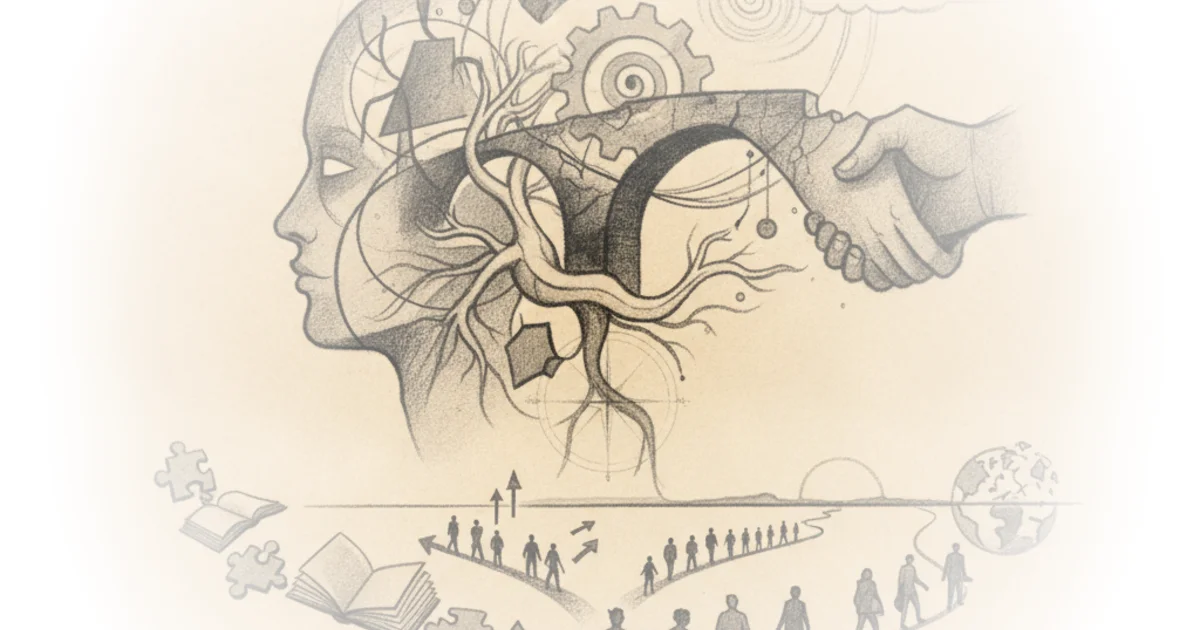
Critics might argue that this binary view ignores the complexity of modern governance, but Doctorow insists that the core disagreement remains as old as the French Revolution: the supremacy of property versus the primacy of human rights.
Property Rights as a Tool or an End?
The piece's most potent argument comes from science fiction writer Steven Brust, whose definition Doctorow adopts as his own litmus test for political alignment. The question is simple: "What is more important: human rights or property rights?" If you believe property rights are a human right in themselves, you are on the right; if you view them as tools to achieve human rights, you are on the left. This distinction explains why the left supports taking patents away from pharmaceutical companies to end vaccine apartheid, while the right insists that intellectual property is an inviolable shield against public health needs.
"If you think that property rights are a tool for achieving human rights, then you're on the left."
Doctorow illustrates this with stark examples: a town full of empty homes and homeless people, or a farmer whose nectarines are seized by a cartel because they cannot legally sell them. In these scenarios, the "right" paradigm allows the owner to let people starve or freeze, viewing their suffering as irrelevant to the sanctity of ownership. The left, conversely, sees property rights as flexible instruments that must yield when they block basic human needs like shelter and food. This is not a call for chaos, but a demand that laws serve people rather than assets.
"The right's paradigm is that property rights are human rights, which cashes out to 'property rights are the only human right.'"
This framing exposes the hypocrisy of "post-political" movements that claim to be above the fray. By treating property as an absolute end, these movements inevitably support oligarchy and hereditary aristocracy. Doctorow notes that if property is a human right, then it is a violation of your rights to expect you to work for a living if you didn't inherit wealth. This logic underpins the current executive branch's reluctance to regulate corporate electioneering or force landlords to allow solar panels on their properties, even when such measures would benefit the broader public.
The Human Cost of Abstraction
The argument takes a darker turn when Doctorow connects this ideological rigidity to real-world suffering. He points out that viewing property as an absolute right allows factory owners to fill workplaces with death traps, arguing that workers have a "revealed preference" for risk. This cold calculus ignores the human cost of such policies, where economic efficiency trumps life itself. The administration's actions in shutting down aid programs, leading to mass deaths, are not anomalies but logical outcomes of this worldview.
"If property rights are human rights, I can leave an apartment building empty while you freeze to death on its sidewalk."
This is the crux of the matter: politics isn't about who rules, but whether we are ruled at all. When we accept that property rights are supreme, we accept a system where the wealthy can destroy their own orchards just to drive up prices while others starve. Doctorow's call to view property as a tool is a plea for a civilization that prioritizes safeguarding human rights above all else. It challenges readers to stop seeing political debates as cultural wars and start recognizing them as battles over survival.
"Politics aren't about who rules – it's about whether we are ruled at all, or whether we are free."
Bottom Line
Doctorow's strongest move is stripping away the cultural camouflage to reveal the hard economic core of modern conservatism: the absolute supremacy of property over people. His argument's greatest vulnerability lies in its binary nature, which may struggle to account for the nuanced compromises required in a complex democracy. However, as long as policy debates focus on identity rather than material conditions, this framework remains an essential tool for understanding why so many "reasonable" solutions fail to save lives.