Kings and Generals doesn't just recount a battle; they resurrect the first military campaign in human history that was documented with tactical precision, turning a 3,500-year-old skirmish into a masterclass in strategic deception. While most historical accounts skim over the Bronze Age, this piece leverages the unique annals of an ancient scribe to reveal how a young pharaoh outmaneuvered a coalition through sheer audacity rather than brute force.
The Geopolitical Stakes
The narrative begins by establishing the fragile nature of power in the ancient Near East. Kings and Generals writes, "for much of human history the ancient land known as Canaan was at the crossroads of continents and civilizations." This framing is crucial because it explains why Egypt, traditionally isolationist, suddenly became an expansionist empire. The authors argue that the traumatic experience of the Hyksos invasion fundamentally shifted Egyptian strategic doctrine. As Kings and Generals puts it, "the Hyksos's takeover had taught the Egyptians that they were vulnerable to attack especially from western Asia."
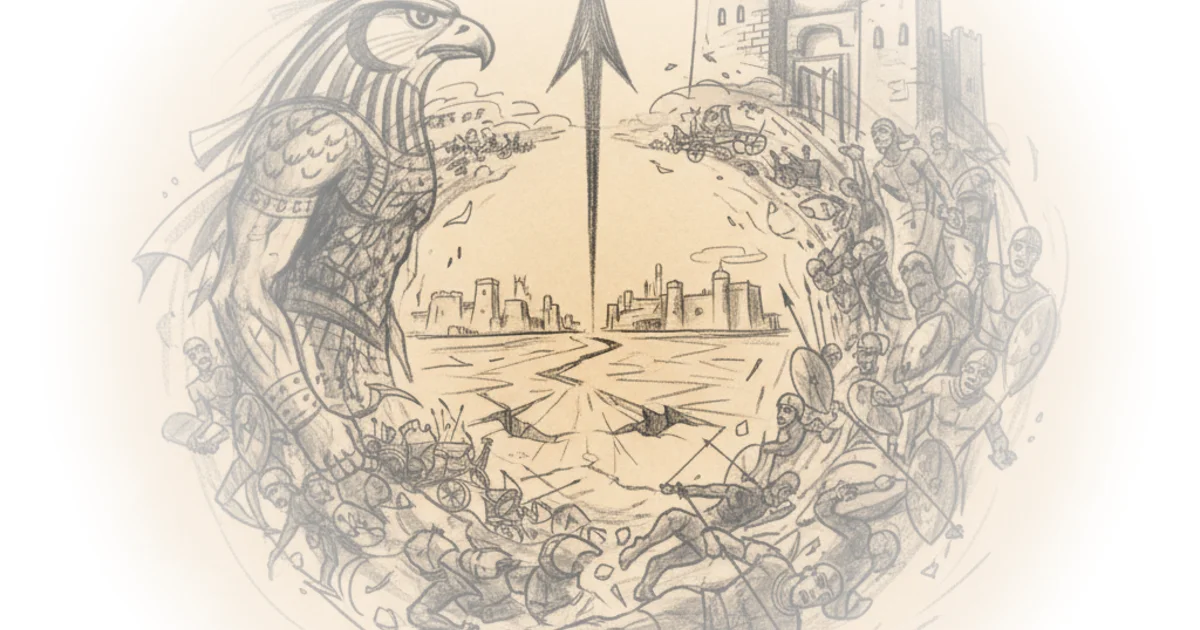
This shift from reactive defense to proactive buffer-zone creation is the engine of the entire story. The commentary correctly identifies that the rebellion at Megiddo wasn't just a local dispute; it was a coordinated effort by Canaanite city-states to break free from a perceived weak regime. The authors note that "upon the death of Hatshepsut... the king of the city of Qadesh led a coalition of Canaanite kings to revolt against their Egyptian overlords." The stakes were existential: if Egypt lost Canaan, the great powers of Mesopotamia could march unimpeded to the Nile.
Critics might note that the source material relies heavily on later Egyptian propaganda, which often exaggerates the threat of rebels to justify the pharaoh's glory. However, the archaeological consensus supports the idea that the region was indeed a volatile powder keg of competing city-states and rising empires like the Mitanni.
The Gamble at Aruna
The heart of the piece is the tactical decision-making process. Thutmose III, though young, faced a classic military dilemma: take the safe, long routes or risk a narrow pass where an ambush could destroy his army. Kings and Generals highlights the fear of his council, quoting the ancient inscription directly: "how will it be to go on this road which becomes narrow when it is reported that the enemies are waiting out there and they are numerous." The phrasing captures the visceral anxiety of the moment.
The authors emphasize that Thutmose's genius lay in psychological warfare. He didn't just choose the dangerous path; he chose it because he knew his enemies expected him to avoid it. Kings and Generals writes, "the reason for this wasn't because he didn't respect the advice of his advisors or was himself reckless but Thutmose believed that the king of Qadesh and his Canaanite allies would come to the same conclusion as his war council." This insight transforms the battle from a clash of arms into a clash of minds. The pharaoh understood that the enemy's confidence was their greatest weakness.
The surprise attack had not only caught the Canaanite rebels off guard but also left them in a poor position to face the Egyptian chariots and infantrymen that were racing towards them.
The execution was flawless. The army traversed the 20-kilometer convoy through the 30-foot-wide pass without losing a man to an ambush. Kings and Generals notes that the enemy had concentrated their forces elsewhere, leaving only a "small detachment of soldiers guarded the mouth of the pass." This detail underscores the precision of the intelligence and the boldness of the maneuver. The enemy was so confident in their prediction of Egyptian behavior that they left their flank completely exposed.
The Collapse of the Coalition
Once the Egyptian forces emerged, the battle turned into a rout. The authors describe the chaos with vivid imagery drawn from the Karnak inscriptions. Kings and Generals writes, "the Canaanites saw his majesty prevailing over them and they fled head-long to Megiddo with faces of fear." The psychological impact of seeing the Pharaoh himself leading the charge, rather than a general, shattered the rebel morale. The text notes, "they may also have been shocked when they learned that it was not a mere general or some other senior officer that was commanding the Egyptian forces... but the Pharaoh."
However, the commentary also points out a critical failure in the Egyptian pursuit. Despite the overwhelming victory, the discipline of the troops faltered at the most crucial moment. Kings and Generals writes, "the battle would have ended there and then in a decisive victory for the Egyptians had that Thutmose's usually disciplined troops not made a crucial mistake instead of" pursuing the fleeing enemy immediately, they stopped to plunder the abandoned chariots of gold and silver. This single lapse allowed the rebel leadership to escape into the city walls, turning a total annihilation into a grueling seven-month siege. This is a vital lesson in military history: tactical brilliance can be undone by operational greed.
Bottom Line
Kings and Generals succeeds in transforming a dry recitation of ancient dates into a gripping study of leadership under pressure, proving that the principles of deception and risk assessment are timeless. The piece's greatest strength is its reliance on the primary source—the scribe's journal—to ground the narrative in the actual voices of the participants, though it occasionally glosses over the logistical nightmares of moving 20,000 men through a desert. The ultimate takeaway is clear: history's first recorded battle was won not by the size of the army, but by the willingness of a commander to trust his own judgment over the consensus of his council.