This piece cuts through the noise of ecclesiastical posturing to reveal a stark, almost tragic inevitability: the refusal of the Vatican to meet with the Society of St. Pius X (SSPX) may not be an act of stubbornness, but a deliberate act of mercy designed to delay a formal schism. While the SSPX frames the Pope's silence as a rejection of dialogue, The Pillar argues that a meeting would force a public, face-to-face rupture that the Church is desperately trying to avoid until the very last possible moment.
The Trap of the Audience
The narrative pushed by the Society's leadership is one of aggrieved necessity. They claim that without a papal mandate for new bishop consecrations, they cannot ensure the salvation of souls. Rev. Davide Pagliarani, the society's superior general, has insisted that "in an ordinary parish, the faithful no longer find the means necessary to ensure their eternal salvation." This radical claim sets the stage for their planned illicit ordinations in July. The Pillar notes that Pagliarani has framed the consecrations as a "reluctant last resort," suggesting that if only Pope Leo XIV would grant him an audience, the crisis could be averted.
However, the article dismantles this framing by pointing out the logical contradiction at the heart of the SSPX's position. They demand recognition of their authority while simultaneously rejecting the Church's authority on doctrine. The piece argues that the society's leadership "essentially closed off any future for the negotiations" by admitting that no agreement is possible on the teachings of the Second Vatican Council. Pagliarani's own words reveal the impasse: "In the shared recognition that we cannot find agreement on doctrine... the only point on which we can agree is that of charity toward souls and toward the Church." This is not a call for dialogue; it is a declaration that the Church is wrong on fundamental matters, yet the SSPX expects to remain in communion.
"It is impossible to remain faithful to the Tradition while breaking the ecclesial bond with him to whom, in the person of the Apostle Peter, Christ himself entrusted the ministry of unity in his Church."
The Pillar draws on the historical precedent of Pope St. John Paul II's 1988 declaration to contextualize the severity of the coming events. The article reminds readers that the root of the previous schism was an "incomplete and contradictory notion of Tradition" that opposed the universal Magisterium. By invoking this history, the piece underscores that the current standoff is not merely a bureaucratic dispute but a fundamental breach of the definition of communion itself. Critics might argue that the SSPX feels justified in its actions due to a genuine crisis in the Church, but the article counters that their solution—defying the Pope to create their own hierarchy—is the very definition of schism under canon law.
The Mercy of Silence
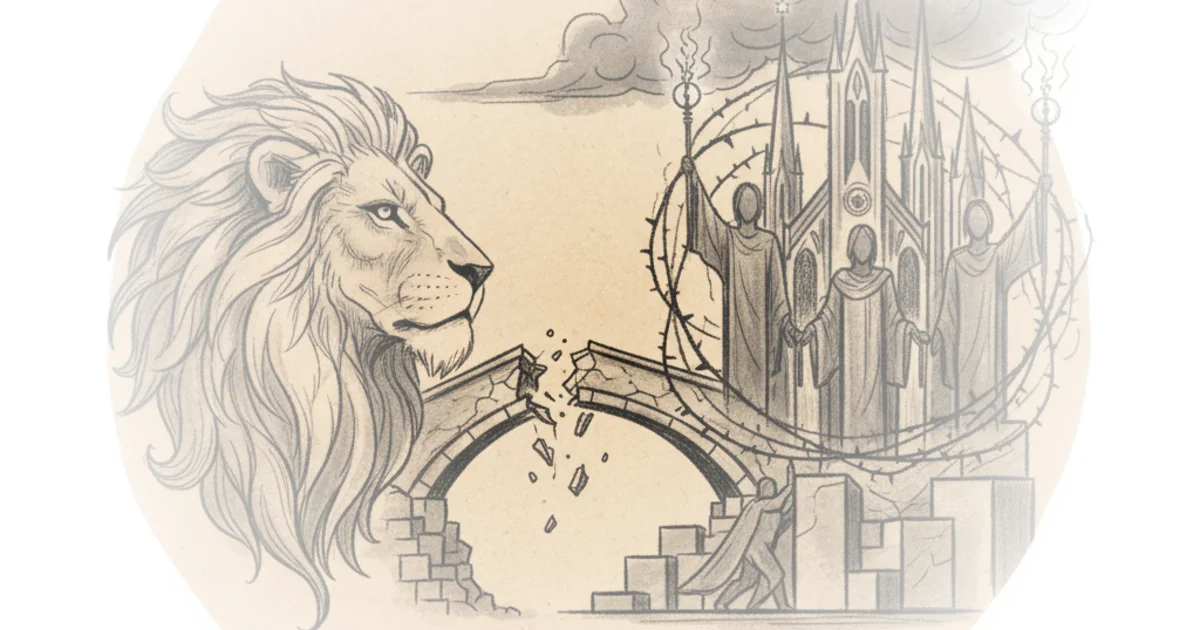
The most compelling argument in the piece is the reframing of the Pope's refusal to meet. Supporters of the SSPX have portrayed the lack of an audience as evidence that the Vatican is "unwilling to meet its supposedly modest requests." The Pillar flips this script, suggesting that a meeting would be disastrous for the SSPX. If Pagliarani were to sit before the Pope, he would be forced to either accept the Pope's correction on doctrine or explicitly reject it. The article posits that given the society's public stance, rejection is the only outcome.
The piece explains that "being warned personally by the pope would mean Pagliarani would have no choice but to respond." If he were to reaffirm his disagreements in the Pope's presence, it would constitute an explicit, formal act of schism that could not be walked back. By refusing the meeting, the Pope effectively buys time, hoping that the SSPX leaders might reconsider before they cross a line that cannot be uncrossed. The Pillar writes that "Leo's refusal to meet with the SSPX leadership is more likely to be an act of charity towards the society's leaders, and a desire to keep a moment of ultimate crisis at bay for as long as possible."
This interpretation challenges the SSPX's self-portrayal as victims. Bishop Bernard Fellay has warned that there is an "enormous probability" of excommunication, claiming the Vatican has already said so. The article points out that this is factually incorrect; the Vatican has made no such statement, and the assertion is not supported by canon law. This suggests a communications strategy aimed at portraying the Holy See as vindictive, rather than a reflection of legal reality. The Pillar notes that the society has struck a tone of "aggrieved seekers of compromise" while preparing for actions that are, by their own admission, illicit.
"Leo likely hopes — or at least prays — that between now and July, the SSPX leaders might reconsider their planned actions, and appreciate the consequences. Meeting with them would seem most likely only to cut that time short."
The article also touches on the concept of latae sententiae (automatic excommunication) versus ferendae sententiae (excommunication imposed by a decree), hinting that the current situation is a complex legal and theological minefield. The SSPX's insistence that they are acting out of charity for souls, while rejecting the Church's authority, creates a paradox where their very existence depends on the schism they claim to avoid. The Pillar concludes that the society's logic is circular: they claim the Church is ineffective, so they must act outside it, which proves their schism.
Bottom Line
The strongest part of this argument is its psychological and canonical insight: the Pope's silence is a strategic delay tactic to prevent a formal, personal declaration of schism that would be impossible to reverse. The piece's biggest vulnerability lies in its assumption that the SSPX leadership is rational enough to be swayed by this mercy; given their public rhetoric, they may view the refusal to meet as a confirmation of their worst fears. Readers should watch whether the SSPX proceeds with the July consecrations regardless of the Pope's silence, which would force the Holy See to move from passive hope to active canonical penalty.
"If he did not accept the correction, instead reaffirming the SSPX's doctrinal disagreements with the Church over Vatican II or holding out the possibility of continuing ahead with the illicit consecrations, the superior would have placed what most canonists would consider an act of schism — refusing the authority of the pope to his face."
Ultimately, The Pillar offers a sobering look at a crisis where the only way to avoid a total break might be to refuse to speak. The article suggests that in the high-stakes theater of Catholic doctrine, sometimes the most powerful thing a leader can do is say nothing at all.