Most historical accounts treat the Mongol Empire as a sudden, inexplicable force of nature—a storm of horsemen that swept across Eurasia by sheer ferocity. Kings and Generals challenges this myth, arguing instead that the empire's success was not born of magic, but of a deliberate, ruthless synthesis of existing steppe traditions and captured sedentary technology. This is not just a story of bravery; it is a case study in institutional adaptability that explains how a nomadic confederation conquered the world's most fortified cities.
The Technology of Endurance
The coverage begins by dismantling the idea that the Mongols invented horse archery. Kings and Generals notes that the core tactics of hit-and-run and feigned retreat were standard for steppe peoples long before the 13th century. "The little boys start out by learning to ride sheep and shoot birds and rats with a bow and arrow... thus all the young men are able to use a bow and act as armed cavalry in time of war." This observation grounds the Mongol rise in a deep cultural continuity, suggesting their advantage lay not in the concept of mounted warfare, but in the refinement of its tools.
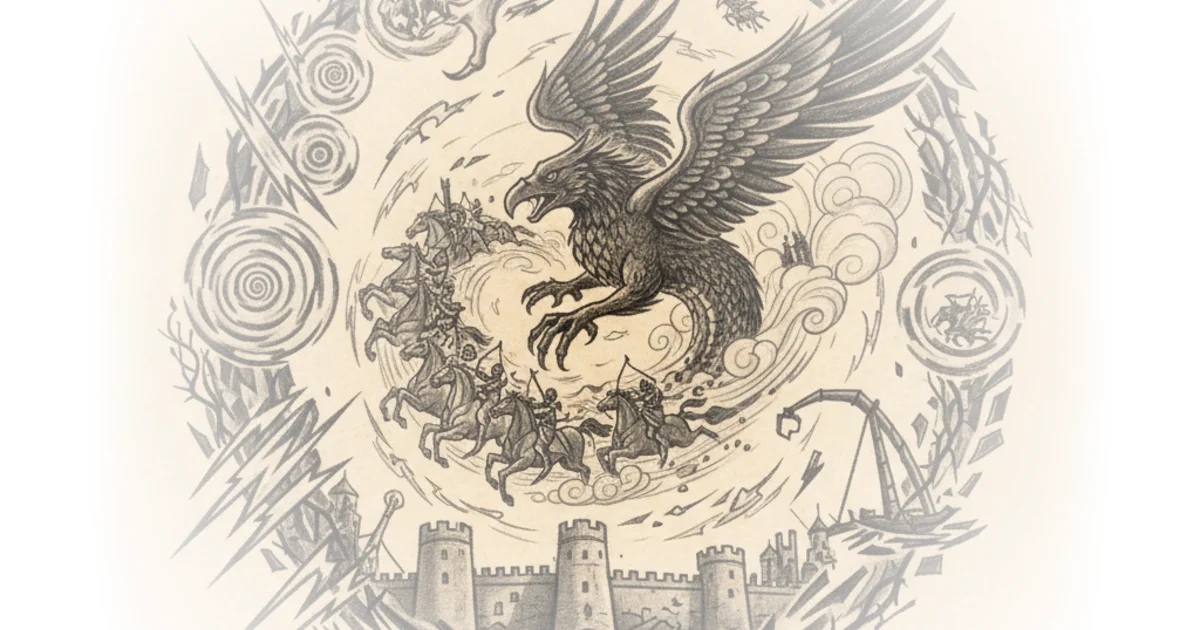
The author highlights a crucial, often overlooked technological shift: the evolution of the saddle and stirrup. While earlier nomads like the Scythians relied on soft pads, the Mongols utilized the treed saddle and paired stirrups. Kings and Generals writes, "Stirrups provided several advantages... allowing the rider to raise himself in the saddle for extra leverage... the knees could better absorb the jolts from the horse's movement." This mechanical advantage allowed riders to draw heavier bows and fight with greater stability, transforming the horse from a mere transport into a stable firing platform. The argument here is compelling because it shifts the focus from the warrior's spirit to the engineering that enabled it.
The famed weapon of the horse archer was their composite bows... the shorter bow made it more maneuverable on horseback allowing mongol warriors to even travel with heavier and lighter bows on them as the situation required.
However, the commentary also notes a vulnerability in this high-tech approach. The Mongol composite bows, stripped of the bone plates used by earlier cultures to prevent warping, were incredibly powerful but fragile in humid climates. Kings and Generals points out that this design choice may account for "reduced mongol military effectiveness in southeast asia and europe." This nuance is vital; it suggests that the Mongol military machine was not invincible, but rather optimized for a specific environment, and its failures were often environmental mismatches.
The Innovation of Organization
Where the Mongols truly diverged from their predecessors was in their administrative and organizational structure. The source text argues that Genghis Khan's genius was not in inventing the decimal system, but in weaponizing it against the very tribal structures that had previously held steppe societies together. "It was the innovation of chinggis khan to largely break down the tribes of mongolia and almost entirely replace them with the decimal system removing minor chiefs and khans from power to ensure no alternatives to his rule." This reframes the conquest as a political revolution as much as a military one.
The creation of the Keshik, or imperial bodyguard, is presented as a masterstroke of state-building. Rather than a simple royal guard, it evolved into a general staff and a school for governance. Kings and Generals explains that "sons of the royal families of subject kingdoms were taken into the keshig as hostages to help secure the loyalty of their dynasty but also to be essentially indoctrinated in mongol imperial destiny." This system turned potential enemies into loyal administrators, a stark contrast to the purely extractive nature of earlier nomadic empires. The coverage effectively argues that the Mongol Empire survived its founder because it built institutions that outlasted the tribe.
The Art of the Nerga and the Siege
Perhaps the most striking section of the piece is the analysis of the nerga, the massive hunting drive. Kings and Generals describes it as a dual-purpose tool: a training exercise and a military strategy. "Organizing this properly took considerable skill given the size of the operation... following orders meeting timetables unit tactics and discipline were the basic building blocks of mongol successes." The author draws a direct line between the precision required to drive game into a circle and the coordination needed to encircle a city.
A nerge was set over an entire region designating a major city to be the meeting point mongol units would spread across the region attacking small towns and villages driving the rural populations towards the major city as the tightened refugees fled into the city.
This tactic did more than just surround a city; it weaponized the refugee crisis to break morale and logistics. By driving terrified populations into urban centers, the Mongols overwhelmed the city's food supplies and sowed chaos, often forcing surrender before a siege even began. Critics might note that this description romanticizes a brutal strategy of psychological warfare, but the historical evidence for its effectiveness is undeniable.
Finally, the piece addresses the Mongol siegecraft, which is often the most misunderstood aspect of their campaigns. Kings and Generals writes, "The adoption of warriors and knowledge of defectors vassals and captives proved perhaps the greatest deviation from earlier nomadic empires." The Mongols did not rely on a single culture; they built a heterogeneous army that utilized Chinese engineers, Persian infantry, and Korean naval knowledge. This adaptability allowed them to solve problems that had stumped previous nomadic confederations. As the text concludes, the Mongols were able to "pick the most effective tactics weapons armors and warriors from the cultures of eurasia."
Bottom Line
Kings and Generals makes a strong case that the Mongol Empire was a product of institutional innovation and technological synthesis rather than mere barbaric fury. The argument's greatest strength is its focus on the Keshik and the nerga as mechanisms of state-building and operational discipline. However, the piece slightly underplays the sheer scale of the human cost involved in this "efficiency," treating the slaughter of populations as a logistical variable rather than a moral catastrophe. For the modern reader, the takeaway is clear: the Mongols succeeded because they were the most adaptable organization on the planet, not because they were the strongest.