Most guides on artificial intelligence adoption drown in theoretical roadmaps or endless tool lists, but Emily Kramer offers a radical, time-boxed alternative: stop planning and start building in a single day. Her proposal reframes AI not as a distant strategic mandate, but as a tangible, shippable output achievable through a structured "hackathon" ritual. This approach cuts through the paralysis of choice that plagues modern marketing teams, offering a concrete path from anxiety to action.
The Ritual of Experimentation
Kramer draws heavily on her tenure leading marketing at Asana, where she observed that intentional, time-bound experimentation yielded better results than open-ended mandates. She argues that the biggest hurdle to AI adoption isn't a lack of tools, but a lack of dedicated space to test them without the pressure of immediate ROI. "The delta between what marketing teams can achieve and produce with and without AI is massive," she writes, highlighting the cost of inaction. By invoking the concept of "Polish Week" and "Grease Week" from her past, she suggests that cultural rituals are more effective than executive orders.
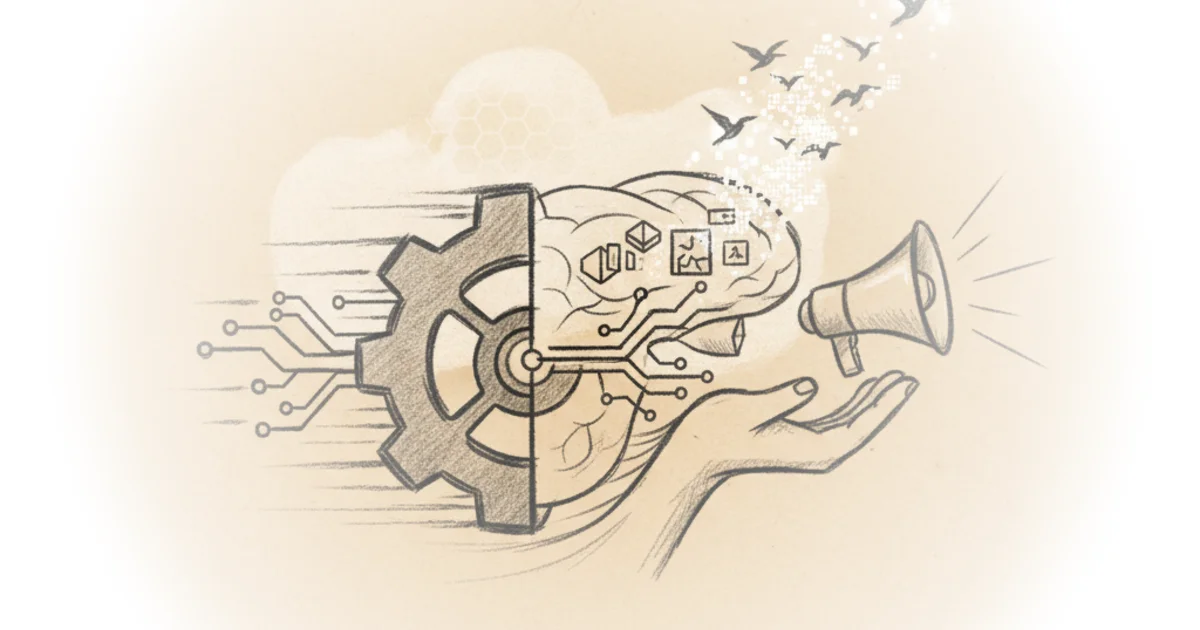
This framing is particularly effective because it addresses the human element of change management. Rather than demanding a complete overhaul of workflows, Kramer proposes a low-stakes environment where failure is expected and fun is encouraged. She notes that some of her favorite features at Asana, like the "flying yetis and unicorns," emerged from these special weeks. The logic holds: when teams are given permission to play, they often stumble upon high-value innovations they would never have discovered through rigid planning.
"Many companies don't realize how big they can think with AI with until we show them what's possible."
However, a counterargument worth considering is whether this "hackathon" model scales beyond agile startups. In highly regulated industries or large legacy enterprises, the idea of building a functional tool in eight hours without legal or IT review could introduce significant compliance risks. While the spirit of the approach is sound, the execution may require more guardrails than Kramer suggests for non-tech-native organizations.
From Theory to Shippable Workflows
The article pivots to a practical case study involving Clay, a data enrichment platform, to demonstrate how this model works in the real world. Kramer interviews Mishti Sharma, who leads product marketing at Clay, to illustrate that these events are not mere training sessions but production engines. "Our hackathons are a great way for us to get customers to turn the very fluffy kind of AI speak that's out there into actually building some workflows," Sharma explains. The result is tangible: in a single day, clients like Vanta automated tasks that previously took hours, and Amplitude cleaned up their contact databases.
Kramer uses this evidence to dismantle the idea that AI adoption requires a massive, months-long implementation project. Instead, she advocates for a "build day" structure where teams pair up, focus on specific bottlenecks, and ship a working prototype by the end of the day. She emphasizes that the goal is to move teams from "I should use this tool" to actually using it for real problems. This shift from passive consumption to active creation is the core of her argument.
The author's recommendation to include constraints—such as limiting the team to one specific tool or problem type—is a crucial tactical detail. Without these boundaries, teams often suffer from "blank page syndrome," paralyzed by the infinite possibilities of generative AI. By narrowing the scope, the hackathon forces creativity within a manageable frame. "It's a win-win," Kramer concludes, noting that these events build rapport and spark org-wide curiosity.
"The more you sleep on AI, or limit your AI usage to helping you write content, the worse off you will be."
Critics might argue that focusing on "quick wins" and "scrappy builds" risks creating technical debt or fragmented tools that cannot be integrated into the broader technology stack. If every hackathon produces a unique, unconnected script or workflow, the organization could end up with the very "tool sprawl" Kramer warns against. The article acknowledges the need to "incorporate some of the projects" afterward, but the long-term maintenance of these rapid prototypes remains a potential vulnerability.
A Blueprint for Action
Kramer concludes by providing a step-by-step guide for running an internal marketing AI hackathon, moving from the abstract to the operational. She advises leaders to pick a mandatory day, set clear constraints, and ensure that every project is shippable within 24 hours. The emphasis is on momentum: "Don't let this drag into 'we'll present eventually.'" She suggests that the energy of the event should be sustained through demos and even light judging, turning the process into a celebratory event rather than a chore.
The specific tool recommendations—ranging from no-code platforms like Lovable and Retool to design tools like Figma Make—reflect a shift toward "vibe coding," where the barrier to entry for building software is lower than ever. This democratization of development is central to her thesis: if marketers can build their own tools, they no longer need to wait for engineering resources. "We all know it's time to get on board with AI or get left behind," she writes, but the "how" has always been the missing piece. Her solution is to stop waiting for the perfect strategy and start building imperfectly, quickly, and together.
Bottom Line
Emily Kramer's argument is strongest in its rejection of abstract AI strategy in favor of immediate, tangible experimentation; the "hackathon" model effectively bypasses the paralysis that often stalls digital transformation. However, the piece's biggest vulnerability lies in its optimism regarding the long-term viability of rapid prototypes, which may struggle to survive the scrutiny of enterprise governance and maintenance. Leaders should adopt the spirit of the hackathon but must pair it with a rigorous post-event process to ensure these "scrappy builds" evolve into sustainable assets rather than digital clutter.