The Case for AI-Enhanced Mammography
A landmark Swedish trial involving over 105,000 women has produced results that could redefine breast cancer screening. Dr. Eric Topol argues the data now compels a shift in medical practice: AI support for every mammogram, not as a luxury but as a standard of care.
Detection Gains Without Tradeoffs
The MASAI trial—Mammography Screening with Artificial Intelligence—tested whether one radiologist plus AI could outperform two radiologists alone. The results favor the hybrid approach decisively.
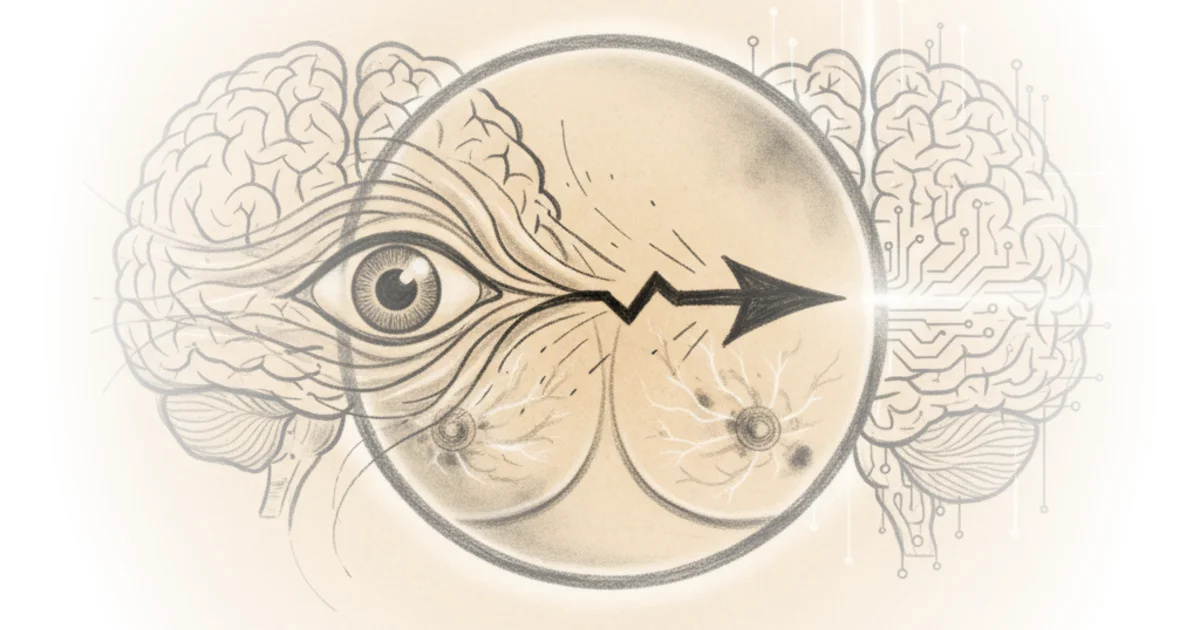
Dr. Eric Topol writes, "There was a 29% increase in detection of cancer with AI, with a 24% increase in invasive cancer." That gain came without increasing false positives or recall rates. The false positive rate held at 1.4% in both arms.
Workload dropped 44%. For health systems facing radiologist shortages, that efficiency matters as much as accuracy.
As Dr. Topol puts it, "The AI support served a preventative role for earlier detection, catching aggressive breast cancer at the time of screening." At two-year follow-up, the AI arm showed 12% fewer interval cancers—tumors that emerge between screenings—and those detected were smaller and less aggressive.
The National Cancer Institute estimates 20% of breast cancers are missed by mammograms. AI closes that gap. Studies from Hungary, Germany, South Korea, and the US have replicated the finding across different algorithms and populations.
"It is a standout for demonstrating superhuman performance—'digital eyes'—that see things which humans can't."
Prevention Beyond Detection
AI's role extends beyond reading the scan. New algorithms predict five-year risk from a normal mammogram. CLARITY Breast received FDA authorization in June 2025 for this capability, trained on 420,000 mammograms across 27 facilities.
Dr. Topol writes, "About 16% of women in their 40s with a normal mammogram were found to be high risk." Women in the high-risk AI group had more than four-fold higher cancer incidence than average-risk women—5.9% versus 1.3%. Breast density alone showed minimal predictive power.
Identifying high-risk patients enables tighter surveillance: MRI, ultrasound, more frequent screening, or genetic testing for BRCA mutations. The cascade can extend to family members.
The Heart Disease Signal
Breast arterial calcification detected by AI marks cardiovascular risk. The leading cause of death in women is heart disease, not cancer—yet it's often missed due to clinician bias and atypical symptoms.
Dr. Topol writes, "An increase in category from mild to moderate was linked to a 59% higher risk of major adverse cardiovascular events, and for moderate increased to severe BAC a 91% increase." The FDA cleared CureMetrix cmAngio for this detection in 2023.
Mammography becomes a two-for-one: cancer screening plus cardiovascular risk assessment.
The Obstacles
Implementation barriers remain substantial. In the US, AI readouts are restricted to RadNet—400 locations in only 8 states. Added fees attach to CLARITY Breast risk assessment and breast artery calcification reports. Costs range from zero to fifty dollars out-of-pocket.
Dr. Topol writes, "These are unacceptable added costs to patients to get the most information from their mammogram."
Only Transpara has MASAI-level validation. Other algorithms—DeepHealth, Kheiron, Vara, Lunit—lack comparable rigorous assessment. Large randomized trials continue in Norway and the US, suggesting the matter remains unresolved.
Critics might note that survival improvement hasn't been directly demonstrated. Critics might also note there's no standard protocol for acting on high-risk predictions. Critics might argue that embedding AI costs at scale remains unproven despite Topol's assertion that "if used at scale, a small fee could be paid to the company providing the AI."
When Practice Changes
Forty million mammograms are performed yearly in the US. The rationale for mass screening is early detection. AI improves that detection by roughly 30% while reducing radiologist workload.
Dr. Topol writes, "I believe the data we now have is compelling and should set the stage for a new standard of care."
The conclusion from MASAI hedged: "Further analyses of subsequent screening rounds and cost-effectiveness will clarify the long-term balance of benefits and harms." Topol rejects that caution. The proof exists. The obstacles are implementation, not evidence.
Bottom Line
The MASAI trial and real-world studies establish AI-enhanced mammography as more accurate, faster, and preventative—detecting aggressive cancers earlier and flagging cardiovascular risk. The barrier isn't science; it's cost and access. Until AI readouts are embedded without patient fees, the standard of care remains incomplete.