More Perfect Union has uncovered a disturbing reality hidden in plain sight: your grocery bill isn't just rising due to inflation, but because of a sophisticated, algorithmic system designed to charge you the maximum amount you are willing to pay. While most headlines blame supply chains or tariffs, this investigation reveals a deliberate "dark art" of surveillance pricing where identical items cost different people vastly different amounts at the exact same moment. This is not a summary of rising costs; it is an exposé on how technology is quietly turning the grocery aisle into a profit extraction machine.
The Experiment That Broke the Model
The investigation began with a simple, yet radical question posed by researcher Katie Wells: if delivery platforms pay workers differently for identical tasks, do they charge consumers differently for identical goods? More Perfect Union writes, "Walk into any grocery store and on average everything is about 30% more expensive than it was in 2020. Inflation, supply chains, tariffs, we've heard it all. But what if something else is happening? Something intentional." This framing is crucial because it shifts the blame from macroeconomic forces to corporate strategy, a distinction that demands immediate attention from every household budget.
To test this, the team mobilized over 400 volunteers to shop simultaneously for the same 20 items at the same store via Instacart. The results were not just statistically significant; they were baffling. As the author notes, "Some people were charged about $114 for the 20 items, others nearly $124." This wasn't a glitch or a random error. The data revealed that shoppers were sorted into distinct price groups, with nearly three out of four products showing different prices for different users. The evidence suggests a system that doesn't just react to the market but actively segments the consumer base.
Critics might argue that price variation is a standard feature of dynamic pricing, similar to airline tickets, and that these fluctuations are too small to matter. However, the scale of this investigation—verifying thousands of data points across a massive volunteer network—demonstrates that this is not a minor fluctuation but a structural feature of the modern grocery economy.
The Architecture of Surveillance Pricing
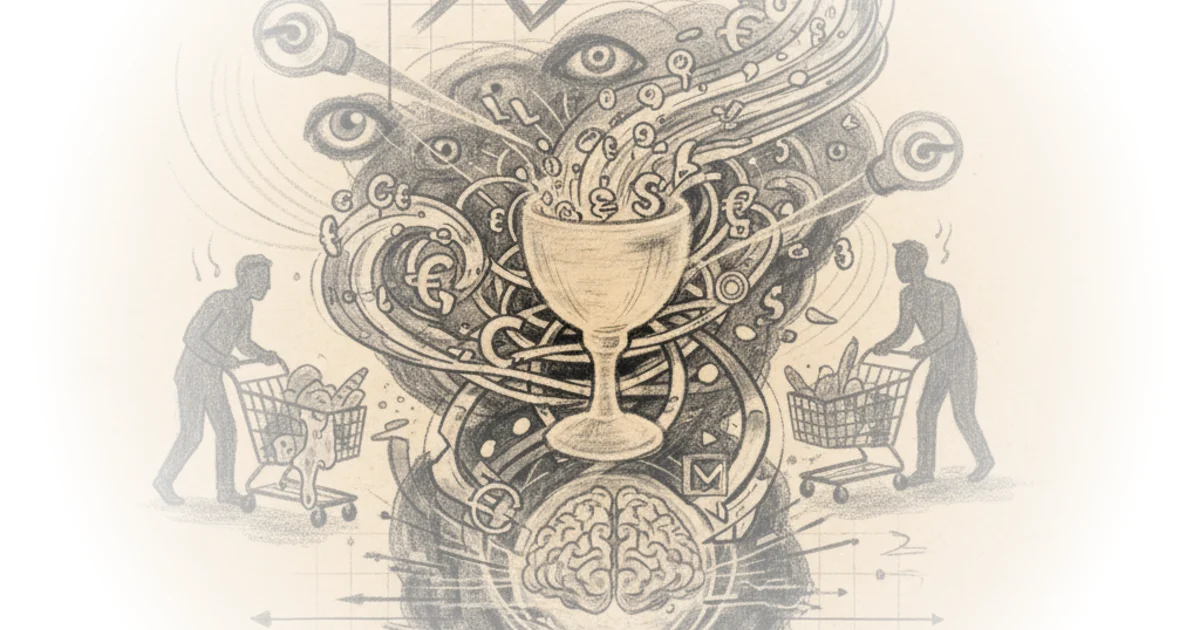
The core of the argument rests on the concept of "surveillance pricing," where companies use vast amounts of behavioral data to determine a customer's price sensitivity. More Perfect Union explains, "It's a type of algorithmic pricing where companies hand pricing over to an algorithm... It's almost impossible for people outside the companies practicing the art the dark art of algorithm price determination." The investigation points to Instacart's acquisition of Eversight, a firm specializing in price optimization, as the catalyst for this shift. The author highlights the chilling efficiency of this model: "The company calls it AI for everyday price performance. The website promises 2 to 5% profit increases."
This is where the narrative becomes particularly unsettling. The system isn't just guessing; it is learning. The author describes how the algorithm tracks "buying behavior, purchase history, how frequently you shop, whether you're shopping around, coupon usage, loyalty program participation." By analyzing these behavioral characteristics, the system calculates "shopper and product headroom," essentially determining exactly how much more money a specific individual could spend before they stop buying. This moves beyond simple price discrimination into a realm of hyper-personalized extraction that is invisible to the consumer.
They know things about us that we don't know. They're smarter than us and we're training them in a way that is incalculable.
The author's use of the term "dark art" is not hyperbole; it reflects the opacity of these systems. When the team confronted Instacart with the data, the company's responses were evasive, shifting from claiming retailers set prices to admitting they manage them, and finally denying the existence of features that were previously advertised on their own website. This pattern of denial followed by subtle admission suggests a corporate strategy of obfuscation rather than transparency.
The Broader Ecosystem of Profit Maximization
While Instacart is the primary focus, the investigation reveals that this is an industry-wide race. The author notes, "It's very much defensive. Amazon's already doing it. Walmart is doing it. So, everybody's got to keep up." This context is vital; it suggests that even if one platform were regulated, the competitive pressure would simply drive others to adopt similar tactics. The piece cites Len Sherman, a business school professor, who observed a similar pattern with Uber: "For the next three years, average rider price per mile went up up up up up... That's why more and more companies are trying as hard as they can to perfect this dark art."
The investigation also uncovers a potential link to physical stores through electronic shelf labels. The author speculates, "What if they already moved past online testing?" suggesting that digital price tags in physical stores could be testing prices in real-time, with the app simply mirroring those changes. This would explain why some stores, like Schnucks, showed no price variation in the online test—they might already be conducting the testing in the aisles. The author points to a removed feature on Instacart's website regarding "price optimization with Eversight via electronic shelf labels" as a smoking gun, noting that the company claimed the update was for "accuracy" despite the feature appearing in past marketing materials.
Critics might note that the investigation relies heavily on patents and marketing materials to prove the existence of in-store testing, which is circumstantial evidence. However, the combination of the massive price discrepancies found in the online experiment and the explicit admission of "smart rounding" by Costco makes the case for a coordinated, multi-channel strategy highly credible.
Bottom Line
More Perfect Union has delivered a masterclass in investigative journalism, moving beyond the surface-level complaints of inflation to expose the algorithmic machinery driving it. The strongest part of the argument is the empirical evidence of price segmentation, which proves that the market is no longer a level playing field but a targeted extraction system. Its biggest vulnerability is the difficulty of proving intent without internal documents, yet the pattern of corporate evasiveness speaks volumes. Until regulators intervene, the "dark art" of surveillance pricing will continue to quietly inflate grocery bills, one penny at a time.