Adrian Neibauer offers a rare, unvarnished confession from the front lines of public education: the system is not broken, it is functioning exactly as designed to suppress human curiosity. In a landscape dominated by data dashboards and compliance checklists, this piece stands out because it refuses to offer a quick fix, instead arguing that the only viable path forward for a veteran educator is a strategic, quiet rebellion. Neibauer does not ask for a revolution; he asks for the permission to remain human in a machine built for standardization.
The Performance of Compliance
Neibauer begins by dismantling the myth of the "perfect lesson," describing his early career as a frantic attempt to adhere to a script that never existed. He writes, "Teaching felt performative in a way, as I was constantly trying to 'get it right.'" This admission cuts through the professional veneer that often hides teacher burnout. The author recalls a specific moment of indoctrination where a colleague taped a large 'X' on the floor, commanding him to stand there to ensure engagement. "Give all of your directions from this spot," the colleague advised, a directive that Neibauer notes would have been anathema to the constructivist theories he studied in college, specifically the work of Piaget and Vygotsky on the Zone of Proximal Development.
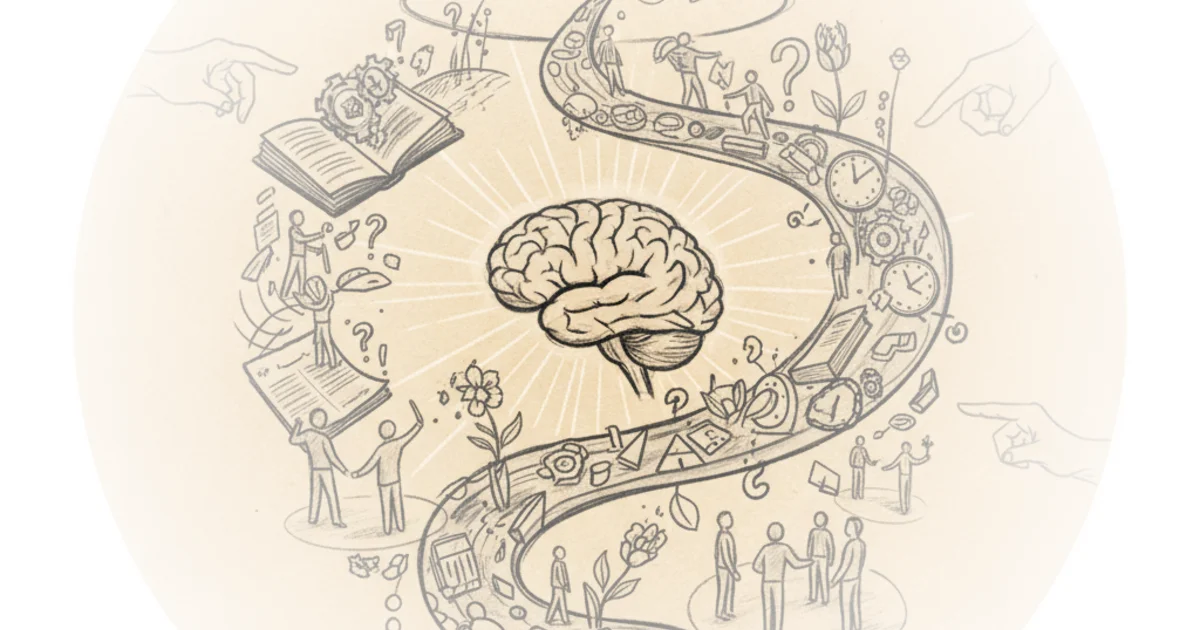
The core of Neibauer's argument is that the tension between pedagogical theory and administrative mandate is not a bug, but a feature of the current system. He notes that despite decades of research supporting student-centered learning, the "overemphasis on standardized testing, basal readers, and standardized curricula has caused severe harm to teachers and students." This framing is powerful because it shifts the blame from individual teacher failure to systemic design. However, critics might argue that without the pressure of standardized metrics, the system lacks the accountability needed to ensure equity for marginalized students. Neibauer anticipates this, pointing out that "standardized testing is still not improving student learning," yet the status quo persists.
"I would tell him to trust his gut and form those honest connections with students because, in the end, that is more important than any data point or assessment."
The Art of the Hack
As Neibauer moves from his early years to his twenty-fourth, the narrative shifts from resistance to a sophisticated form of subversion he calls "hacking." He describes a transition from hiding his methods behind a closed door to openly inviting administrators into the "messiness of the learning experience." When a colleague complains about noise, he explains, "We were just demonstrating the difference between planetary orbit versus revolution with our bodies." This is not merely defiance; it is a reclamation of professional autonomy.
He argues that educators must adopt a "hacker mindset" when faced with mandates they cannot change. "If I have to follow this boxed curriculum, how can I hack it to best meet the needs of my students?" he asks. This approach treats the infinite nature of education as a series of design levers—space, time, and rituals—that can be manipulated even within a rigid framework. This is a pragmatic, if exhausting, strategy. It acknowledges that while the system is an "infinite system," reform measures often treat it as "finite," creating a friction that only the most adaptable teachers can survive.
Hubris, Humility, and the Mentorship Loop
Perhaps the most nuanced section of the piece addresses the psychological toll of long-term dissent. Neibauer introduces the concept of "self-assured humility," a balance between knowing one's craft and admitting fallibility. He warns that experience can create "cognitive bias blind spots," leading to a dangerous arrogance. To counter this, he advocates for a two-way mentorship model, where veteran teachers learn from novices who possess "fresher" knowledge of pedagogical theory.
He cites a conversation with Joe Ferraro about having a younger teacher observe his class, noting that "newer teachers have a lot to offer us older veterans." This reciprocal learning is essential for preventing stagnation. Neibauer admits that even if he disagrees with a mandated basal reader, he can still "gain techniques in how best to have students annotate text." This willingness to extract value from the very systems he critiques demonstrates a maturity that goes beyond simple contrarianism. It suggests that the path to reform isn't just about rejecting the old, but about integrating the new with the wisdom of the past.
"The system isn't changing any time soon, so I need to find ways to hold onto a self-assured humility that keeps me engaged and steadfast in teaching against the tide."
Bottom Line
Neibauer's strongest argument is that the survival of meaningful education depends on teachers who can navigate the gap between policy and practice without losing their souls. The piece's vulnerability lies in its reliance on individual heroism; it offers no structural solution for the millions of teachers who lack the tenure or confidence to "hack" the system. Ultimately, this is a vital read for anyone who believes that education is a human endeavor, not a manufacturing process, and a stark reminder that the most effective resistance is often a quiet, persistent refusal to conform.