This piece cuts through the noise of daily political theater to expose a dangerous shift: the normalization of treating national institutions as a personal vanity project. Sarah Longwell, Tim Miller, and Bill Kristol argue that the administration's obsession with renaming landmarks and minting coins is not merely silly, but a calculated assault on the rule of law and historical truth. For the busy listener, this is a warning that the erosion of democratic norms often arrives disguised as ego-driven farce.
The Architecture of Ego
The authors begin by contrasting the administration's initial ambitions with its current behavior, suggesting a pivot from political conquest to historical revisionism. "President Donald Trump arrived back in the White House with Caesarian aspirations, eager to bring the power of the entire government under his personal control," they write, noting a shift toward "acting more like Caligula—spending more and more time on a series of empty gestures intended to spite his enemies and feed his own ego." This historical parallel is potent; just as the Roman emperor Caligula attempted to make his horse a consul, the current administration is attempting to rewrite the names of the Kennedy Center and the U.S. Institute of Peace to include the president's own name. The authors note that the Kennedy Center renaming is particularly striking because "the name of the Kennedy Center isn't supposed to be up to the president; it was established in U.S. law by act of Congress."
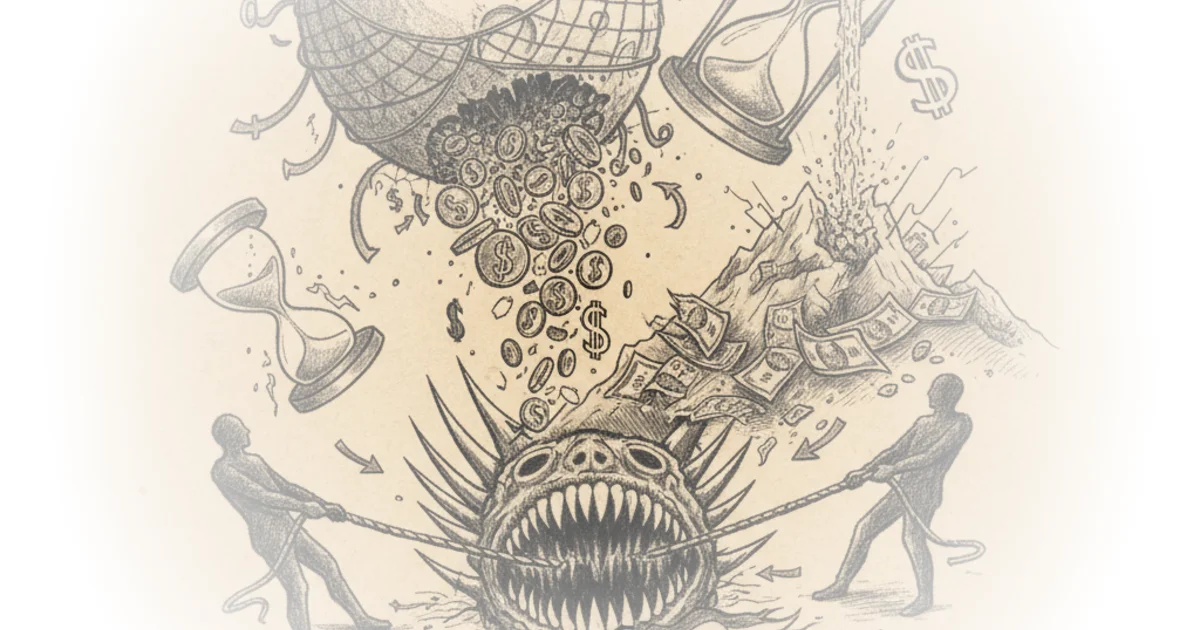
The commentary effectively highlights the danger of this "law-optional world." By simply updating websites and printing new playbills, the administration is testing the limits of its own authority. "What matters is that the White House controls the actual power in question," Longwell, Miller, and Kristol observe. "They can update the Kennedy Center website to read 'Trump-Kennedy Center.' They can put 'Trump-Kennedy Center' up in big letters on the building." This is a crucial distinction for the listener to grasp: the threat isn't just the name change, but the precedent that the executive branch can unilaterally override statutory law through sheer force of will. Critics might note that renaming a private institution's board-approved venue is less legally fraught than the authors suggest, but the symbolic message of executive supremacy remains the same.
The name of the Kennedy Center isn't supposed to be up to the president; it was established in U.S. law by act of Congress, but in the strange law-optional world into which Trump is trying to usher us, that simple fact—words in the U.S. code—isn't what matters.
The authors extend this critique to the proposed $1 coin featuring a living president, a move that would break a century-old precedent. They draw a sharp line between the Coinage Act of 1873, which standardized currency, and the current administration's desire to turn money into a campaign poster. "In true Roman fashion, they're scheming up plans to put him on a $1 coin next year," they write, framing the act not as a tribute but as a breach of democratic tradition. The argument holds weight because it connects these specific actions to a broader pattern of dismantling institutional guardrails.
The Epstein Reckoning
The piece then pivots to the release of the Jeffrey Epstein files, treating the event with a gravity that contrasts sharply with the earlier discussion of vanity projects. The authors note that while the files are being delivered to Congress, the legislative body has adjourned, creating a moment of symbolic silence. "This seems appropriate, in a way," they write, suggesting that the political establishment has long been "conspicuously uninterested" in the full scope of Epstein's crimes. The commentary argues that the delay is not just bureaucratic but reflects a deeper unwillingness to confront the "lifestyles, of the mores and morals" of the elite circle that enabled Epstein.
Longwell, Miller, and Kristol emphasize that the release of these files is a test of the administration's compliance with the law, but also a test of the nation's moral courage. "A real reckoning with Epstein would mean a real re-thinking of questions of gender, wealth, and power," they argue. This framing elevates the story from a scandal to a systemic critique of power dynamics. The authors quote journalist Julie Brown to underscore the human cost of the delay: "So while lawmakers will be celebrating their holidays early, Epstein's survivors won't be having a jolly time; they will be reliving the trauma of their abuse at the hands of a man the Justice Department should have put in prison decades ago." This quote is the emotional anchor of the section, reminding the listener that behind the political maneuvering are real victims.
The commentary also addresses the distraction of conspiracy theories, urging a focus on the documented facts. "Some of those are worth shunning," the authors concede, but insist that "there were conspiracies to cover up Epstein's deeds." This nuanced approach prevents the narrative from devolving into speculation while maintaining the urgency of the truth. The authors suggest that the release of the files is a necessary step toward a "civic revival," arguing that "none of those happens without a reckoning first."
The Bottom Line
The strongest part of this argument is its ability to connect the absurdity of renaming the moon to the seriousness of the Epstein files, revealing a common thread: the administration's tendency to prioritize personal narrative over institutional integrity. The authors successfully frame these events not as isolated incidents but as symptoms of a deeper crisis in governance. However, the piece's biggest vulnerability is its reliance on the assumption that the public will recognize these actions as dangerous rather than entertaining. The strongest takeaway is that the erosion of norms often begins with the trivial, and the only way to stop it is to treat the trivial with the gravity it deserves.
Real reckonings are uncomfortable. That's what it means to come to a reckoning. People say, correctly, that we need a political reformation, a civic revival, a moral awakening. None of those happens without a reckoning first.