Robert Reich reframes his decades-long political crusade not as a policy debate, but as a moral imperative born from the trauma of bullying—a lens that transforms economic inequality into a fight against structural predation. This piece is notable because it bypasses standard political analysis to reveal how personal history shaped a public philosophy, arguing that the failure to protect the weak has allowed a specific form of corporate tyranny to reshape American democracy.
The Anatomy of Bullying
The article's most striking move is its refusal to treat Reich's height as a mere biographical footnote or a source of self-deprecating humor. Instead, Robert Reich writes, "By the time I was a young man... I understood that bullying really is a metaphor for all sorts of abuses of power." He traces this realization back to the murder of Michael Schwerner, a childhood protector who became a civil rights martyr during Freedom Summer in 1964. The death of Schwerner at the hands of the Ku Klux Klan forced Reich to see that playground intimidation was merely a microcosm of a much larger, more lethal dynamic.
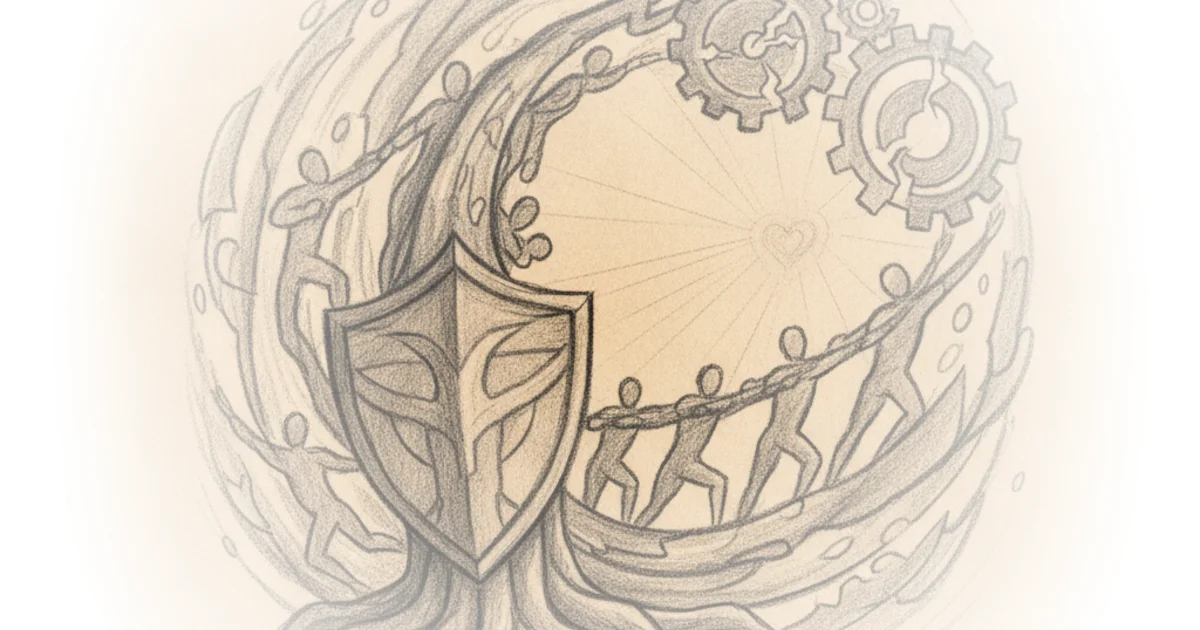
This connection is powerful because it grounds abstract economic theory in visceral human experience. Reich argues that his lifelong conviction stems from seeing how "bullies were everywhere," from gender relations to the legal system. He posits that the moral responsibility of society is singular: "to protect the weak from the strong." This framing effectively bypasses the dry technicalities of tax policy or labor law, replacing them with a narrative of survival and defense. However, one might argue that reducing complex geopolitical and economic shifts solely to "bullying" risks oversimplifying the systemic incentives that drive corporate behavior beyond mere malice.
Men bullying women, or white supremacists bullying black people and brown people, or employers bullying employees.
The Battle Within the Beltway
The narrative then pivots to Reich's time in government, specifically his clash with Treasury Secretary Robert Rubin during the Clinton administration. Here, Reich offers a candid assessment of why progressive goals were often sidelined. He recalls that while he argued for public investment in education and healthcare, "Bill was intimidated by Wall Street." The article highlights a poignant detail: Reich used his physical stature to his advantage, fitting into the jump seat of the presidential limousine to lobby privately, yet still lost out to Rubin's vision of deregulation.
Reich admits that this era represents a failure for American liberalism. He writes, "Since Reagan, American liberalism has failed to check the forces of Wall Street—and has too often been seduced by them." This is a harsh self-indictment from a former insider, suggesting that the Democratic party's attempt to court corporate donors alienated its working-class base. The piece notes that Reich views the rise of populist authoritarianism as a direct consequence of this abandonment, calling the current political climate a "dictatorship" forged by those who exploit fear.
Critics might point out that Reich's memoir downplays his own initial support for trade agreements like NAFTA to fit a cleaner narrative of consistent opposition. As co-founder Paul Starr noted, Reich was perhaps more aligned with neoliberal orthodoxy in the 1990s than he admits now. Yet, Reich counters that staying in the administration allowed him to mitigate damage, even if he couldn't publicly dissent at the time. He concedes only one major shift in his own understanding: realizing that "power that came from big money in our election system" was the missing factor driving inequality, not just globalization or technology.
I believe, but have no way of proving, that I am the oldest person to fastdance on TikTok.
A New Generation and a Fractured Party
In his later years, Reich has pivoted from the halls of power to digital platforms, using short-form video to reach a younger audience that might otherwise ignore policy wonks. The article captures this odd juxtaposition: a former cabinet secretary "fastdancing" on TikTok to explain why billionaires should pay more taxes. This strategy is born of necessity; as Reich notes, he wants students to stop "absorbing data to regurgitate on exams" and instead feel the emotional weight of economic disparity.
However, the piece also highlights a sobering reality: the bipartisan alliances that once existed have evaporated. Reich describes his friendship with conservative Alan Simpson as an "illicit affair," noting that such cross-aisle cooperation is now impossible because Republicans have been purged of anyone who does not personally support the current executive agenda. He asserts that the opposition party no longer has a purpose other than "rubberstamping" demands, leaving progressives to fight a lonely struggle against entrenched corporate power.
Unfortunately prescient.
Bottom Line
Robert Reich's argument is most compelling when it connects the personal trauma of childhood bullying to the structural violence of unchecked economic power, offering a moral clarity often missing from policy debates. Its greatest vulnerability lies in its retrospective certainty regarding his own political evolution, though his admission of being "unfortunately prescient" on inequality lends significant weight to his warnings. The reader should watch for how this generation of progressives attempts to translate Reich's emotional framing into concrete legislative victories before the window for reform closes entirely.