More Perfect Union exposes a harrowing disconnect between the rhetoric of political loyalty and the reality of federal disaster response in America's most impoverished regions. While national headlines fixate on political theater, this report documents a catastrophic failure in West Virginia where residents are left to rebuild from scratch while the very agency designed to help them faces dismantling.
The Myth of Institutional Support
The piece opens by dismantling the assumption that federal aid is a reliable safety net. More Perfect Union writes, "You absolutely have to beg people to pay attention... it's like look we're done, hey we're dead now." This framing is crucial because it shifts the narrative from a natural disaster to a crisis of visibility and prioritization. The report details how, even two weeks after the waters receded, residents in the southern coal fields found themselves sleeping in yards with no government assistance in sight.
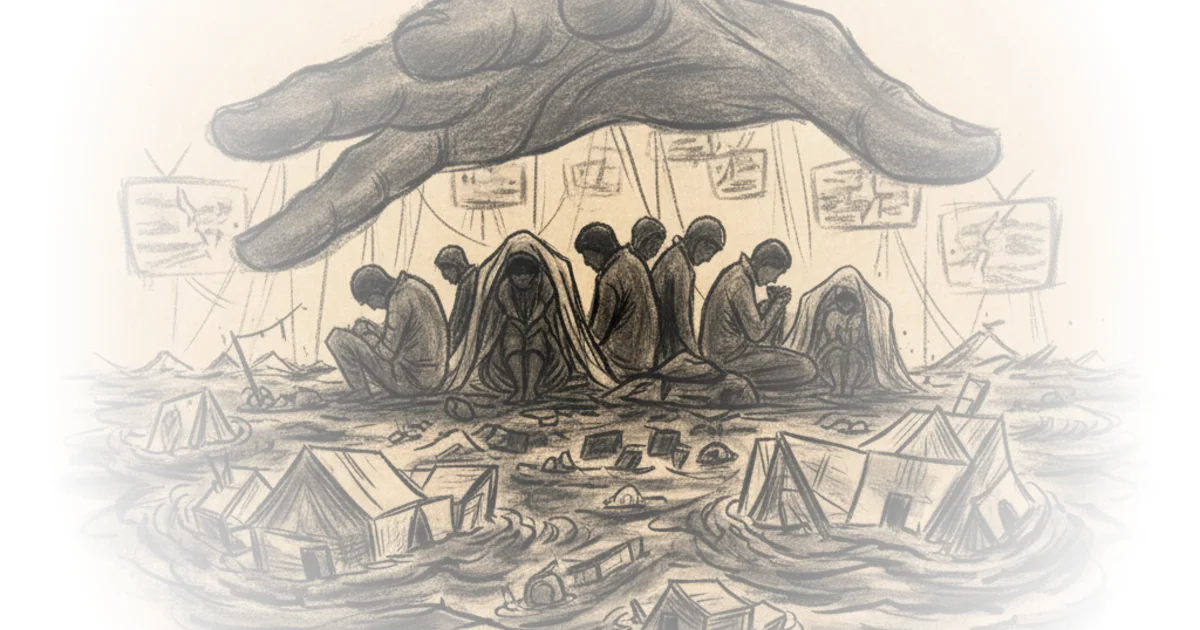
The coverage highlights a profound erosion of trust. As one resident puts it, "I don't expect to get anything from the government because they're never here... if we want something done you got to do it by yourself." More Perfect Union uses this testimony to argue that the distrust of government in these communities is not ideological but earned through decades of neglect. The evidence suggests that when the administration proposes getting rid of the Federal Emergency Management Agency (FEMA) or firing its staff, it is not just a policy debate but a direct threat to the survival of these towns.
"Neither side, Democrat or Republican, has ever come through for the people here."
Critics might argue that disaster response is inherently slow and that local governments often bear the brunt of immediate logistics. However, the report counters this by noting that the state of West Virginia itself has a $400 million deficit and a flood protection fund with zero funding, making the reliance on federal support not just preferred but essential.
The Political Paradox
The most striking element of the coverage is the tension between the region's political alignment and its treatment by the executive branch. More Perfect Union points out that this is a state that "showed up in a big way" for the administration, yet the response has been characterized by delay and limitation. The report notes that the disaster declaration was approved only after significant pressure and covers just four of the thirteen counties that requested assistance.
The argument here is that the administration's hostility toward FEMA creates a paradox where its most loyal supporters are the most vulnerable. As the piece observes, "If you completely burn the system down and turn it over to the states... those States cannot afford to help the people like they want to help them." This is a powerful critique of the "turn it over to the states" philosophy when applied to states with no fiscal capacity. The report suggests that the administration's ideological stance on cutting federal agencies is directly incompatible with the material needs of its voter base.
Community as the Only Safety Net
With formal channels failing, the spotlight shifts to the grassroots efforts filling the void. More Perfect Union documents how local organizations like Mata Outreach and individuals in U-Hauls have become the de facto emergency responders. "Yesterday we gave out our 8,000 cases of water... we've been doing on average 200 food bags a day," one volunteer reports. The narrative emphasizes that the resilience of these communities is born of necessity, not choice.
The coverage captures the emotional toll of this self-reliance. One resident notes, "We always look to us to each other because we do get forgotten... nobody is coming to save us but us." This sentiment underscores the tragedy of the situation: the "West Virginia way" of taking care of one another is being celebrated, but only because the state has failed to provide basic infrastructure and disaster relief.
"The billionaires they don't need a tax break... it's us small people that make America what it is that needs the help."
This section effectively reframes the disaster not just as a weather event, but as a symptom of broader economic extraction. The report reminds readers that these areas have historically been stripped of resources—timber, coal, and now, in the view of residents, their future.
Bottom Line
The strongest part of More Perfect Union's argument is its ability to connect the abstract policy of dismantling FEMA to the concrete reality of a family sleeping in a yard with no road to the hospital. Its biggest vulnerability is that it offers little hope for immediate political change, instead highlighting a deepening cynicism. Readers should watch for whether the limited federal aid eventually arrives or if the narrative of abandonment solidifies into a permanent reality for these communities.