This piece from The Walrus cuts through the diplomatic fog surrounding Canada's latest trade overtures to Beijing by asking a question most policy wonks are too polite to voice: Is Canada trading its future for a short-term fix? The article doesn't just analyze the numbers behind the deal to import 49,000 Chinese electric vehicles; it interrogates the very mindset of a nation that has forgotten how to build power in a world dominated by great powers. For a busy reader trying to grasp the stakes of the next decade, this conversation with writer Dan Wang offers a rare, unvarnished lens on why middle powers are losing their way.
The Lawyer and the Engineer
The Walrus anchors the entire discussion in a provocative framework popularized by Wang: the distinction between societies run by lawyers and those run by engineers. The author notes that while political science often relies on dry labels like "democratic" or "authoritarian," Wang's binary offers a more functional explanation for why the US and China act the way they do. "Political power in the US is dominated by lawyers, while, in China, it is largely held by engineers," the piece explains, suggesting this cultural divide drives everything from regulatory caution to rapid infrastructure build-out.
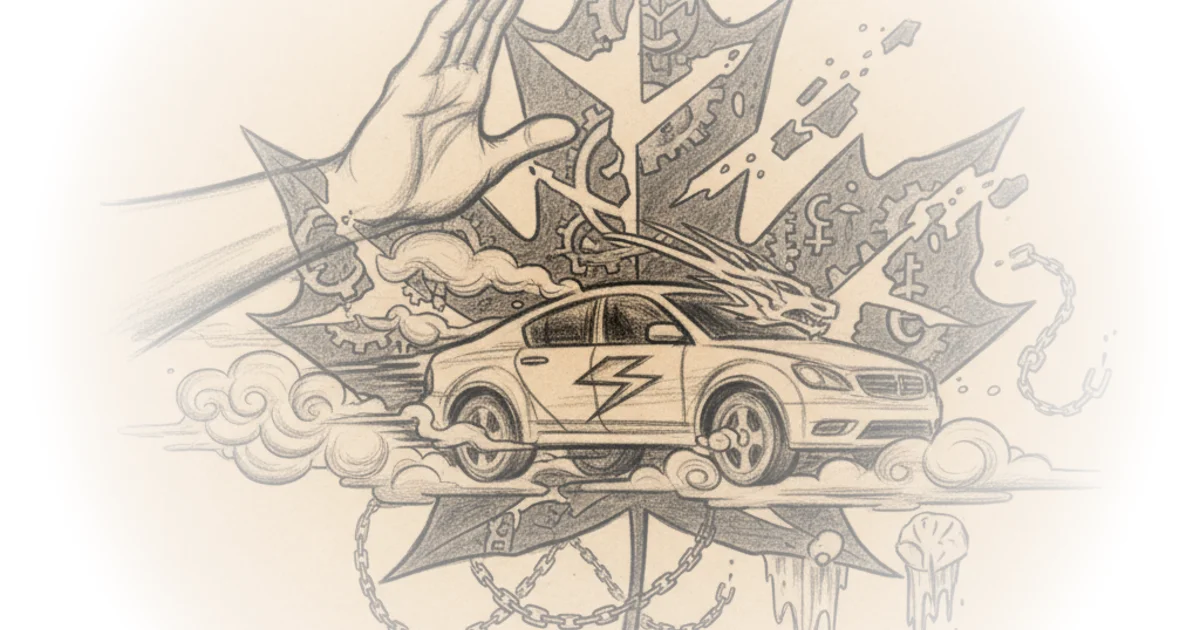
This framing is effective because it moves the conversation away from moralizing and toward mechanics. It forces the reader to consider that the clash isn't just about values, but about fundamentally different operating systems for national ambition. The Walrus writes, "In the wrong hands, China is a super boring subject because of how complicated everything is. I think we need to do better, because we need to understand this big place." By stripping away the jargon, the article makes the geopolitical stakes feel immediate and tangible.
However, the argument risks oversimplifying the nuance of Canadian governance. Critics might note that labeling Canada merely "reasonable" or "boring" ignores the complex, often aggressive industrial strategies employed by Ottawa in recent years, particularly in the tech and defense sectors. Yet, the core insight holds: Canada lacks the singular, driving industrial vision that characterizes its great-power rivals.
The Trap of Multipolarity
The commentary then pivots to the concept of "multipolarity," a term often used by Canadian diplomats to suggest a world where no single nation dictates the rules. The Walrus challenges this comforting narrative, quoting Wang's blunt assessment: "'Multipolarity' is more of a rhetorical term than anything that actually reflects real power in the world." The article points out that while the European Union looks like a giant on paper, it is often fragmented and easily pushed around by Washington and Beijing.
This is a crucial correction to the prevailing diplomatic optimism. The piece argues that true balance comes from raw power, not polite appeals. "The US and China are very powerful and are also willing to throw their weight around," the text observes, noting that the recent administration's aggressive moves abroad feel less like a new world order and more like "bullying." The Walrus effectively dismantles the idea that Canada can simply "band together" with other middle powers to create a counterweight without first building its own substantial economic and technological muscle.
Multipolarity is not the product of rhetorical appeal; it is the product of raw power.
The Commodities Trap
Perhaps the most stinging critique in the article concerns the nature of the trade deal itself. The Walrus highlights a stark imbalance: Canada exports commodities like canola and ore, while importing finished high-tech goods like electric vehicles. "When we took a look at the big headline—Canada is getting electric vehicles, and China is getting canola—you have to wonder, which is the developing country here, and which is the developed country?" the author asks.
This question strikes at the heart of Canada's economic anxiety. The piece suggests that by focusing on resource extraction and importing finished goods, Canada is locking itself into a role that feels like the past rather than the future. The Walrus contrasts this with the ambitions of its neighbors, noting that while the US and China are building the "electric age," Canada risks remaining dependent on the "age of hydrocarbons." The article also touches on the human cost of this stagnation, observing that Canada's best talent is leaving for higher salaries in California and New York because the country has failed to produce a comparable ecosystem of global brands.
The argument here is powerful but perhaps slightly harsh on the previous administration's social focus. A counterargument worth considering is that the emphasis on social issues and Indigenous rights was a necessary moral correction to a history of neglect, even if it came at the cost of short-term economic signaling. However, the Walrus insists that without a conception of national power and economic growth, social progress is fragile.
Bottom Line
The strongest part of this argument is its refusal to accept diplomatic platitudes, forcing readers to confront the uncomfortable reality that Canada's "reset" with China may be a symptom of a deeper lack of strategic direction. Its biggest vulnerability is the potential to underestimate the political difficulty of pivoting a resource-dependent economy toward high-tech manufacturing in a single election cycle. The reader should watch whether the current administration can translate this technocratic clarity into actual industrial policy that builds power, rather than just managing decline.