Casey Newton delivers a rare, unvarnished look inside the engine room of artificial intelligence, moving beyond the usual hype to dissect the specific mechanics of Google's new Gemini model. The piece's most striking revelation isn't just that the technology works, but that it represents a fundamental shift in how machines perceive the world—moving from processing text to understanding images, audio, and video simultaneously. For the busy professional, this isn't just a product update; it is a signal that the digital tools we rely on are about to become active partners rather than passive search engines.
The Multimodal Leap
Newton frames the launch not as a simple upgrade, but as a structural transformation in AI capability. The author notes that Gemini is "natively multimodal," meaning it can analyze the contents of a picture and answer questions about it, or create an image out of a text prompt. This distinction is crucial. While previous models struggled to connect the dots between a graph in a PDF and the text describing it, Gemini can reportedly identify a mistake in a student's math homework just by looking at a photo of the page. Newton writes, "The ability of AI systems to take different kinds of data (text, images, video, audio), analyze them using a single tool, and translate them in and out of various formats is the kind of foundational innovation that makes lots of other progress possible."
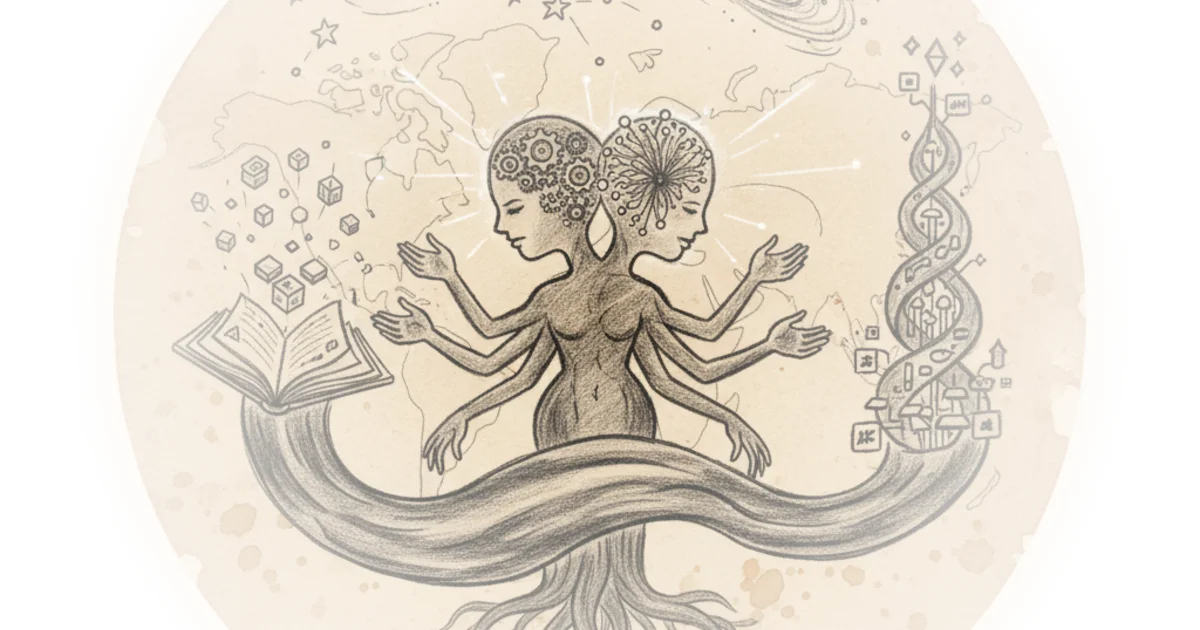
This framing is effective because it grounds the abstract concept of "intelligence" in a tangible, practical application: error correction and visual reasoning. However, one must be cautious about the benchmarks. The article highlights that the model "exceeds current state-of-the-art results on 30 of the 32 widely-used academic benchmarks," yet Newton acknowledges that competitive coding is "meaningfully different from day-to-day software engineering." Critics might note that excelling in controlled academic tests does not always translate to reliability in the messy, unstructured reality of enterprise workflows. Still, the trajectory is undeniable.
"Multimodal" can read like awkward jargon, but the term comes up constantly in conversation with Google executives.
The Race for the Crown
The commentary then pivots to the competitive landscape, where Newton carefully positions Gemini against its rivals without succumbing to tribalism. The author suggests that the "Pro" version is best seen as the company's answer to OpenAI's GPT-3.5, while the upcoming "Ultra" version is positioned as the top rival to GPT-4.5 Turbo. Newton observes that the Ultra model "won't be available next year so that Google can complete trust and safety testing," a move that signals a deliberate, albeit risky, attempt to prioritize stability over speed in a market that often rewards the former.
In an exclusive interview, Google CEO Sundar Pichai and DeepMind CEO Demis Hassabis discuss the future of this technology. When asked if the model will have capabilities beyond previous iterations, Hassabis states, "We're kind of in beta — to safety-check it, responsibility-check it, but also to see how else it can be fine-tuned." This admission of a "beta" status for a flagship product is significant. It suggests that even the architects of the system view the current release as a foundation rather than a finished product. Newton captures this tension well, noting that while the pace is "striking," the executives are aware of the need for "foresight... about the unintended consequences."
The Human Element and the Future of Work
Perhaps the most provocative section of the piece addresses the impact on the workforce. Newton asks Pichai directly if the company will hire fewer engineers given the model's ability to outperform 85 percent of humans in coding competitions. Pichai's response reframes the narrative from displacement to augmentation: "I really think of this as making programmers far more productive, and over time taking some of the grunt work out of the job." He argues that the bar will change, and "more people will be able to become programmers."
This is a compelling, if optimistic, take. Newton presents this as a shift in the "value proposition" of search and software development, where the technology becomes an "assistant for the user to help you with what you're doing." However, the counterargument is implicit in the speed of the rollout. If the technology can indeed parse scientific papers, interpret graphs, and write code at an expert level, the transition period for the workforce could be more turbulent than the "productivity boost" narrative suggests. As Hassabis puts it, "We're really close now to actual, practical, useful things in the real world, beyond just the games and stuff we used to do so well." The implication is that the era of AI as a novelty is over; the era of AI as infrastructure has begun.
"If I take a step back and say that the breakthroughs here may help us make progress against cancer more easily, I want it to move as fast as possible. Why wouldn't you?"
Bottom Line
Newton's coverage succeeds by stripping away the marketing veneer to reveal the genuine technical leap of Gemini, particularly its native ability to understand the world through multiple senses. The strongest part of the argument is the emphasis on "multimodality" as the key differentiator, not just raw processing power. The biggest vulnerability remains the uncertainty of how these capabilities will be governed once they permeate search, advertising, and enterprise tools. Readers should watch closely how the administration of these models evolves, as the gap between "safety-checking" and market demand will define the next year of the industry.