Sara Hildreth transforms a standard seasonal newsletter into a sharp meditation on how fame colonizes the self, arguing that two recent novels expose the quiet violence of celebrity culture and the male literary gaze. While the piece opens with a personal retreat to Maine, its true value lies in Hildreth's dissection of how we consume stories about famous people, revealing that the reader is often just as complicit in the exploitation as the author. This is not merely a book review; it is a critique of the mechanisms that turn human lives into commodities for our consumption.
The Architecture of Complicity
Hildreth begins her analysis with Julie Buntin's Famous Men, a novel she describes as "profoundly necessary" for its exploration of the grey space where admiration curdles into exploitation. The story follows Will, a young woman from a small town who becomes the off-the-books assistant to a renowned, aging poet named Nathaniel Fellows. Hildreth notes that while the premise might sound familiar, "the layers, the depth, and the context Buntin provides here turn this into something very special."
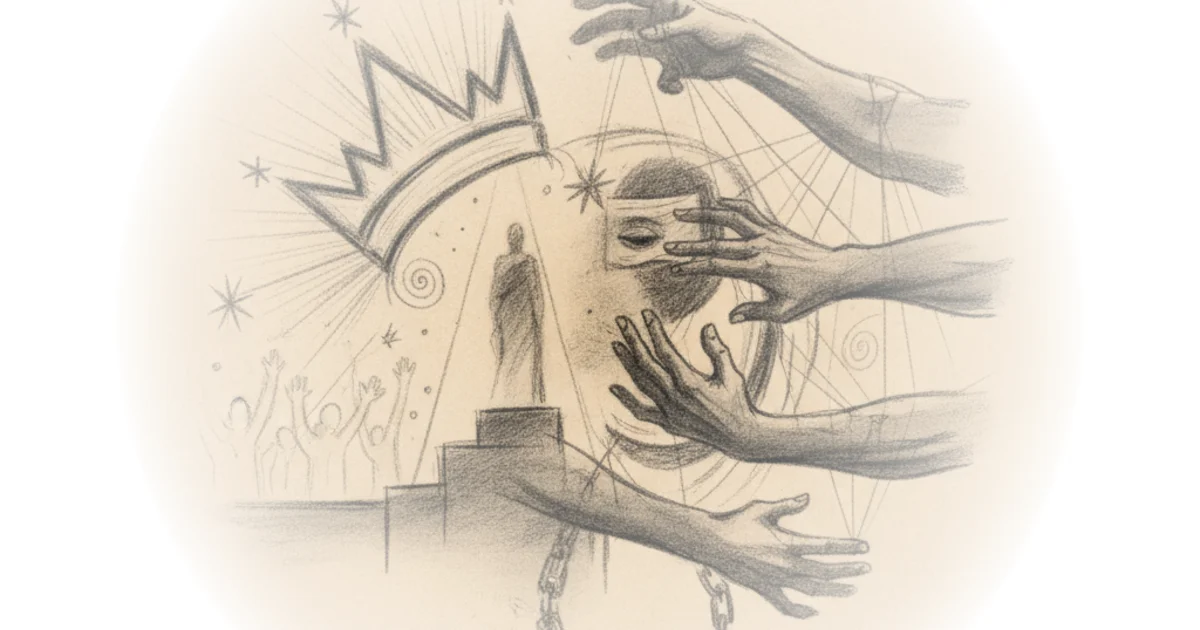
The author's insight is particularly potent when she discusses the structural forces that drive Will toward this toxic relationship. Hildreth writes, "She also builds out Will's world... so we see the way men, the male gaze, economic necessity, loneliness, on and on, have gone into forming her conception of herself." This framing is crucial because it refuses to treat Will's choices as simple errors of judgment, instead positioning them as inevitable outcomes of a culture that teaches women to seek validation through proximity to powerful men. The narrative echoes the themes found in companion deep dives on the male gaze, where the female subject is often reduced to an object of observation rather than a fully realized agent.
"The book also brilliantly examines the way male storytelling styles have colonized fiction broadly, and the way men can take up an undue portion of an individual woman's story."
Critics might argue that focusing so heavily on the "male gaze" risks oversimplifying the complex psychological dynamics of mentorship, but Hildreth's evidence suggests that the power imbalance is the central engine of the plot. The novel's brilliance, she contends, lies in its refusal to let the reader off the hook: "every small decision Will, or, more accurately Buntin, makes" is scrutinized to show how we are all implicated in these systems of complicity.
The Celebrity as an Idea
Shifting to Rachel Cusk's Life of M, Hildreth tackles a more abstract challenge: a novel where "nothing really happens" yet demands intense intellectual engagement. The book features an unnamed writer who meets a famous actress, M, who was thrust into the spotlight as a child in a role that was "much too mature, perhaps even provocative, for a child of eleven to be playing." Hildreth observes that the relationship between the narrator and M serves not to develop a plot, but to "explore the nature of identity and the power of art to shape reality."
The most provocative element of Hildreth's commentary is her analysis of the rumors surrounding the character's inspiration. She acknowledges the widespread speculation that M is based on Natalie Portman, noting that "there are enough details that echo the career trajectory of Portman that Cusk clearly knows people will make the connection." Rather than dismissing this as a marketing stunt, Hildreth argues that this ambiguity is a deliberate narrative strategy. "What this choice does do is force readers to become complicit in the construction of M/pseudo-Natalie," she writes. By inviting readers to fill in the blanks with their own knowledge of a real celebrity, Cusk implicates the audience in the very act of fame-making that the novel critiques.
This approach mirrors the historical context of The Custom of the Country (1913), where Edith Wharton similarly used the rising star of the era to dissect the commodification of women, though Cusk pushes the meta-fictional boundary further by blurring the line between fiction and reality. Hildreth is right to point out that "M remains an idea throughout the novel, sometimes frustratingly so even as M-the-idea serves a fascinating role in furthering the questions of identity Cusk wants to pose."
"We notice the similarities, we make the connections, we fill in what we know or have suspected or have heard about this celebrity. This active speculation brings the reader into Cusk's dialectic on fame and identity in an admittedly intriguing way."
However, Hildreth does not shy away from the book's flaws. She admits that the final sentence is "so baffling that it makes the entire book slightly less successful," leaving the reader with a sense of unresolved confusion. This critique adds necessary weight to her praise, suggesting that while Cusk is an "exceptional guide," the journey is not without its potholes. A counterargument worth considering is whether the frustration caused by the ending is intentional, a final act of resistance against the reader's desire for closure, but Hildreth's honest reaction resonates with the experience of many readers who feel shortchanged by the lack of resolution.
Bottom Line
Sara Hildreth's commentary succeeds by elevating book reviews into a broader cultural critique, demonstrating how literature can expose the hidden costs of fame and the gendered dynamics of storytelling. Her strongest argument is that readers are not passive consumers but active participants in the construction of celebrity, a realization that makes the reading experience uncomfortably self-reflective. The piece's only vulnerability is its occasional reliance on the reader's prior knowledge of specific literary debates, which may alienate those unfamiliar with the nuances of the "male gaze" or the specific history of MFA programs, but for the engaged reader, it offers a rich, necessary analysis of how we tell stories about power.