Jeremy Faust cuts through the noise of presidential health secrecy with a counterintuitive thesis: the public deserves total transparency, yet almost no diagnosis should automatically disqualify a leader. While the White House recently released a sanitized summary of "advanced imaging" results for the President, Faust argues that this "in-between" space of vague press releases fails the electorate. He posits that true fitness is not about the absence of disease, but the management of it—a distinction lost when we rely solely on a single doctor's yes-or-no verdict.
The Case for Radical Transparency
Faust challenges the conventional wisdom that a President must be medically pristine to serve. He writes, "The public should be given extensive access; that is, much more information than we currently receive." His argument rests on the idea that medical privacy is a luxury the Commander-in-Chief cannot afford, especially when the stakes involve the stability of the executive branch. Faust suggests that the current system, where the White House doctor acts as the sole gatekeeper, is flawed because that physician "could easily be fired for saying an unpopular thing."
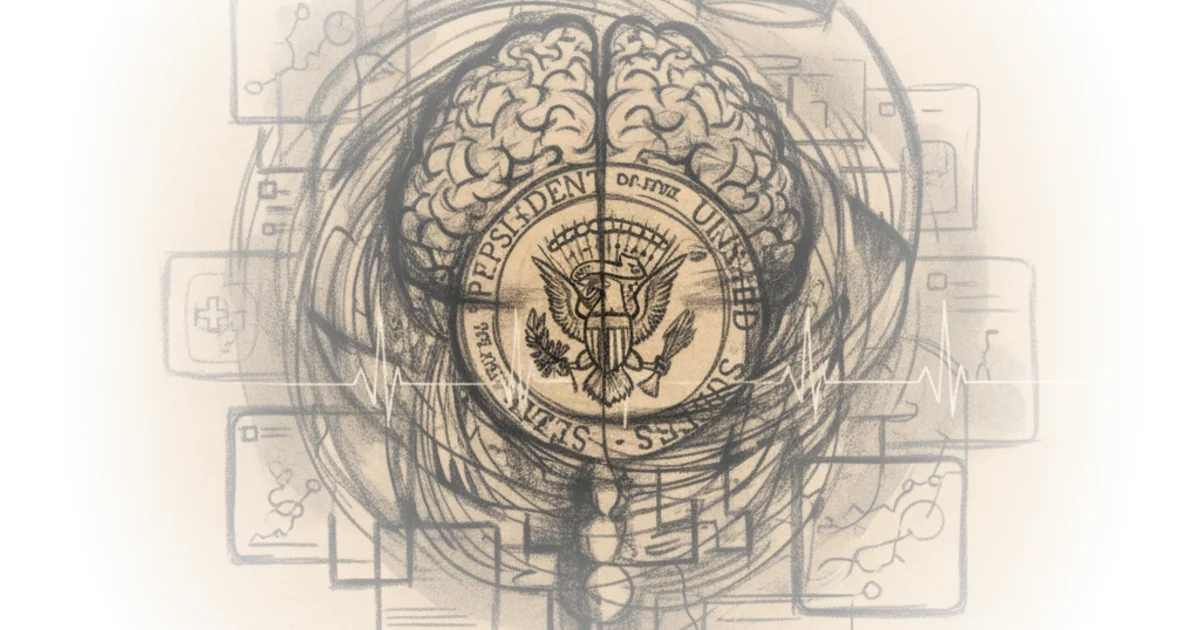
This framing is powerful because it shifts the burden from the patient's privacy to the public's right to know. However, it also ignores the practical chaos of releasing raw medical data, where laypeople might misinterpret benign findings as catastrophic failures. Faust anticipates this by arguing that we must normalize the reality of aging. He notes, "There are very few medical diagnoses that should preclude a President from serving." Instead of fearing a cancer diagnosis, he argues, the focus should be on "how severe the condition is, and how arduous the treatments are."
"If you agree to serve as President, you should also agree to opening your full medical records to us."
The author draws a sharp line between the name of a disease and its functional impact. He uses the late Senator John McCain as a historical anchor, noting that McCain served effectively for years after a cancer diagnosis until his condition deteriorated rapidly. Faust writes, "Until one day he started to sound delirious. Within a short period, we learned that he had terminal cancer." This example serves to illustrate that the warning signs of incapacity are often behavioral and observable, not just hidden in a lab report. Critics might argue that full transparency could lead to a paralysis of governance, where every minor ailment becomes a political weapon, but Faust insists that the alternative—guessing based on vague summaries—is worse.
The Reality of "Advanced Imaging"
Turning to the specific tests the President recently underwent, Faust dismantles the administration's claim that these scans are standard procedure. The White House doctor described the "advanced imaging" as routine for an executive physical, but Faust calls this "simply false." He explains that for an otherwise healthy adult, routine MRIs or CT scans are not recommended guidelines but rather examples of medical overuse. "Whether these were MRIs... or CT scans, doesn't matter," Faust writes. "Advanced imaging is not routine, even for 'executive physicals,' regardless of whether the physician meant 'Presidential' by invoking the term 'executive.'"
This is a crucial distinction for busy readers to grasp: the President may have undergone unnecessary procedures, wasting taxpayer dollars and potentially introducing risk without benefit. Faust triangulates the situation, suggesting a more likely scenario: the tests were a response to an incidental finding or a specific symptom, such as the venous insufficiency diagnosed earlier in the year. He notes, "Sometimes (often, even), during testing like the President received this summer, doctors notice some 'incidental findings'—that is, small abnormalities that likely amount to nothing, but should be monitored."
The author speculates that the administration's vague language—"all major organs appear very healthy"—is a deliberate strategy to avoid the stigma of admitting to a minor issue. "Perhaps the President's doctor instructed the radiologist not to evaluate everything in those scans," Faust muses, highlighting the debate over how much detail modern technology reveals versus what is clinically necessary. This touches on the concept of "incidental imaging findings," where better technology finds more problems that often require no treatment. By framing this as a human issue rather than a political scandal, Faust attempts to normalize the aging process. He argues, "If we are going to elect older people to be President, we should expect them to, well, be old."
"The reality is that nothing about this is normal. But that does not mean that something major is being covered up here."
Faust's analysis suggests that the President likely had a specific, non-emergency reason for the scans, but the administration chose to present the results as "perfectly normal" to avoid public panic or conspiracy theories. This approach, while perhaps politically expedient, fails to provide the context needed for the public to judge the President's long-term fitness. The author points out that the long campaign season acts as a de facto medical test, a period of stress that can reveal underlying issues. He notes that while President Biden passed a day-to-day fitness check, he "was apparently not quite fit to run for President without such an event occurring," suggesting that the grueling nature of the campaign itself is a diagnostic tool.
Bottom Line
Faust's strongest contribution is his refusal to conflate a medical diagnosis with political disqualification, urging a shift toward functional assessment rather than secrecy. However, his call for total transparency risks overwhelming the public with data they lack the training to interpret, potentially fueling the very misinformation he seeks to dispel. The most critical takeaway is that the President's recent tests likely revealed minor, age-related findings that were downplayed to avoid political fallout, a dynamic that will only become more pressing as the executive branch ages.