The Conversation That Changed How We Think About Work", > Mike Rowe has spent years documenting people who do jobs nobody notices — and what he's found challenges everything we think we know about work in America.
The Guest: Mike Rowe
Dan Carlin sits down with Mike Rowe, the host of Discovery Channel's Dirty Jobs. It's a show that has narrated roughly 100 million programs. His voice is unmistakable — one of those voices that just sounds born for broadcasting, though he works at it relentlessly.
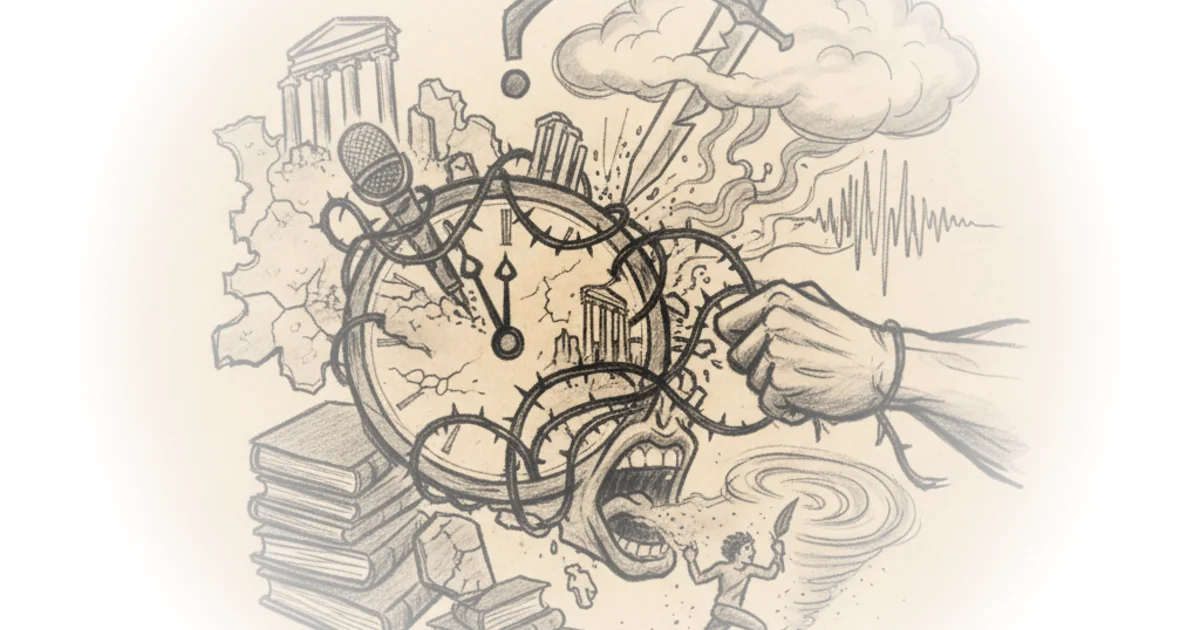
The conversation runs over two hours. No edits. No holds barred. They cover everything from the working class to politics to how media has changed.
What Dirty Jobs Teaches Us
Carlin explains what makes this conversation special: "Half the battle in choosing a Hardcore History topic is that the story is already good, and it's yours to screw up. But with Mike Rowe on the show, if the conversation isn't good, it's your fault."
What they found is striking. The working class — people who make the country operate — are in demand. Society needs more of them than we can supply. That's one side of the coin.
The other side: many people would benefit from going into these lines of work but don't realize how much they'd gain from it.
"In a healthy society, especially a healthy democratic republic like ours, making sure that particular class of people is healthy is part of keeping the ballast of your society where you need it," Carlin says. "It anchors society to some important roots. And if you lose that or it degrades, you're talking about damage at the roots, and then the tree can fall over."
The Political Permeation Problem
The conversation takes an unexpected turn into politics — not by design, but because that's where their discussion naturally goes. Carlin reflects on how everything has become political now.
"I feel like we've reached critical mass on a number of issues we've been talking about since I was starting on the radio in '92," Carlin says. "And I don't know how to roll with that."
He describes feeling like time has compressed — the rearview mirror isn't where we left it anymore. Everything is close. He quotes from the movie Everything Everywhere All at Once: the feeling of everything happening simultaneously, all at once.
"Politics is normally a segment of our society," Carlin continues. "And I feel like suddenly it's gotten woven through the fiber of any other subject we might talk about — in a way that you know back when we were kids, it was you don't talk about sex, religion, politics at the dinner table. And I just don't see... there's no escape anymore."
Rowe pushes back gently. "Everything you've said resonates." He notes it's super weird for him because he's actually a fan of Carlin's show — his podcast was literally the first podcast he listened to from start to finish, about ten years ago.
The Media Transformation
They discuss how media has transformed. Rowe recalls working at a tech company in the late 1990s and early 2000s when nobody could envision what the world would look like when we could all be broadcasters.
"We developed a common sense podcast growing out of my radio show as an example to show potential investors what this would sound like," Rowe says. "Because they literally couldn't envision it without an example."
Now they've reached what Carlin calls "guinea pig generation territory" — where children born in 2002 have iPhones and texting as reality, younger than their own age. And the pace of change keeps accelerating: from MySpace to Facebook to Instagram, all happening so fast that we haven't absorbed the last big shift before the next one arrives.
The Audience Question
The conversation turns to how audiences and influencers have merged in strange ways. "It's a sucker's bet," Carlin says, "trying to figure out your audience. On the one hand, it's so important to respect your audience and understand them. But the moment they sense that, then what are you doing? Are you performing for them? Are you telling them what you think they want to hear?"
Carlin describes feeling whipsawed — going back and forth between being a consumer of news, a quasi-reporter, a fan of current events, a curious private citizen, a guy with a podcast.
"It's just a phenomenally odd time to be in our line of work," he says.
Bottom Line
This conversation accomplishes something rare: it makes the case for why those invisible workers — the ones who keep America running — matter more than we've been willing to admit. The strongest thread is Rowe's observation that society undervalues both the work and the people who do it, while simultaneously needing them more than ever.
The vulnerability: their political tangles threaten to obscure the core argument about labor and class. Carlin gets lost in the weeds of current events when he reflects on time compression — but that's also where the conversation feels most alive.by society. The biggest vulnerability is the political tangents that threaten to overwhelm the core message about labor and class value. At two hours and twenty-two minutes, some listeners may wish they'd tightened further. But the substance here is exactly what needs more airtime: who keeps America running, and why we've stopped appreciating them.