This piece from The Pillar does something rare for a Tuesday newsletter: it refuses to let the noise of the moment drown out the silence of history. Instead of leading with the latest political explosion, the editors anchor the reader in the 13th-century life of Blessed Peter Gonzalez, a story of a nobleman who fell into the mud and found his soul, before pivoting to the very real, very modern friction between the executive branch and the Holy See. The result is a commentary that suggests the current political theater is merely a new act in an ancient drama of power, pride, and the cost of proximity to authority.
The Mud and the Mirror
The Pillar opens by inviting readers to consider the life of Blessed Peter Gonzalez, born into the Spanish nobility in 1190. The piece paints a vivid picture of a man destined for comfort: "Peter was well-educated, raised for leadership, taught horsemanship and swordplay and culture and languages." Yet, the editors note that his trajectory shifted not through a grand theological revelation, but through a moment of public humiliation. The narrative describes how Peter, riding a magnificent horse, stumbled and fell into the street muck, where "Peter's own people... laughed at him. Not one of them helped him up."
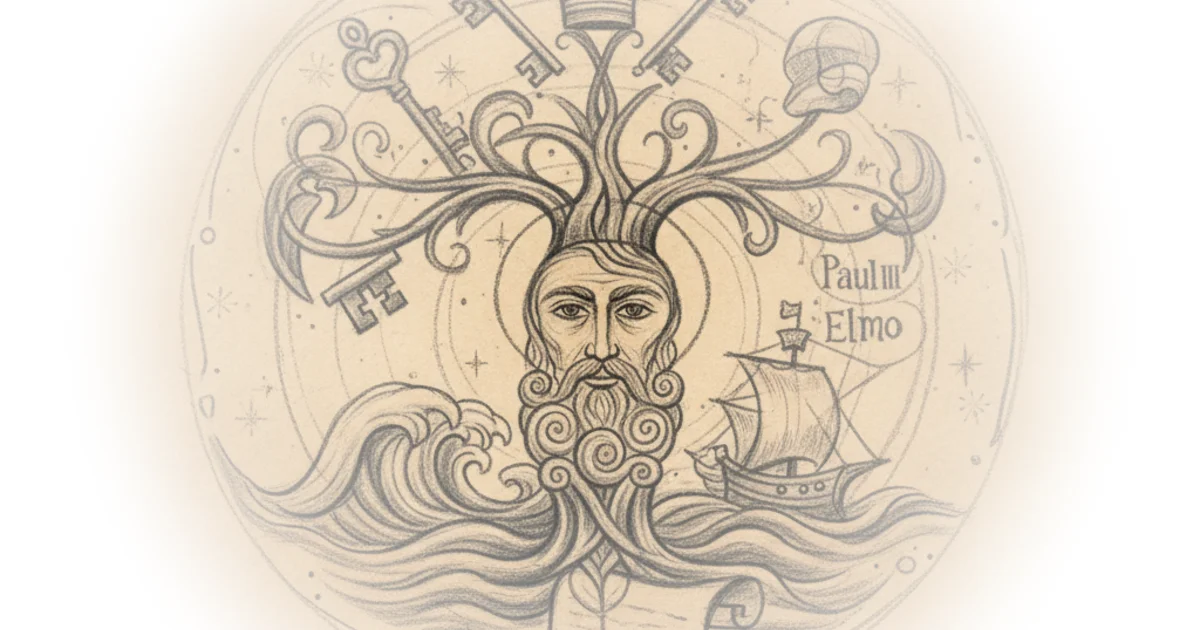
This anecdote serves as a powerful metaphor for the piece's broader argument about the fragility of status. The editors suggest that this fall was the catalyst for a profound conversion: "He was Peter freakin' Gonzalez, and he'd been laughed at like a fool. Somehow God worked through that." The commentary draws a parallel between Peter's rejection of his uncle's plan to secure him a "cushy cathedral" position and the modern temptation to cling to institutional power. The piece argues that Peter's decision to become a Dominican friar, despite his family's objections, was a radical act of humility. As the editors paraphrase his challenge to his kin: "If you love me... follow me!"
The historical context deepens this argument. The piece notes that Peter's uncle had "hung benefices around his neck," a reference to the practice of assigning church offices for revenue and status—a system that, as the related deep dive on the Benefice explains, often corrupted the spiritual mission of the clergy. By rejecting this path, Peter chose a life of "contemplative and missionary patterns" over the "ecclesial nobility" his family desired. The editors observe that even when Peter found himself back in the court of King Ferdinand III, he remained wary of the seduction of power. "Peter realized that his old sins — pride and vanity, especially — were creeping in," the piece notes, leading him to leave the court to become a "circuit rider" for sailors.
"He put a lot aside to follow Jesus Christ. And he was so appreciated by those sailors, they kept telling his story... On the docks and on ship decks, they called him their saint, long before he was beatified in the 1740s."
Critics might argue that drawing a direct line between a 13th-century saint and modern political dynamics is a stretch, but the piece uses the story not as a political allegory but as a moral mirror. The editors are clear that the lesson is about the individual's relationship with power, not a specific policy critique. The story of Peter serves to question the "trappings which go with it" of office, a theme that resonates as the piece shifts to the contemporary news.
The Avignon Shadow and the Chicago Fracture
The commentary then pivots to the immediate news, addressing the "fracas" surrounding Cardinal Christophe Pierre and the U.S. Pentagon. The Pillar reports on rumors that Pentagon officials referenced the "Avignon papacy" during a meeting, a historical allusion to the period when the papacy was under the influence of the French crown. The editors explain that understanding this reference requires "some solid historical basis on why popes went to Avignon in the first place," framing the incident as a potential veiled threat of coercion against the Holy See.
Simultaneously, the piece highlights a different kind of institutional tension in Chicago, where the Archdiocese and the public school district are locked in a dispute over federal special education funds. The editors describe the situation as a rupture of the "covenant at the heart of Catholic education," noting that up to 800 students with learning differences could face cutbacks in reading and math interventions. The piece presents the conflicting narratives: the Archdiocese claims "religious discrimination," while the school district alleges "administrative negligence" and warns that funds were spent too quickly.
The Pillar's stance here is firm on the moral imperative: "In other words, this is a mission-critical issue for the Archdiocese of Chicago, and one which it likely aims to resolve as quickly as possible." The editors argue that providing support for students with disabilities is "not optional or an add-on, it's a matter of justice." This framing elevates the dispute from a bureaucratic squabble to a fundamental question of the Church's mission. The piece suggests that the outcome in Chicago will be a test of whether the Church can maintain its educational integrity when federal support is withdrawn.
The New Patriarch and the Old Patterns
Amidst the political and educational turmoil, the piece offers news of a significant ecclesiastical transition: the election of Archbishop Emil Nona as the new Patriarch of Baghdad, taking the name Paul III. The Pillar describes Nona as a man who "lost his archdiocese" when ISIS took Mosul in 2014, forcing him into exile in Australia. The editors highlight his resilience and his role in leading the Chaldean diaspora, noting that his election comes after a "tumultuous period" under his predecessor, Cardinal Louis Sako, which involved a financial scandal.
The piece captures the sentiment of the Chaldean community with a quote from a senior cleric: "It's like we woke up, and the entire Church had changed." This election is presented as a moment of hope and renewal for a community that has faced immense suffering. The editors note that Nona's leadership will be tested by the need to address the "financial and moral scandal" of the previous administration while navigating the complex geopolitical landscape of Iraq and Iran.
The Executive Branch and the Pontiff
Finally, the commentary addresses the most volatile topic: the public friction between the administration and Pope Leo. The Pillar reports on the President's social media attack on the pontiff, describing it as a "tweetstorm" where the President called the Pope "soft on crime" and claimed credit for his election. The editors characterize this behavior as consistent with the President's style: "This is the guy people picked to be the president."
The piece goes further, analyzing an AI-generated image posted by the President that depicted him as a divine healer. The editors describe the image as a "Trumpish bit of blasphemy," featuring a "Jesus/Trump mashup" with a bald eagle and F-35s. The commentary notes that the President later claimed he thought the image depicted him as a doctor, a defense the editors find unconvincing. The piece draws a parallel to the cult of personality seen in other regimes, suggesting that the President's behavior is driven by a need for self-aggrandizement rather than strategic political calculation.
"Trump is gonna Trump. You can no more expect otherwise than you can expect Italians to queue up politely and orderly for Holy Communion."
The editors argue that this behavior is unlikely to change the President's base, as voters have decided the "benefits of the president outweigh his peculiarities." Instead, the piece suggests that the more interesting political dynamic is the position of Vice President JD Vance, who must navigate the fallout of these public clashes. The commentary concludes that while the President's actions are predictable, the long-term impact on the relationship between the executive branch and the Church remains uncertain.
Bottom Line
The Pillar's strongest move is its refusal to treat the political conflict as an isolated event, instead framing it within a centuries-long struggle between spiritual authority and temporal power. The article's vulnerability lies in its somewhat dismissive treatment of the President's supporters, assuming their loyalty is unshakeable without fully exploring the nuances of their political calculus. However, the piece succeeds in reminding readers that the stakes of these conflicts are not just political, but deeply human, echoing the ancient lesson of the man who fell in the mud and found his way back to the light.