This piece cuts through the noise of parenting advice to reveal a startling biological reality: becoming a father physically rewires the male brain in ways that mirror maternal changes. Two Truths moves beyond anecdotal stereotypes to present evidence that the transition to parenthood is not just a social role shift, but a profound neurobiological event requiring its own scientific framework and policy support.
The Biology of Patrescence
The core argument rests on the work of Darby Saxbe, a neuroscientist whose research challenges the notion that fatherhood is merely a behavioral adjustment. Two Truths reports that Saxbe's findings show men undergo "real brain changes in fatherhood—many of them surprisingly similar to what women experience." This is a critical distinction because it validates the intensity of the paternal experience without diminishing the maternal one. The piece effectively reframes the conversation from "helping dads help moms" to recognizing that fathers are undergoing their own distinct, yet parallel, developmental crisis.
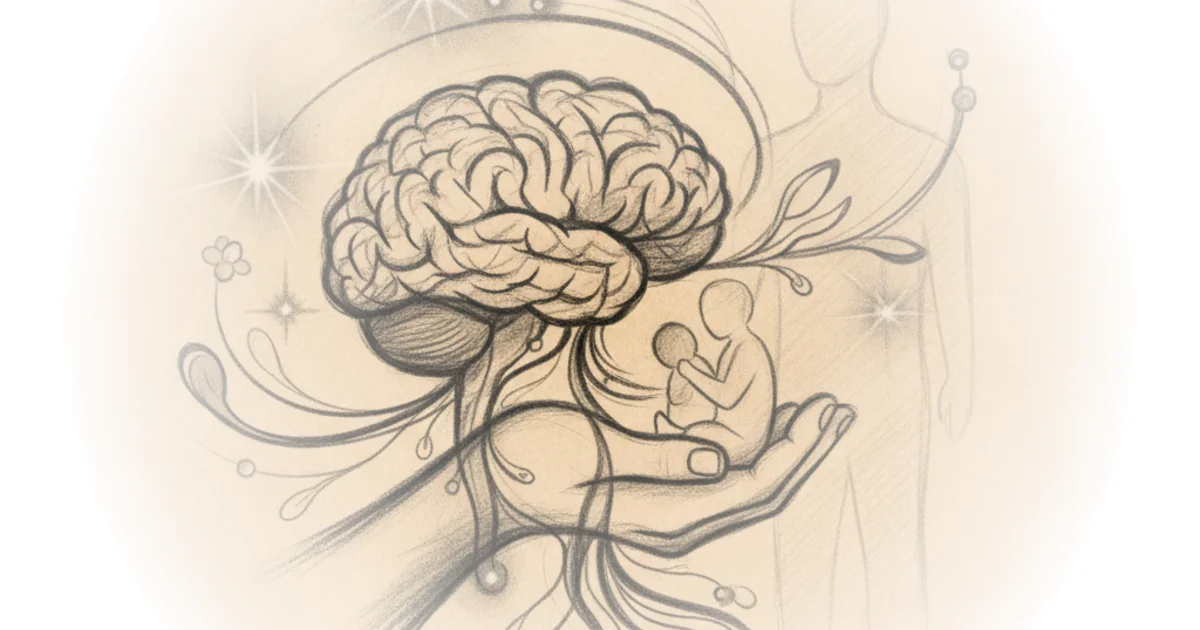
Saxbe notes that this biological shift is complicated by a lack of cultural models for modern fatherhood. She explains that while "Millennial men... are doing between triple and quadruple the amount of hours devoted to childcare compared to their fathers," many lack the generational blueprint for how to be a hands-on parent. This creates a unique psychological pressure where men must invent new frameworks without guidance. The article wisely connects this to the concept of "patrescence," arguing that just as we recognize the transformative period of motherhood, we must acknowledge the upheaval in male identity.
If we really want men to step up as parents, if we really want them to go through the highs and lows of parenthood as primary or key caregivers, that's going to come with all the challenges that moms have long faced.
This perspective is bolstered by historical context. Just as the understanding of oxytocin's role in bonding has evolved over decades, shifting from a purely maternal hormone to one that facilitates paternal attachment, our societal structures are lagging behind biological reality. The piece suggests that without policy interventions like paid leave, we are asking men to navigate these intense neural changes in isolation.
The Policy Gap and Male Mental Health
The commentary shifts sharply to the systemic failures that exacerbate this biological transition. Two Truths highlights a disturbing trend where male postpartum depression often manifests not as sadness, but as "a hyperfocus on work" or withdrawal from the family unit. This reframing is essential for early detection, yet it reveals a deeper issue: men are often socialized to view financial provision as their primary contribution, leading them to retreat into work when feeling overwhelmed.
The article argues that the current infrastructure of support is exclusively designed for mothers. Saxbe points out that "Mothers plug into a larger infrastructure that's been built for them—breastfeeding support groups, mommy-and-me yoga, parenting classes," while dads feel like outsiders. This creates a feedback loop where fathers lack community, increasing their isolation and risk for mental health crises.
Critics might argue that focusing on male struggles risks diverting attention from the historically underfunded and critical needs of mothers. However, the piece counters this by asserting that "mental health is interdependent within families." Ignoring the father's mental state ultimately undermines the entire family unit's stability. The argument gains weight when considering the historical lack of paternal leave policies; without dedicated time off, fathers cannot bond effectively or build the support networks Saxbe deems vital.
Breaking Down Barriers to Connection
A significant portion of the discussion addresses the friction between parents, specifically the phenomenon of "maternal gatekeeping." Two Truths presents a nuanced view where mothers, driven by intense biological bonds and anxiety, may unconsciously exclude fathers from early care tasks. Saxbe explains that while this is understandable given the mother's physical experience, "to whatever extent we consciously or unconsciously put up those barriers, we're ultimately hurting our own ability to rest and recover."
The piece suggests that welcoming men into the care space benefits everyone: it strengthens the father-child bond, provides mothers with necessary respite, and exposes the infant to a diversity of caregiving styles. This is particularly relevant when considering the evolution of parental leave policies. Just as early advocates fought for maternity leave, Saxbe argues for "real paternity leave policies" that are specifically earmarked for fathers to destigmatize their absence from the workforce.
We don't have the community support and kin networks we evolved to have, so there's a lot of pressure on the nuclear family and the dad.
The article effectively posits that the solution lies in changing the language and policy surrounding parenthood. By shifting from "maternity" to "parental" health and leave, society can signal that caregiving is a universal human function rather than a gendered one. This cultural shift is necessary to support the neurobiological reality that fatherhood changes men just as deeply as it changes women.
Bottom Line
Two Truths delivers a compelling case that the science of fatherhood has caught up with our biology, but our culture and policies have not. The strongest element of this coverage is its insistence that supporting fathers is not a zero-sum game against mothers, but a prerequisite for family stability. Its biggest vulnerability lies in the sheer difficulty of dismantling deep-seated gender norms; while the science is clear, the political will to fund dedicated paternal support systems remains uncertain.