Rana Ayyub transforms a personal pilgrimage into a searing indictment of global Muslim alienation, revealing how the world's holiest site has become a mirror for political fractures rather than a sanctuary from them. While the piece chronicles a solo journey to Mecca and Medina, its true power lies in exposing the quiet, pervasive fear that silences solidarity across national borders.
The Architecture of Silence
Ayyub begins by dismantling the assumption that faith alone guarantees access or safety. She recounts how travel agencies immediately recoiled at her request to travel alone, with one stating point blank: "We do not make arrangements for single women." This bureaucratic hurdle sets the stage for a deeper exploration of how gender and nationality dictate one's experience of the divine. As she navigates the crowds, she finds that the shared ritual of Umrah often masks a profound political isolation. When she asks her guide, Asif, about protests for Palestine, the response is immediate and telling: "Sister, I know you are a journalist but I would request to not probe around here... Saudi is not the place for protests."
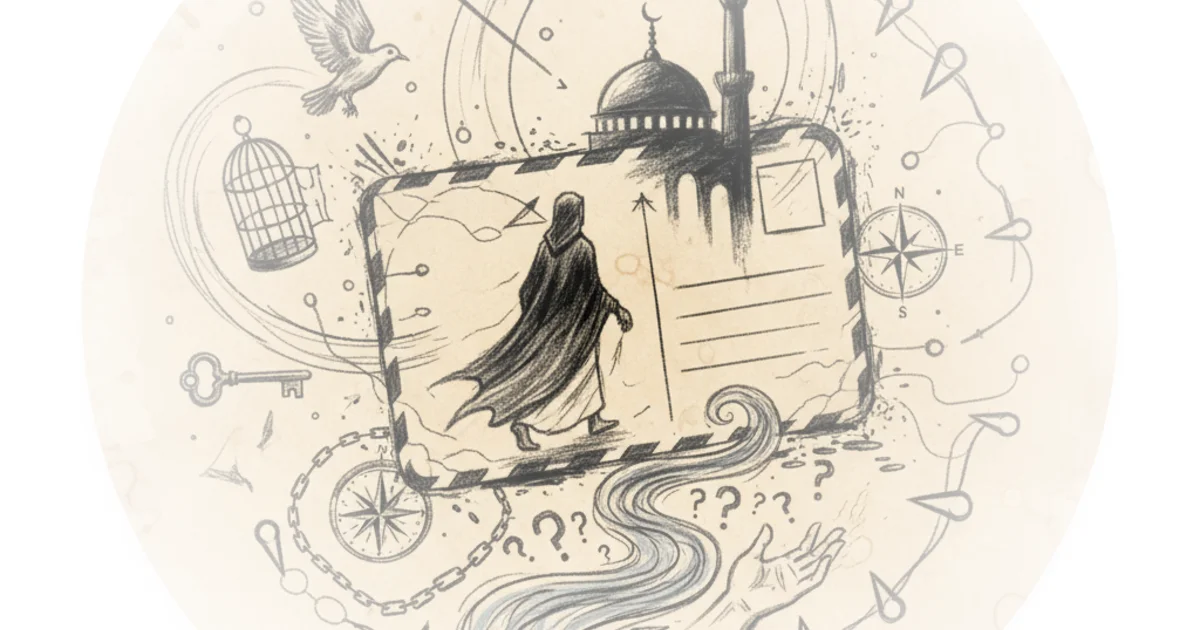
This moment is crucial. Ayyub captures the tension between the spiritual ideal of the Ummah and the geopolitical reality of surveillance and control. The pilgrimage is not just a religious act but a performance of compliance. Critics might argue that focusing on the suppression of dissent in Mecca overlooks the genuine spiritual devotion of the millions present, yet Ayyub's framing suggests that the two are inextricably linked; the silence is part of the experience.
"We Muslims are scared of tyrants, we are not scared of Allah."
This observation from an Algerian woman in Mecca serves as the piece's emotional anchor. Ayyub uses this encounter to pivot from the physical journey to a critique of the Muslim world's collective failure to act. The argument is that the fear of political repercussions has eroded the moral courage required to stand with the oppressed. The evidence is anecdotal but potent, drawn from the raw, unguarded moments between strangers in a crowded hotel lobby.
The Global Shadow of Persecution
The narrative widens as Ayyub moves from the holy sites to the human cost of rising nationalism. She encounters a Rohingya server, Rashid, who works double shifts while his family languishes in a relief camp in Bangladesh. Rashid's plight highlights the hypocrisy of regional powers; he notes that "India, a neighbouring country he had great regards for is treating the Rohingyas like terrorists and sending them to detention camps." Ayyub connects this personal tragedy to the broader policy of the Indian government, specifically the Citizenship Act which excludes Muslims from protection.
The piece also touches on the surveillance of Chinese Muslims. When Ayyub speaks to a Chinese couple, their hesitation is palpable. "Your first time?" the husband asks, before carefully steering the conversation away from the persecution of Uighurs. Ayyub notes that reports have documented how Chinese Muslims are surveilled even when attempting to travel to Mecca. This section underscores a global trend: the state's reach extends even into the most sacred spaces, turning a journey of faith into a test of loyalty to the nation-state.
The juxtaposition of the glitzy malls and the suffering of the faithful is stark. Ayyub writes, "Look for faith and resilience. I know It is easy to feel the anger over destruction of humans, environment, when you witness the luxury, the abundance, the companies with blood on their hands." This quote, shared by a friend in Germany, frames the pilgrimage not as an escape from the world's pain, but as a confrontation with it. The luxury of the holy cities, built on the labor of migrant workers and funded by oil wealth, stands in sharp contrast to the desperation of the pilgrims themselves.
The Exile of the Prophet
As Ayyub travels to Medina, the narrative shifts to the historical resonance of exile. She reflects on the Prophet Muhammad's migration to Medina, noting that he was "persecuted by his own people who attacked him for preaching God's word." This historical parallel is used to make sense of the modern Muslim experience of alienation. Ayyub, who grew up as an outcast due to her physical disabilities and communal violence, finds a personal connection to this narrative of persecution.
The piece concludes with a sense of acute isolation, exacerbated by the political climate in India. As she prepares to leave, she notes that her city, Mumbai, was "dressing up in saffron" for the inauguration of a temple built over a demolished mosque. The timing is not coincidental; it serves as a reminder that the political tensions of the home country follow the pilgrim even to the edge of the world. The administration's policies and the rise of majoritarian nationalism are not distant abstractions but immediate, personal threats.
Bottom Line
Ayyub's greatest strength is her ability to weave the intimate details of a solo pilgrimage with a sweeping critique of global Muslim politics, proving that faith cannot insulate one from the machinery of state power. The piece's vulnerability lies in its reliance on isolated encounters to represent a vast, complex geopolitical landscape, yet these moments of human connection provide a clarity that broad statistics often miss. Readers should watch for how the intersection of religious tourism and state surveillance continues to reshape the experience of faith in the 21st century.