Andrew Henry dismantles the most persistent myth about Iceland: that its belief in elves is a quaint, unbroken relic of ancient paganism. Instead, he reveals a far more complex history where the "hidden people" were once godlike figures, then Christianized neighbors, and finally rebranded by the tourism industry into the whimsical sprites we know today. This is not just folklore trivia; it is a masterclass in how modern culture consumes and distorts ancient belief systems to fit a marketable narrative.
From Gods to Sprites
Henry begins by challenging the assumption that Icelandic elves have always been the small, mischievous creatures of modern imagination. He traces the term Alvar back to medieval texts where they held a stature far greater than mere nature spirits. "In the Edic poems, the Olivar occasionally appear alongside the icier in stock formulas, which refers to the primary group of Norse gods," Henry notes, highlighting a linguistic pairing that suggests divine status. This evidence is crucial because it upends the popular view of elves as minor, folkloric annoyances; they were once beings worthy of blood sacrifice and named in the same breath as the primary pantheon.
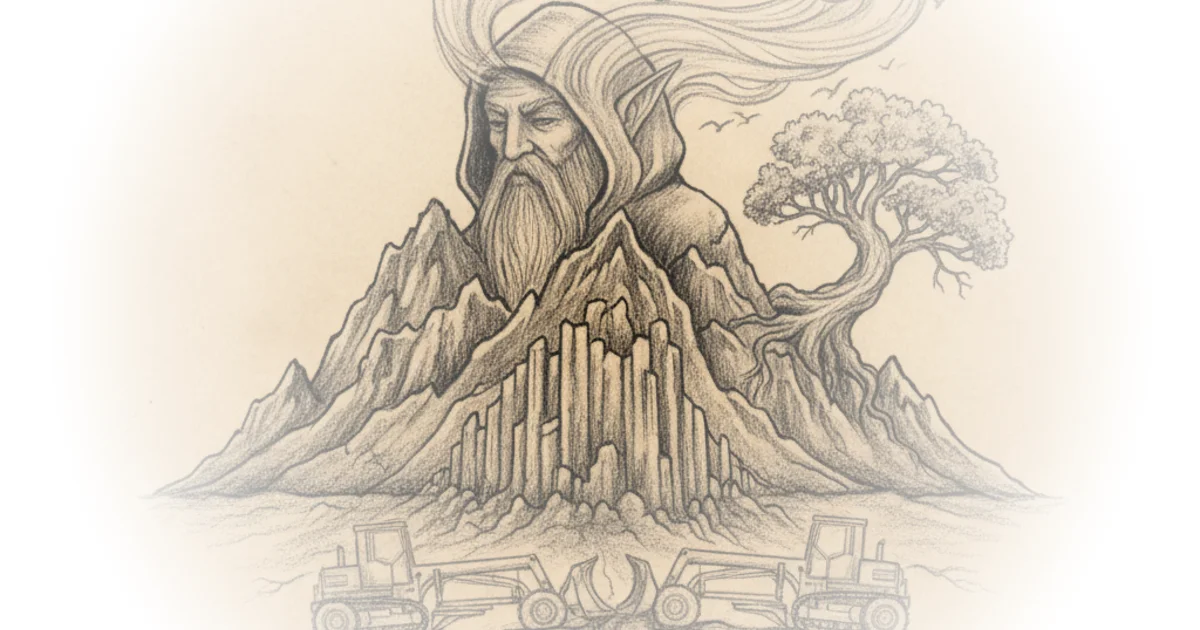
The author argues that this fluidity is often misunderstood by modern readers who expect a single, coherent mythology. "We should not assume that every old Norse poet imagined the Alvar in the same way," Henry writes, drawing a parallel to the varying theological perspectives found in the Gospels of Mark and Matthew. This is a sophisticated move that prevents the oversimplification of pre-Christian religion. However, critics might note that relying on poetic formulas to define theological hierarchy can be tricky, as poetry often employs stock phrases for meter rather than doctrinal precision. Despite this, the core point stands: the ancient elf was a powerful, ambiguous entity, not a Tinkerbell.
The term itself is a grammatically male word in sagas about kings remember certain rulers who after death were revered under the title of elf.
By the later Middle Ages, Henry explains, the concept shifted dramatically. Influenced by French romance literature and Christian theology, these powerful beings were demoted to "uncanny spirits that intrude on everyday life." He points out that origin stories emerged to reconcile these spirits with Christianity, such as the tale of Eve hiding her children out of shame, which transformed them into the "hidden people" living in parallel societies. This transition from god to neighbor is fascinating, but it also highlights how belief systems adapt to survive religious dominance. The elves didn't vanish; they just moved into the rocks and stopped receiving sacrifices.
The Invention of the Tourist Elf
The most striking part of Henry's analysis is his demonstration that the global obsession with Icelandic elves is a relatively recent invention. He contrasts 19th-century travel writers, who barely mentioned the creatures, with the modern tourism boom. "Earlier travelers hardly mentioned them at all," Henry observes, citing the German tourist Bernard Collie, who dismissed elf belief as a "defunct superstition of the past." This historical gap is the smoking gun that proves the current fascination is manufactured.
Henry identifies the turning point as the rise of the New Age movement and the work of figures like Stephenter, an "elf specialist" who sold maps of elf dwellings to tourists. "She acted as a kind of spiritual entrepreneur, mediating between folk tradition, global new age ideas and the tourist economy," he writes. This reframing of the hidden people as a spiritual ecology tied to the environment was a perfect fit for the modern tourist seeking authentic, mystical experiences. The author effectively argues that the "tourist elf" is a hybrid figure, blending Victorian fairy paintings, Lord of the Rings aesthetics, and local folklore.
Her illustrations of elves are also revealing, showing influence from Victorian fairy painting, and pop culture like Lord of the Rings and Disney.
This section exposes a feedback loop where pop culture imagery has looped back into Iceland itself, changing how locals perceive their own traditions. Henry notes that people increasingly imagine the hidden people as characters that look "suspiciously like Legolos or Tinkerbell" rather than invisible farmers. While this is a compelling critique of cultural commodification, one might argue that the author underplays the genuine, persistent belief that still exists among Icelanders, as evidenced by the national surveys he mentions later. The surveys show that a significant portion of the population still considers the existence of hidden people "probable" or "certain," suggesting the belief is not entirely a tourist construct.
The Taxonomic Trap
Henry also critiques the 19th-century folklorists who tried to impose a scientific taxonomy on these fluid beliefs. "The medieval owlar were reimagined as a specific category of being," he explains, noting that this was influenced by the rise of scientists creating species classifications. This rigid categorization paved the way for J.R.R. Tolkien to create his own distinct race of elves, which Henry argues was a conscious attempt to restore a "true mythological aura" that had been degraded by the tiny sprites of popular culture.
His creation of an elevated almost angelic race was a conscious attempt to restore what he saw as the true mythological aura of the elf.
This insight into Tolkien's motivation adds a layer of irony: the modern fantasy elf is actually a scholarly reconstruction that is more rigid than the original, fluid medieval concept. Henry's analysis suggests that our current understanding of elves is a patchwork of medieval poetry, Christian apologetics, 19th-century taxonomy, and 20th-century marketing. It is a testament to the author's skill that he weaves these disparate threads into a coherent narrative about how we construct meaning.
Bottom Line
Andrew Henry's most powerful argument is that the "Icelandic elf" is a mirror reflecting the desires of the observer rather than a static artifact of the past. The piece's greatest strength is its historical depth, tracing the evolution from godlike beings to tourist attractions with clear evidence. Its only vulnerability is the potential to overstate the role of tourism in erasing genuine local belief, though the data on modern belief rates suggests a complex coexistence. Readers should watch for how this pattern of "curated mystique" repeats in other cultures, where ancient traditions are repackaged for global consumption.