This piece delivers a chilling, first-hand account of a legal limbo that exists at the edge of American sovereignty: the moment an American citizen is detained by border agents with no explanation, no lawyer, and no timeline. Reason reports a reality that defies the standard narrative of border security, revealing a system where the Fifth Amendment's protections seem to evaporate the moment you cross the threshold of an airport. For the busy professional who assumes their citizenship is an absolute shield, the article's central claim—that you can be held for hours in a "strange mix of professional courtesy and casual cruelty" without knowing why—is a necessary and disturbing wake-up call.
The Administrative Loophole
The core of the argument rests on a terrifying legal distinction: the classification of border stops as "administrative functions" rather than criminal investigations. Reason explains that under this framework, agents claim the authority to bypass standard due process. The piece quotes a Customs and Border Protection (CBP) spokesman, Stephen Sapp, who states, "Since the international arrivals inspection is an administrative function, CBP policy and federal regs do not permit the presence of lawyers during secondary examinations." This distinction is the linchpin of the entire detention strategy. It creates a zone where the government can ask intrusive questions about your family, your work, and your associations without the right to counsel.
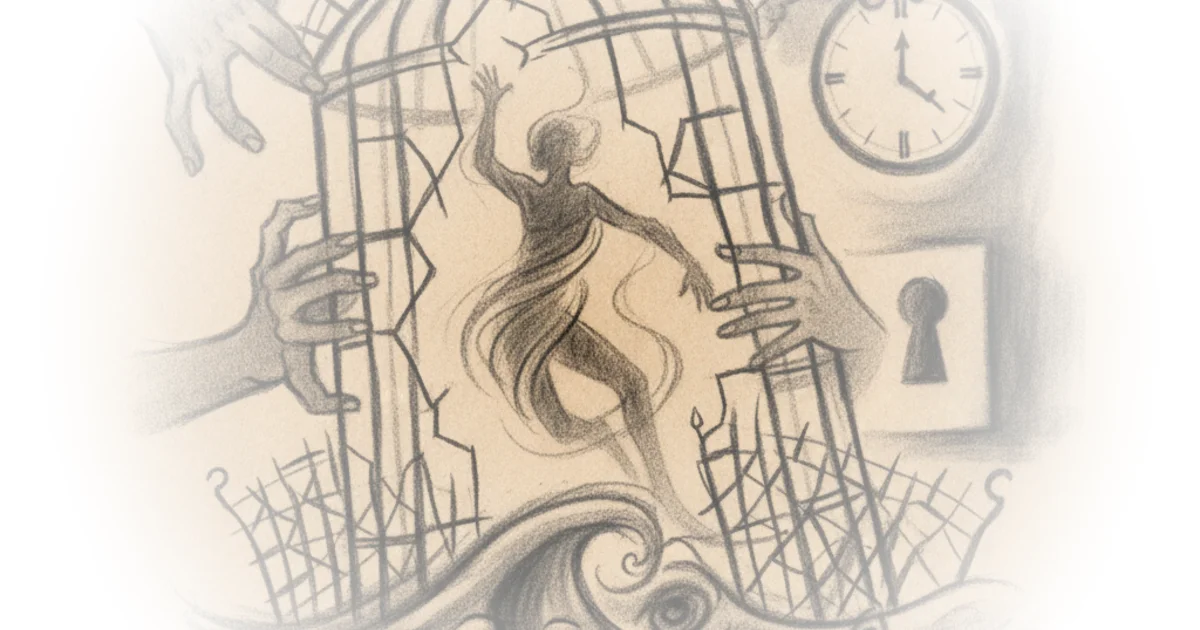
The author's experience illustrates the human cost of this bureaucratic maneuvering. After a Fulbright program in Jordan—a program designed to foster international understanding—the author was subjected to questioning that felt less like security screening and more like an interrogation. "One of the beautiful things about America is that neither my journalism nor my ethnic background are the government's business, except, apparently, at the border," the piece notes. This observation lands with particular force because it highlights the contradiction between domestic freedoms and border realities. Critics might argue that national security requires broad discretion at entry points, but the article effectively counters that by showing how this discretion is applied arbitrarily, often based on vague automated alerts rather than concrete evidence of wrongdoing.
Crossing the U.S. border is the closest most Americans will come to experiencing life under the foreign dictatorships I report on.
The Black Box of Automated Surveillance
The commentary shifts from the physical waiting room to the invisible algorithms driving these decisions. The piece argues that the problem is no longer just human bias, but the opacity of automated systems that even the agents don't fully understand. Reason reports that "automated border control systems often take away the personal discretion that officials have, and even deprive them of knowing the reasons behind decisions the computer is making." This is a critical development in the history of surveillance. It echoes the concerns raised during the early debates over the Entry/Exit System, where the fear was always that technology would outpace the legal framework designed to check it.
The author describes a scene of profound helplessness: an agent face-palming and admitting, "I don't know why either," when asked why the citizen was being detained. This admission underscores the breakdown of accountability. The government is moving toward AI-generated watch lists, and as the piece notes, "travelers don't have any way of knowing they're on any of these lists until they run into problems." The historical context of the Fulbright program adds depth here; the very program meant to build bridges is now a potential trigger for suspicion, suggesting that the definition of "security risk" has expanded to include the act of cross-cultural engagement itself.
Arbitrary Power and the Watch List
Perhaps the most alarming section of the coverage details the existence of secret databases. Reason highlights that the Department of Homeland Security maintains various lists, including the Automated Targeting System, but also "lists that the government doesn't even acknowledge exist." The article points to a secret list of journalists and lawyers compiled during the previous administration, noting that "no DHS person wants to be noticed... especially if they have pulled in the 'wrong' kind of person." This suggests a system where the threat is not just to foreign nationals, but to domestic citizens who happen to be on a specific, undisclosed list.
The piece argues that this arbitrary power is the true danger. "For all the dictatorial powers that CBP and its Skynet-like systems have at the border, America is still a democracy domestically," the author writes, drawing a sharp line between the two realms. The narrative of a school superintendent being asked to surrender passwords, or a lawyer being detained for criticizing the executive branch, serves as a warning that the border is becoming a testing ground for authoritarian tactics. While the author notes that they were eventually released, the uncertainty remains: "Unfortunately, there is no legal limit to how long 'eventually' can be."
Going home after a long trip is not a crime.
Bottom Line
The strongest part of this argument is its exposure of the "administrative function" loophole, which effectively suspends constitutional rights at the border without public debate. The piece's biggest vulnerability is its reliance on a single anecdote, though it is bolstered by references to other legal battles and the systemic nature of the watch lists. The reader should watch for the outcome of the Freedom of Information Act request mentioned in the text, as the redacted documents may reveal just how widespread these automated detentions have become. This is not just a story about one traveler; it is a case study in how the machinery of the state can quietly erode the rights of its own citizens.