Most discussions about the future of humanity focus on technology or policy, but Bentham's Bulldog challenges a far more fundamental assumption: that we have no moral reason to bring new happy people into existence. This piece dismantles the "person-affecting view"—the idea that creating a life is neutral unless it harms someone—with a rigor that exposes deep logical fractures in how we value existence itself. For those tracking the high-stakes debate on Longtermism, this is not just abstract philosophy; it is the ethical bedrock determining whether preventing extinction is a moral imperative or a mere preference.
The Trap of Neutrality
Bentham's Bulldog opens by identifying a slogan that has quietly guided many ethical frameworks: "make people happy, not happy people." The author argues that if this view holds, we lose the moral urgency to ensure the survival of the human species. The stakes are astronomical. As Bentham's Bulldog notes, "If creating a happy person is a good thing, then ensuring we have such a future is a key priority." They cite calculations from MacAskill and Greaves suggesting that "each dollar spent reducing existential risks increases expected future populations by 10 billion." This reframes risk reduction from a safety measure into a generative act of immense value.
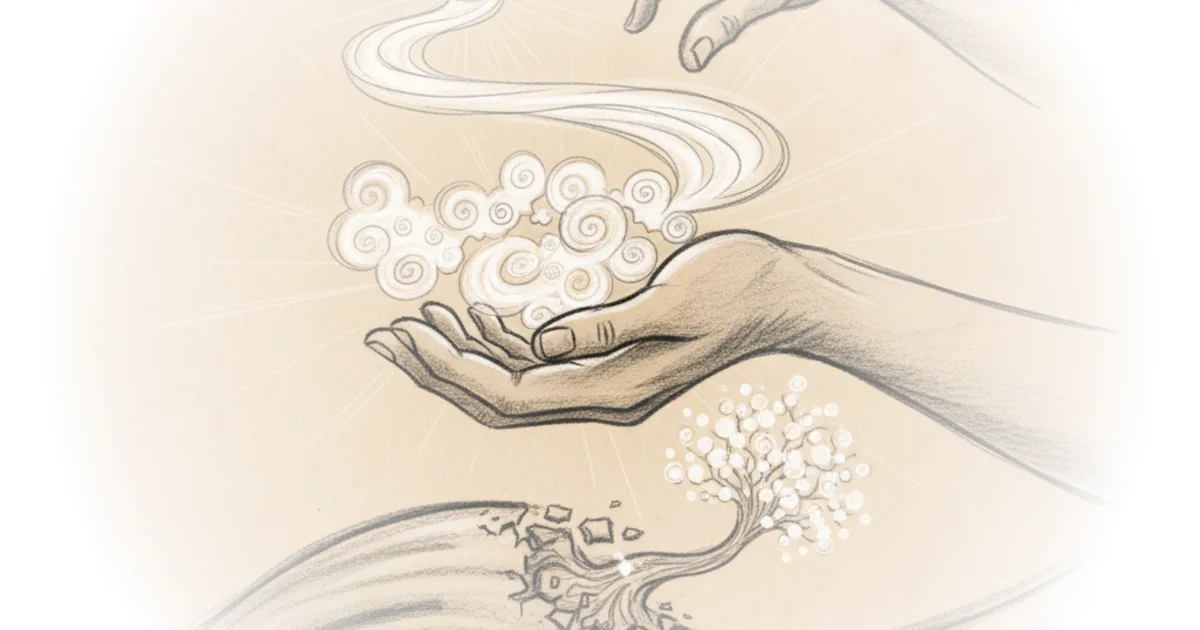
The core of the author's critique targets the intuition that an action is only "good" if it makes a specific existing person better off. Bentham's Bulldog writes, "The core intuition behind the person-affecting view is that in order to be better, a state of affairs has to be better for someone." The author dismantles this by showing its absurd implications. If we accept that logic, they argue, "a machine that spawns babies over a furnace isn't bad, because it doesn't harm anyone." This parallel argument is devastating because it forces the reader to confront the counter-intuitive conclusion that creating suffering is neutral if the victim never existed to be "worse off" than a non-existent state.
If you create someone, they're not worse off, because they wouldn't have otherwise existed. Thus, a machine that spawns babies over a furnace isn't bad, because it doesn't harm anyone. This is clearly wrong, yet it's the same logic as the argument for it not being good to create happy people.
The author points out that this logic collapses when applied to other scenarios, such as reviving someone from the dead. If the person-affecting view were consistent, bringing someone back to life would be neutral, since they weren't "better off" than their non-existent state. Bentham's Bulldog observes, "If a person is revived from the dead then they would not have existed absent being revived from the dead. So bringing a person back from the dead is not good." This highlights a fatal flaw: the view cannot account for the obvious value of restoring life or preventing extinction.
The Paradox of Incomparability
When pressed on these contradictions, defenders of the person-affecting view often retreat to the concept of "incomparability," claiming that adding a happy person makes the world neither better nor worse, but simply "incomparable" to the previous state. Bentham's Bulldog argues this is a desperate maneuver that fails to live up to the view's own promises. "Where the hell did incomparability come in?" they ask, noting that the original intuition was about neutrality, not a mysterious inability to compare values.
The author demonstrates how this shift creates a "strangely greedy" ethical system. If adding a happy person is incomparable, it can neutralize improvements made to existing people. Bentham's Bulldog illustrates this with a scenario where improving one person's life and adding a new happy person results in a state that is "neither better nor worse" than the original. This leads to the bizarre conclusion that "adding a welfare improvement and creating a happy person leaves the world neither better nor worse, even though it is better for some people and worse for no one." This effectively swallows up moral progress, a result that seems deeply at odds with our intuitive sense of value.
Critics might note that the concept of incomparability is a legitimate tool in ethics, often used to describe choices between incommensurable goods like career paths or spouses. However, Bentham's Bulldog counters that this doesn't apply here because "there is nothing at stake—no one made better or worse off" in the creation of a new life. The author insists that the person-affecting view's reliance on incomparability is an ad hoc fix that undermines the coherence of the entire framework.
The view that creating a happy person is neutral seems totally hopeless. But to their credit, defenders of the person-affecting view don't actually think it. Instead, they generally say that creating a happy person has imprecise value.
This section connects to the broader Longtermist discourse, where the "Mere Addition Paradox" often stalls progress. By showing that the person-affecting view leads to anti-natalist conclusions—where hastening extinction might be preferable to creating lives with even a small risk of suffering—Bentham's Bulldog forces a re-evaluation of the stakes. If the view implies that "it would be extremely good to hasten the extinction of life on Earth, even if almost everyone was guaranteed to be born with a great life," it becomes a doctrine of despair rather than a guide for moral action.
Bottom Line
Bentham's Bulldog delivers a compelling case that the person-affecting view is logically incoherent and ethically dangerous, effectively dismantling the slogan "make people happy, not happy people." The strongest part of the argument is the demonstration that the view's retreat to "incomparability" fails to resolve its contradictions and instead neutralizes the value of existing happiness. The biggest vulnerability lies in the assumption that all moral value must be tied to individual welfare, a premise that some philosophers still defend by redefining the nature of harm and benefit. For anyone concerned with the trajectory of civilization, this piece suggests that ensuring a future for humanity is not just a safety measure, but a fundamental moral good.