Phillips P. O'Brien cuts through the noise of escalating rhetoric to reveal a stark reality: the administration's strategy of maximum pressure is not breaking the Iranian regime, but rather exposing the fragility of its own position. This piece is notable not for predicting a new war, but for diagnosing why the threat of one has become a liability, arguing that the administration's erratic oscillation between imminent strikes and sudden delays is eroding American credibility with allies, markets, and adversaries alike.
The Illusion of Imminent Action
O'Brien begins by dissecting the administration's recent behavior, noting that while there was a concerted effort to convince the world that air attacks on Iran were inevitable, the outcome was a retreat that signaled desperation rather than strength. "Trump really did try to convince others, and indeed maybe himself, that he was going to restart the bombing of Iran this week," O'Brien writes, highlighting the internal disconnect between the administration's public posture and its strategic calculus. The author points out that the White House actively spread rumors of an attack, even influencing security conferences in Tallinn, only to pull back at the last moment.
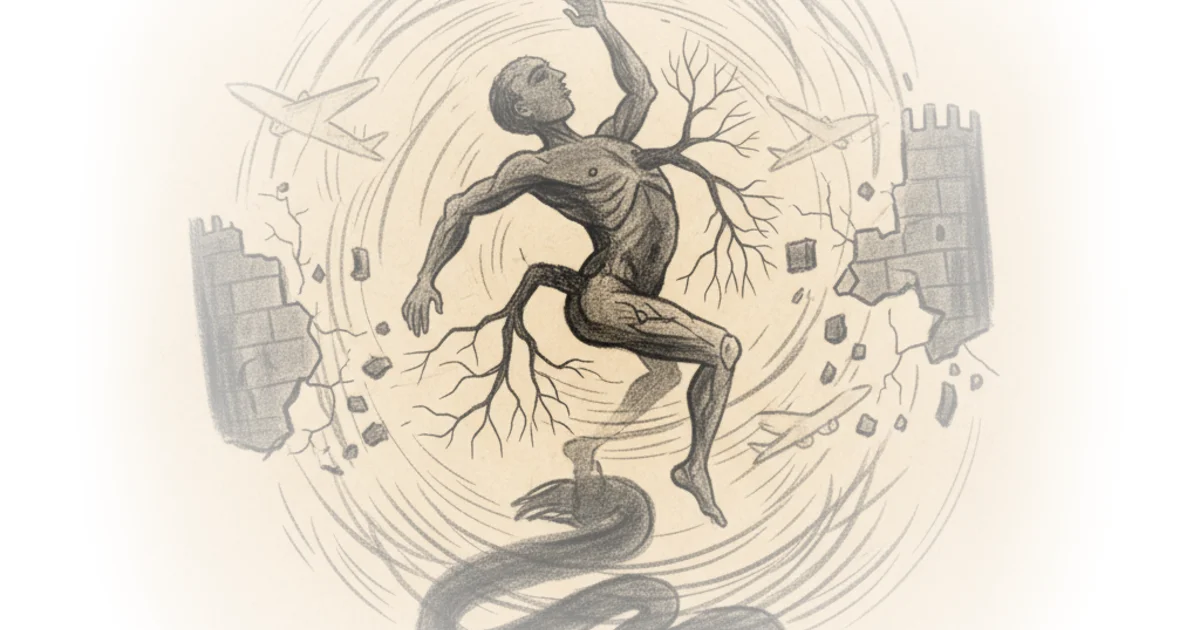
The core of O'Brien's argument is that this pattern of bluffing and backing down is a strategic failure. He observes that the administration's excuses for not striking—claims that allies begged for a pause or that negotiations were miraculously close—are identical to those used for months. "The excuses Trump gave this time not to restart the bombing... are the exact same ones he has used now for almost two months," he notes. This repetition is not a sign of a coherent strategy but of a leader who has run out of options. The author suggests that the administration understands the blockade is taking far longer to yield results than promised and that a military strike now carries a low probability of achieving the stated goal of forcing a better nuclear deal than the one reached under the Obama administration.
The markets no longer react to the President's claims of possible success. For once the oil markets took Trump's claims for the BS that they are.
This observation about the financial markets is particularly damning. O'Brien argues that the erosion of market reaction to threats signifies a loss of leverage. When the price of Brent Crude oil barely dipped and quickly recovered after a threat of war, it signaled that global actors no longer believe the administration is willing or able to follow through. Critics might argue that market volatility is influenced by many factors beyond geopolitical threats, but O'Brien's point stands: the specific mechanism of coercion the administration relies on—fear of immediate conflict—has lost its potency.
The Cost of Repeated Bluffs
The commentary then shifts to the human and diplomatic cost of this cycle. O'Brien details a timeline of false claims regarding diplomatic breakthroughs, from April's alleged "workable basis" to May's non-existent one-page memorandum. He writes, "It certainly is worth marvelling at how often Trump has lied about a deal being close," listing specific instances where the administration claimed progress that never materialized. This relentless fabrication, O'Brien argues, is not just dishonest; it is dangerous. By constantly raising the stakes and then lowering them, the administration is incentivizing the Iranian government to call its bluff.
The author draws a parallel to the administration's previous strategy in Venezuela, referencing the "Honorverse" and "Maximum pressure campaign" deep dives to contextualize the current approach. The administration appears to be hoping for a repeat of the Venezuela operation, where they sought to install a compliant figurehead to replace a hostile leader. O'Brien reveals a startling detail from a recent New York Times report: the administration reportedly identified former Iranian President Mahmoud Ahmadinejad as the potential successor to the current leadership, a figure O'Brien describes as a "super hard-line" leader responsible for a wave of executions.
"Those who have been arguing that the USA wanted to help the Iranian people with this operation, should once again hang their heads in shame," O'Brien concludes regarding the selection of Ahmadinejad. This choice underscores a fundamental disconnect between the administration's stated goal of promoting freedom and its actual strategy of regime change through the installation of a known authoritarian. This reframing moves the discussion away from personality and toward the institutional failure of identifying viable partners for a post-conflict Iran.
By trying to seem strong, the administration is only underlining how weak its position really is.
The author emphasizes that this dynamic is a "really dangerous" one. The hesitation to strike, born of fear that a military option will fail, leaves the Iranian military with more time to regroup and reorganize. "While the Iranian government is probably suffering economically, the Iranian military has had more time to regroup and reorganize, which means it could do more damage if the US eventually restarts action," O'Brien warns. The delay, intended to preserve the option of force, may actually be making a future conflict more catastrophic.
Bottom Line
Phillips P. O'Brien delivers a sobering assessment: the administration's strategy is collapsing under the weight of its own contradictions, trading long-term stability for short-term posturing. The strongest part of this argument is the evidence that the administration's credibility has evaporated, rendering its threats ineffective and its diplomatic claims unbelievable. The biggest vulnerability in the current approach is the risk that a desperate administration, having exhausted its bluffing options, may eventually lash out in a way that causes disproportionate civilian harm without achieving any strategic objective. Readers should watch for whether the administration can pivot to genuine diplomacy or if the cycle of threats and retreats will continue to escalate tensions in the region.