Richard Coffin doesn't just track stock market volatility; he connects the dots between a sudden tariff pause and a terrifyingly specific glitch in the US Treasury bond market. While most coverage fixates on the headline numbers of trade wars, Coffin argues that the real story isn't the 125% levy on Chinese goods, but the fact that US Treasury yields hit their highest weekly jump in decades, potentially forcing the executive branch to walk back its own policies. This is a crucial distinction for any investor trying to understand why the administration suddenly exempted electronics from tariffs without a public negotiation breakthrough.
The Market's Silent Ultimatum
Coffin opens by highlighting the sheer whiplash of the recent market moves. He notes that the S&P 500 saw "one of the strongest single day rallies... closing nearly 10% higher" simply because the administration announced a 90-day pause on wild tariffs. The author is quick to point out the absurdity of the situation, noting that while the US slapped China with a "125% levy," the administration later clarified that smartphones and computers would be exempt. "It could be that the administration is extending an olive branch," Coffin writes, "or it could be that they're due for a mobile upgrade and didn't want to pay $3,000 for a made in USA iPhone."
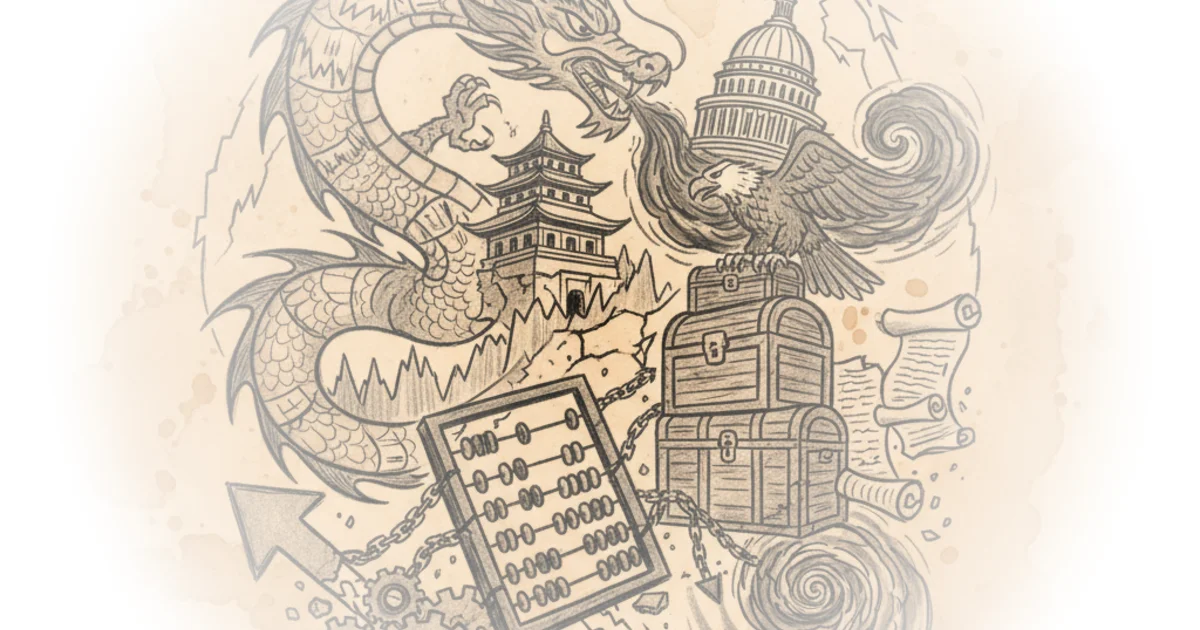
This dry humor underscores a serious point: the pivot was so sudden and unexplained that speculation ran wild. Coffin suggests the real driver wasn't diplomacy, but the bond market. He explains that during the escalation, "we saw a peculiar trend within US treasuries whereby the rates saw their highest weekly increase in decades." This is the crux of his argument: the administration's trade war inadvertently triggered a sell-off in government debt, raising borrowing costs across the entire economy. The author correctly identifies that higher yields act as a brake on the economy, making mortgages and car loans more expensive, which directly contradicts the goal of stimulating growth.
"Historically, because treasury bonds are considered a safe haven investment... we've often seen investors sell stocks and buy treasury bonds during periods of turmoil... However, amid all the tariff uncertainty, the exact opposite has actually happened."
This inversion of the typical market behavior is the piece's most compelling insight. Coffin argues that the trade war created so much uncertainty that even the "safe haven" status of US debt was compromised. He points out that the 10-year Treasury yield saw its biggest weekly jump since 2001, a signal that the financial system is on edge. Critics might note that attributing a complex bond sell-off solely to trade policy ignores other macroeconomic factors like inflation expectations or Federal Reserve policy, but Coffin's focus on the timing—where the yield spike coincided perfectly with tariff announcements—makes a strong circumstantial case for a direct link.
The Myth of the Secret Weapon
The narrative quickly turned to conspiracy theories, with many claiming China was deliberately selling off US debt to sabotage the economy. Coffin tackles this head-on, dismantling the idea that China holds a "secret weapon" capable of single-handedly crashing the US financial system. He notes that while rumors circulated that China sold $50 billion in treasuries, "this does really appear to be a rumor with the source of it being X."
Instead of a coordinated attack, Coffin suggests a more mundane reality: a shift in global trade flows. "A lot of foreign treasury bond demand has come from countries receiving US dollars as a result of trade with the country," he explains. If global trade shrinks due to tariffs, those countries have fewer dollars to park in US bonds, naturally driving yields up. He also highlights that China's holdings have been shrinking for years, dropping from a peak of $1.66 trillion in 2013 to roughly $760 billion in 2025. "China selling US treasuries isn't actually anything new," Coffin writes, reminding readers that the country's share of total US debt is now just 2.1%.
This reframing is vital. It moves the conversation away from geopolitical thriller tropes and back to structural economic realities. The author effectively argues that the market is reacting to the risk of a decoupled world, not a specific act of financial warfare. "The truth is no one knows with certainty what's actually contributing to the selloff," he admits, but he leans heavily on the idea that the perceived risk of US treasuries is rising. Deutsche Bank is cited as noting that US bonds have "decoupled from other safe haven assets like gold," suggesting a fundamental shift in how investors view American fiscal stability.
The Cost of Escalation
Even with the recent pause on tariffs for most partners, the impact on the US economy remains severe. Coffin lays out the numbers with stark clarity: the escalation with China alone could push prices nearly 3% higher, costing the average household $4,700 a year and decreasing US GDP by more than a full percentage point. The administration's focus on the trade deficit is understandable, given that China represents nearly a third of America's total trade deficit, but the collateral damage is significant.
He points out that while exports are only 11% of US GDP, specific sectors like agriculture and high-tech manufacturing are heavily reliant on the Chinese market. "China buying 14% of all US agricultural exports," Coffin notes, means that farmers are on the front lines of this conflict. Furthermore, the reliance on Chinese supply chains for critical components like lithium, cobalt, and rare earths means that high-tech manufacturing and defense sectors are vulnerable. The exemption of electronics from the 125% tariff was a necessary retreat, but it doesn't erase the broader economic strain.
"With the vast majority of cell phone and game console imports, 70 and 90% respectively, entering the United States from China, any inbound product from China is also going to become more expensive."
This reality check is the piece's most grounded moment. Coffin reminds the reader that while the administration might view the trade war as a negotiation tactic, the consumer feels it immediately. The argument that the US has "less to lose" than China is challenged by the sheer scale of inflationary pressure that a prolonged conflict would generate. The author suggests that the administration's sudden pivot was less about generosity and more about avoiding a financial crisis triggered by rising interest rates.
Bottom Line
Richard Coffin's analysis succeeds in cutting through the noise of trade war rhetoric to identify the real pressure point: the US Treasury market. His strongest argument is that the administration's tariff policy inadvertently threatened the stability of the US financial system, forcing a rapid policy reversal that had nothing to do with diplomatic breakthroughs. The piece's biggest vulnerability is its reliance on market speculation to explain the bond sell-off, as definitive proof of a coordinated foreign attack remains elusive. However, the takeaway is clear: in a hyper-connected global economy, trade wars are not just about tariffs; they are a direct threat to the cost of capital, and the market will punish the administration if it ignores that reality.
"The administration's pivot wasn't a diplomatic breakthrough; it was a financial surrender to the bond market."
Readers should watch for the next move in the Treasury market. If yields continue to rise despite the tariff pause, it will signal that the market views the trade war as a structural risk to the US economy, not just a temporary political squabble. The administration's ability to manage this delicate balance between protectionism and financial stability will be the defining test of its economic policy in the coming months.