Timothy Snyder delivers a chilling diagnosis of the current American moment, arguing that the administration's strategy has shifted from seeking a victorious foreign war to manufacturing domestic chaos as a tool for authoritarian consolidation. He posits that the predictable violence of mass deportation is not a policy failure, but a feature of a new path to power he terms "self-terrorism," where the state intentionally creates the conditions for its own oppression to justify further control.
The Echo of 1938
Snyder anchors his analysis in a stark historical parallel, drawing a direct line between the mass deportations of 1938 and the current policies of the executive branch. He notes that in the autumn of 1938, the Nazi regime rounded up Jews lacking citizenship and dumped them on the Polish border, a coercive policy that set off a chain of events leading to World War II. "The family was the Grynszpans," Snyder writes, recounting how Herschel Grynszpan, a refugee denied permanent residence and facing deportation, shot a German diplomat in Paris. This act was then used by the regime to justify Kristallnacht, a nationwide pogrom that destroyed Jewish lives and businesses.
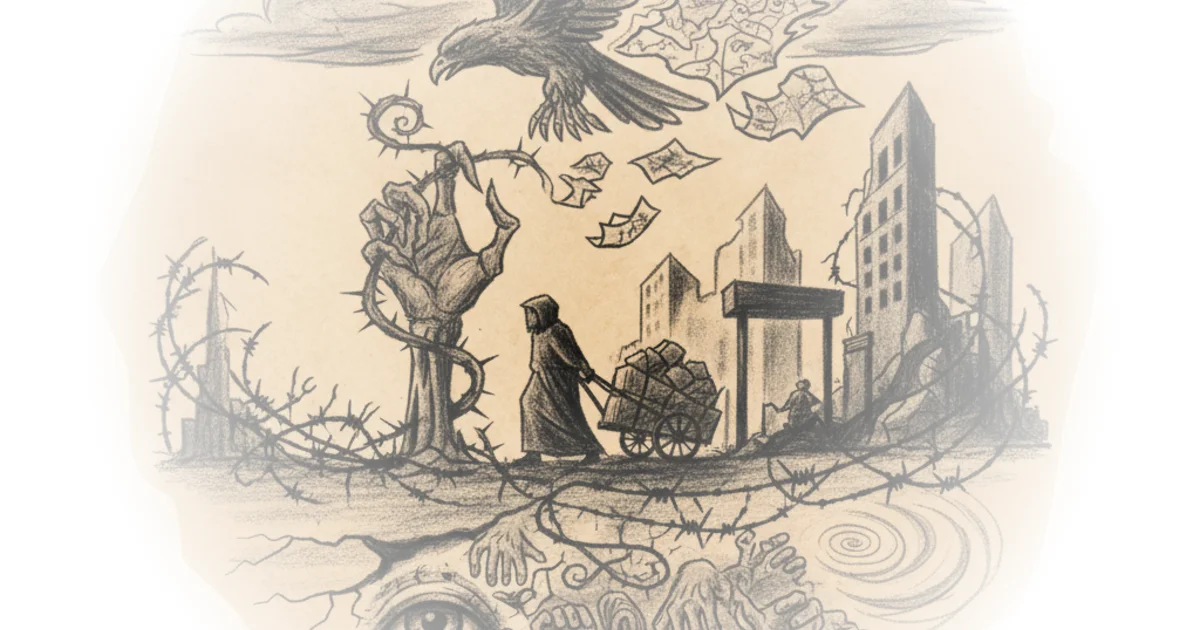
Snyder argues that the current administration is replicating this dynamic, albeit with different actors and a different trigger. He points to the tragic shooting of two National Guard troops in Washington, D.C., by a refugee from Afghanistan who had faced years of uncertainty regarding his visa. "Like Grynszpan, he is someone who experienced trauma and dehumanization," Snyder observes, noting that the assassin's frustration with the immigration process was a foreseeable consequence of the administration's own policies. The core of the argument is that the government's refusal to resolve the status of vulnerable populations creates a powder keg that the administration can then exploit.
Critics might argue that equating a lone act of violence with a state-orchestrated pogrom risks minimizing the specific agency of the perpetrator and the unique complexities of modern American politics. However, Snyder's focus is not on excusing the violence, but on understanding the structural conditions that make such reactions predictable. He writes, "This is not an excuse for his horrible act. It is a fact that is necessary to understand the overall structure of the moment."
The sequence of weakness, provocation and violence must continue until it works.
The Failure of the Land War
Snyder then pivots to why the administration cannot simply follow the traditional fascist playbook of a foreign war to consolidate power. He argues that a land invasion, such as a hypothetical conflict with Venezuela, is strategically impossible for this specific administration due to incompetence and a lack of allies. "Trump knows nothing about war, and neither does his cabinet," he asserts, pointing to the "battleships-and-chin-ups doctrine" championed by the defense secretary as useless in modern warfare.
He highlights a critical strategic blunder: the stance of CIA director John Radcliffe, who suggested that refugees who collaborated with the U.S. should never have been admitted. Snyder explains that this position destroys the possibility of future collaboration, which is essential for any successful occupation. "It is very hard to occupy land without local collaborators, and people will not collaborate with you if they are certain, in advance, that you will later leave and let them be killed," he writes. This creates a paradox where the administration's xenophobia undermines its own imperial ambitions.
Furthermore, Snyder notes the ideological contradiction of fighting a war for "democracy" in Venezuela while actively dismantling democratic norms at home. "Trump does not even pretend to like democracy," he points out, drawing a parallel between the rhetoric used by the administration and that of Nicolás Maduro. Without allies and with a contempt for the laws of war, the administration faces a scenario where any conflict would likely result in humiliation rather than the "glorious military victory" needed for regime change.
The Turn to Self-Terrorism
If a foreign war is off the table, Snyder argues the administration is turning inward. He defines "self-terrorism" as a strategy where the state drops its guard, provokes violence, and then uses the resulting chaos to justify the elimination of civil liberties. "The Trump administration has indeed removed barriers to terrorism, thereby creating the conditions for attacks on and within the United States," he writes. He details how the gutting of the FBI, the dismantling of domestic terrorism databases, and the abandonment of cyber defense have made the country vulnerable.
The author suggests that this is not accidental but instrumental. By deploying troops to cities like Washington and New Orleans and framing them as "war zones," the administration invites the very turmoil it claims to fight. "The resulting violence against one's own people, can then be used as a pretext to further oppress them," Snyder explains. He sees the current militarization of domestic spaces not as a security measure, but as a provocation designed to create a crisis that demands a totalitarian response.
A counterargument worth considering is whether the administration's actions are truly a calculated strategy of self-terror or simply the result of chaotic incompetence without a coherent endgame. Snyder acknowledges this possibility but insists that the outcome is the same: the erosion of democratic institutions. "Self-terrorism need not work," he concedes, but warns that the attempt itself is destructive. "Both of these terrible possibilities, land war and self-terrorism, are signs of weakness rather than strength."
Bottom Line
Snyder's most powerful contribution is reframing the administration's apparent chaos as a deliberate, if desperate, strategy for authoritarianism, forcing readers to see the connection between deportation policies, domestic militarization, and the erosion of security. The argument's greatest vulnerability lies in its reliance on the assumption that the administration is capable of such a coherent, long-term strategy of self-destruction, yet the historical precedent of 1938 suggests that the path to tyranny is often paved with unintended consequences that are exploited with ruthless efficiency. The reader must now watch to see if the administration's "self-terrorism" succeeds in generating the crisis it needs, or if the public's awareness of the pattern can halt the cycle before it completes its turn toward dictatorship.