This episode of Yale University's 'America at 250' podcast does something rare for historical retrospectives: it refuses to let the 1960s remain a nostalgic caricature of flower power and rock and roll. Instead, the historians present a divided 60s where the liberal consensus didn't just crack—it shattered under the simultaneous pressure of civil rights militancy and a brutal foreign war. For listeners trying to understand the fractured political landscape of today, this isn't just history; it's an origin story for the modern American impasse.
The Generational Collision
Yale University frames the era not as a monolith, but as a "mystery zone" for younger generations while remaining a vivid, painful memory for older ones. The podcast highlights a crucial distinction often missed in pop culture: the convergence of two massive, generational forces. As the historians note, "the people who are being asked to fight in Vietnam are mostly young people and the people who are most deeply involved in civil rights organizing also by the mid60s are mostly young people." This creates a unique historical pressure cooker where the demographic most likely to challenge authority is also the demographic most likely to be sent to die in a foreign conflict.
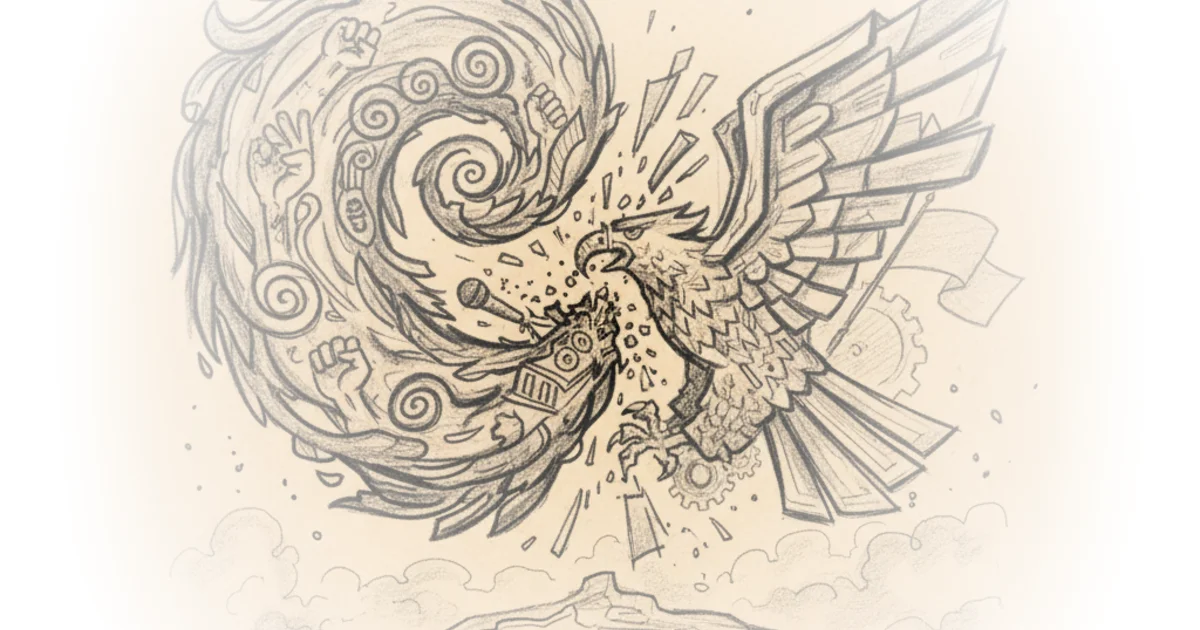
The coverage effectively dismantles the idea that the era was simply about protest. Yale University argues that "whatever liberal consensus had existed in the 30s 40s50s kind of comes flying apart under pressure from the left under pressure from the right as well." This reframing is vital. It suggests that the polarization we see today isn't a new phenomenon born of social media, but a structural fracture that occurred when the mid-century political center could no longer hold the weight of competing demands for racial justice and imperial power.
The 60s are movements and transformative political experiences that are highly generational. So the people who are being asked to fight in Vietnam are mostly young people and the people who are most deeply involved in civil rights organizing also by the mid60s are mostly young people.
Critics might argue that focusing so heavily on the generational aspect risks overlooking the role of established institutions and older political actors who also drove these changes. However, the podcast's emphasis on the youth as the primary engine of both the war and the resistance offers a compelling explanation for why the cultural shift was so sudden and so total.
The Strategist in the Shadows
A significant portion of the discussion centers on Bayard Rustin, a figure Yale University elevates from a footnote to a central architect of the movement. The historians point out that Rustin's background as a gay man and a former communist meant he had to operate "backstage if you were allowed anywhere near the stage at all." Yet, it was this position that allowed him to master the mechanics of change. The podcast highlights Rustin's insistence that the movement's distinctiveness lay in its "turn to nonviolent direct action as its core strategy."
This focus on strategy over personality is a refreshing corrective to the standard narrative. Yale University notes that popular culture often reduces the 1963 March on Washington to Martin Luther King Jr.'s oratory, obscuring the reality that "it really obscures all of the work that went into creating a moment like that." The historians remind us that the march was a "direct ask to Congress" requiring immense logistical precision. As they put it, Rustin was "good at the big picture strategy, the grand strategy of organizing, but then he was also really good at like just making sure the sandwiches were where they needed to be."
The episode also touches on Rustin's later, controversial argument that the movement needed to pivot toward "self-conscious coalitional politics." He believed that because Black Americans were only "between 12 and 15% of the population," lasting change required a broad alliance built on labor and economic security. This was a hard sell in the 1970s, with some labeling him a neoconservative, but Yale University presents it as a prescient insight into the limits of single-issue politics.
You need two things to effectively bring people together in a movement: that people need to understand the history of where they came from and they have to have a clear purpose.
This emphasis on historical grounding and clear purpose feels particularly urgent in the current moment. The podcast suggests that without a shared understanding of "where you are and what you're looking for," strategy is impossible. It's a reminder that effective movements require more than passion; they require a deep, collective memory and a defined destination.
The Enduring Question of Method
The discussion concludes by returning to the fundamental tension that defines American political history: the balance between working within the system and operating outside it. Yale University frames this as the "single greatest divisive element" of the civil rights era. The historians contrast the approach of pressing the government through law and conscience against the separatist impulses that also gained traction. "When does great change in this country come by pressing the government... and when does great change come outside the law, mass protests, sometimes violent?" they ask.
This question remains the central dilemma for modern activists. The podcast does not offer a tidy answer but instead presents the civil rights movement as the "prototypical phenomenon through which we always ask that." By tracing the lineage back to A. Philip Randolph and the Brotherhood of Sleeping Car Porters, the historians show that the struggle for economic and racial justice has always been a complex dance between labor organizing, government pressure, and mass mobilization.
The story of America is people who no longer feel that they can get the king to even read their petitions.
Bottom Line
Yale University's commentary succeeds by stripping away the mythological veneer of the 1960s to reveal the gritty, strategic, and deeply generational machinery of change. Its strongest argument is that the era's polarization was not an accident but a structural collapse of the mid-century consensus, driven by young people caught between a war abroad and a revolution at home. The biggest vulnerability of the piece is its brief treatment of the violent backlash that often met these movements, which could have provided a fuller picture of the "pressure from the right" mentioned. For the busy listener, the takeaway is clear: understanding today's political fractures requires looking past the slogans of the past to the hard-won strategies of those who built them.