Rachel Connolly dismantles the lazy cultural assumption that complexity is the enemy of engagement, arguing instead that our current obsession with literalism and emotional signposting is a failure of imagination, not a reflection of a broken audience. In a landscape saturated with content that explains its own themes via PowerPoint slides and monologues, Connolly offers a radical defense of ambiguity, suggesting that true art—like Jon Fosse's Nobel-winning Septology—trusts the reader to do the work of feeling without a script.
The Myth of the Shortened Attention Span
Connolly begins by challenging the pervasive narrative that digital consumption has fundamentally eroded our capacity for difficult art. She points to the structural innovations in Fosse's Septology, a work composed of eight massive units, each unfolding as a single sentence, as proof that readers are more adaptable than critics give them credit for. "I don't need to recommend it, he did just win the Nobel prize. But I thought I would say it is funny and fresh because work like this, which uses a different convention of syntax or grammar, tends to be described as challenging," Connolly writes. She reframes the label of "challenging" not as a barrier to entry, but as a gatekeeping mechanism used to dismiss work that refuses to cater to the lowest common denominator.
The author's observation that readers naturally adjust to new grammatical conventions after a few pages is a crucial corrective to the panic over declining attention spans. She notes that "people adjust to the meaning of a new convention of full stops or commas or whatever after a few pages. Didn't we all learn to read in the first place because we have the ability to do this?" This argument gains weight when considering the historical context of literary modernism; just as readers in the early 20th century had to acclimate to the fragmented, stream-of-consciousness techniques of Samuel Beckett—whom Connolly notes a delinquent character in Fosse's book loves for his realism—today's audiences are equally capable of navigating Fosse's meandering prose. The "challenge" is often just the friction of learning a new language, not a deficit in the reader's brain.
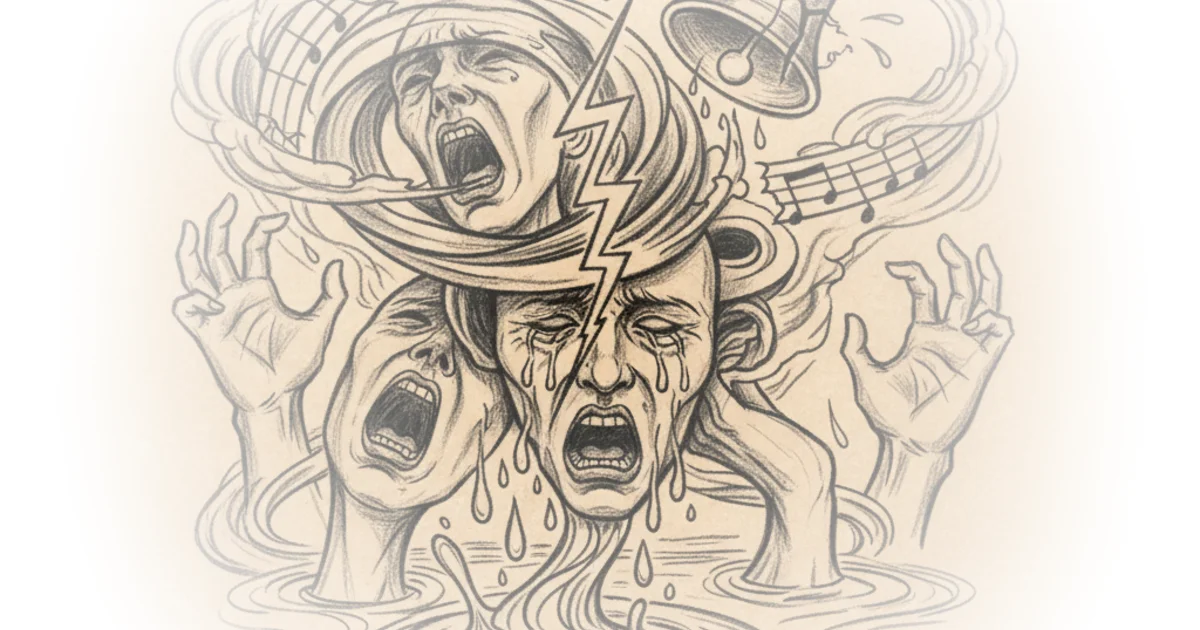
"I think that I don't like this picture, because I can't stand pictures that directly paint feelings even if I'm the only one who knows it, that isn't the kind of thing I paint, it's not the kind of thing I want to paint, because a painting can certainly be filled with feelings but you shouldn't paint feelings themselves, like screaming and weeping and wailing, I think, and I think that this is a truly bad painting, that's what it is…"
This passage from Septology, quoted by Connolly, serves as the essay's thematic anchor. It critiques the modern tendency to literalize emotion, a trend Connolly sees everywhere from cinema to contemporary fiction. She contrasts this with the "overt signposting" found in recent films like The Brutalist, where she observes a "familiar technique of a section explaining the themes and meaning and even adding new ones in, to enhance the social justice credentials of the film." The result, she argues, is a patronizing experience where the audience is treated as incapable of deriving meaning without a verbal summary.
Critics might argue that in an era of information overload, clarity is a virtue and that signposting helps diverse audiences access complex narratives. However, Connolly's counter-point—that society functions on unspoken complexity, from hospital protocols to driving—suggests that the demand for explanation is a creative choice by artists, not a necessity for the public. "If it was the case that people could not watch TV shows without passages explaining the themes repeatedly how would hospitals function?" she asks, dismantling the idea that we are cognitively incapable of nuance.
The Hostility of the Literal
Connolly turns her attention to how this demand for literalism extends to the portrayal of trauma. She rejects the "emotional contrivances" of modern storytelling, where characters are reduced to their pain in a predictable loop. "I love reading about trauma but I want it to look as strange and unpredictable and unsympathetic as I have observed it to look in real life," she writes. Drawing on her own upbringing in a post-conflict society, she argues that real trauma often manifests as humor, violence, or confusion, rather than the performative weeping and wailing that dominates current media.
She highlights a specific scene in Septology where a teenage protagonist, Asle, sets up an exhibition of abstract paintings that the villagers cannot understand. The community's reaction is not one of curiosity, but of hostility. "The Man In Charge of the Barmen Youth Group doesn't understand pictures and art any better than a cow," Asle thinks, as the villagers tell him his work is just "smear[ing] some paint around." Connolly finds this moment "very funny but also heartbreaking," noting that it captures the human impulse to attack what we cannot immediately categorize. "That hostility and even cruelty when presented with something which you don't know how to respond to, that feels so true to life," she observes.
This analysis resonates with the broader cultural fatigue regarding "baddy" narratives and moralizing monologues. Connolly suggests that the culture of literalism is "pandering to this instinct, endlessly," encouraging audiences to reject anything that requires them to sit with discomfort or ambiguity. The solution, she implies, is not to dumb down the art, but to trust the audience's ability to find their own path through the confusion, much like the gallerist who eventually buys the paintings once the social dynamic shifts.
The Power of Ambiguity
The essay concludes by reinforcing the idea that ambiguity is not a flaw, but a feature of authentic human experience. Connolly argues that the straight line between an event and an emotional response is a fiction. "Think of, objectively, the worst thing that ever happened to you. Now think of the thing you felt worst about. Are these the same incident?" she asks, pointing out that trauma often hits us through delayed, seemingly unrelated triggers. By forcing a direct correlation, modern storytelling flattens the complexity of the human psyche.
She praises Fosse for avoiding the trap of "emotional contrivances," noting that his work allows for the messy, contradictory reality of life where "traumatised people can be very funny about their experiences too." This approach stands in stark contrast to the "prescribed way" trauma is often presented in media, where a character must explicitly state they "can't get over it" to be recognized as a victim. Connolly's defense of Fosse is ultimately a defense of the reader's intelligence and the artist's right to be difficult.
"Being challenged was not so bad, see."
Bottom Line
Rachel Connolly's commentary is a timely and necessary rebuke to the culture of over-explanation, successfully arguing that the demand for literalism is a creative failure that insults both the artist and the audience. While her dismissal of the "attention span" argument might overlook genuine cognitive shifts in digital natives, her core thesis—that ambiguity is a vital component of art and that audiences are capable of navigating it—holds strong. The piece serves as a compelling reminder that the most profound emotional truths are often found in the spaces between the words, not in the footnotes.