Devin Stone doesn't just watch television; he dissects the legal architecture of fiction to reveal why it works—or fails. In his breakdown of the premiere of Better Call Saul, Stone argues that the show's greatest strength isn't its drama, but its startling adherence to the mundane, often unglamorous reality of trial practice. For the busy professional who assumes courtroom scenes are pure Hollywood fantasy, Stone offers a rare glimpse into the actual mechanics of persuasion, evidence, and ethical boundaries that define the American legal system.
The Art of the Closing Argument
Stone begins by analyzing the protagonist's courtroom strategy, noting how the character leverages vulnerability to humanize his clients. "What Saul Goodman is doing is he's making himself seem personable," Stone observes, highlighting a technique that transcends the screen. The character admits to past mistakes and frames his clients not as criminals, but as "knuckleheads" who made a momentary error. This approach, Stone explains, is a calculated move to "front run" bad facts before the prosecution can weaponize them.
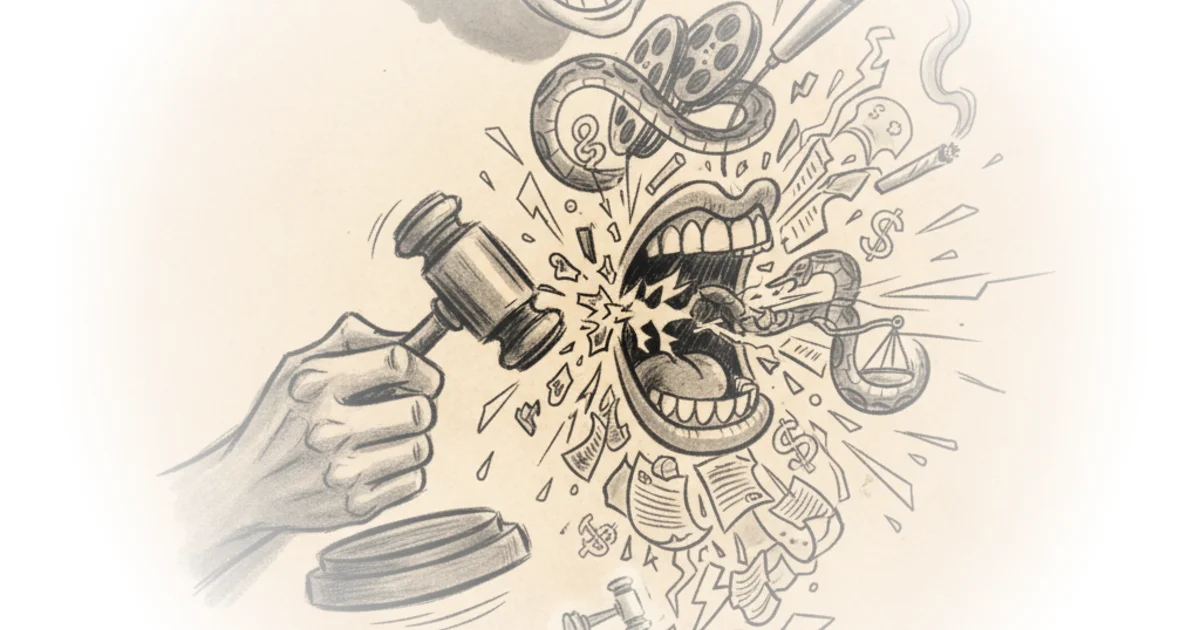
The commentary shines when Stone breaks down the rhetorical devices at play. He points out that the character appeals to the jury's ego by ascribing noble values to them before asking for a verdict. "He is ascribing the values that he wants to the jury," Stone writes, noting that this forces the jurors to live up to the "bigger than that" persona he has assigned them. This is a sophisticated psychological play that often goes unnoticed by casual viewers but is central to real-world litigation.
Sometimes the evidence just speaks for itself, and frankly, sometimes it doesn't require any legal argument.
However, the narrative takes a sharp turn when the character attempts to introduce video evidence. Stone identifies the Latin legal principle res ipsa loquitur—"the thing speaks for itself"—to explain why the defense attorney's plan to show a video of the crime backfires spectacularly. Stone notes that in this instance, "you don't need to gild the lily or pound the rubble; it's just bad enough as it is." The analysis here is particularly effective because it underscores a fundamental truth of the legal system: no amount of rhetorical flair can overcome undeniable visual proof.
The Mechanics of Public Defense and Fraud
Moving beyond the courtroom, Stone shifts his focus to the financial and ethical realities of the legal profession depicted in the episode. He clarifies the distinction between prosecutors and public defenders, grounding the fictional narrative in the historical precedent of Gideon v. Wainwright. Stone explains that the right to counsel is a constitutional mandate, yet the reality for those attorneys is often a struggle to "make ends meet" while facing systemic constraints.
The commentary then tackles the episode's more dubious legal maneuvers, specifically the scheme to stage injuries for insurance fraud. Stone is blunt about the consequences: "I probably don't need to tell you how unethical it is for an attorney to go out and pay people to fake an injury." He dissects the legal theory behind why such a scheme would fail, explaining the concept of "standing" in civil suits. If a plaintiff intentionally creates their own injury, they lack the legal standing to sue because they have negated the very element of harm required for the case.
Stone also touches on the nuances of contract law when the protagonist hesitates to cash a settlement check. He explains the doctrine of entering a contract by conduct, noting that cashing the check could be interpreted as tacitly agreeing to terms the client does not want. This highlights the high stakes of even minor administrative actions in the legal world.
Critics might argue that Stone's analysis occasionally glosses over the dramatic license required to keep a television show engaging, suggesting that real-life legal proceedings are far more tedious and less prone to the kind of rapid-fire ethical dilemmas shown. Yet, Stone counters this by awarding the show an "A-" for legal realism, arguing that it captures the "monotony of courtroom life" and the "unglamorous life of an attorney" better than most legal dramas.
Bottom Line
Devin Stone's commentary succeeds by treating the source material with the seriousness of a case study while retaining the accessibility of a pop-culture review. His strongest argument is that the show's realism lies not in its plot twists, but in its accurate depiction of how lawyers actually think and speak. The piece's only vulnerability is its reliance on the viewer's prior knowledge of legal concepts, which Stone assumes but does not always fully unpack for a lay audience. For those willing to engage, the analysis offers a compelling reminder that the most dramatic moments in law are often the quietest ones.