Paul Cooper doesn't just recount the fall of Roman Britain; he reconstructs the visceral experience of watching a civilization turn into a myth. By anchoring the narrative in an anonymous eighth-century poet staring at the rubble of Bath, Cooper bypasses dry dates to ask a haunting question: what does it feel like when the world you know becomes a ruin of "giants"? This approach transforms a standard history lesson into a meditation on the fragility of order, offering a perspective on imperial overreach that feels startlingly relevant to modern observers of global instability.
The Myth of the Unobtainable
Cooper begins by dismantling the assumption that Rome's expansion was inevitable. He highlights how, for centuries, the British Isles were viewed not as a prize, but as a terrifying frontier where geography itself seemed to conspire against conquest. "According to Plutarch some even believed the island of Britain was a legend," Cooper notes, setting the stage for a narrative where the land was as much an adversary as any army. The author details how early Roman attempts to invade were thwarted not just by military resistance, but by the sheer unpredictability of the North Sea, describing a "narrow space of sea that swells with dreadful surges and then sinks again to be as flat as a level plane."
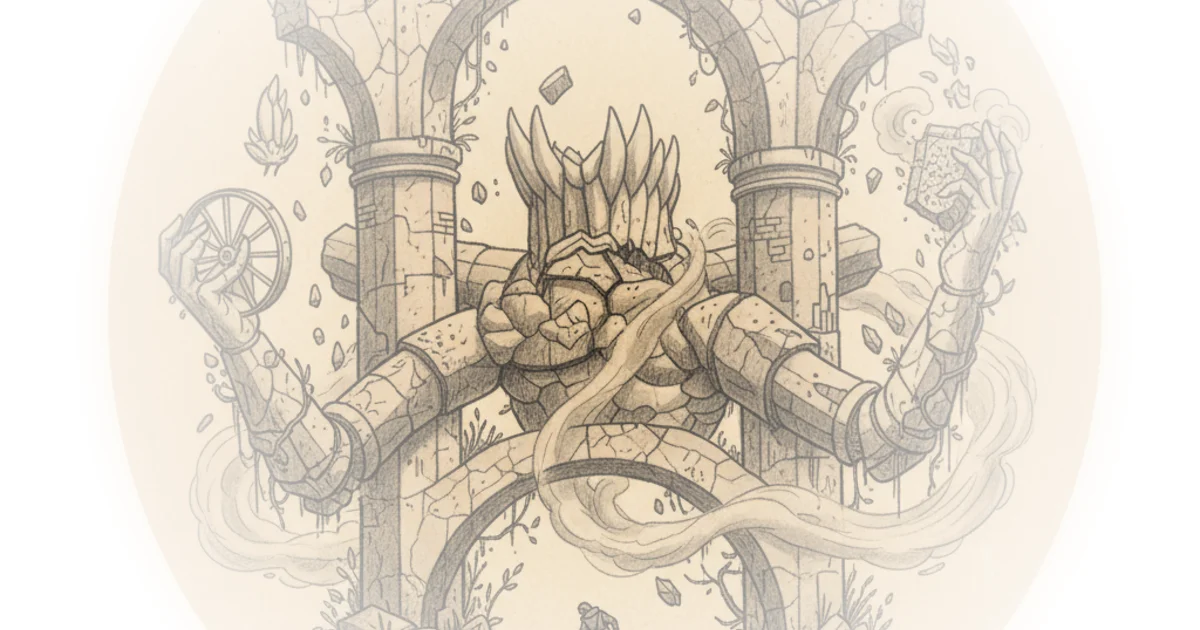
This framing is effective because it humanizes the logistical nightmares faced by ancient commanders, moving beyond the caricature of the "mad" emperor to show the genuine strategic hesitation of the state. The narrative builds tension by cataloging failures: Julius Caesar's costly expeditions, Augustus's fizzled plans, and Caligula's infamous retreat to gather seashells. Cooper writes, "Britain for the Romans was an unobtainable prize... a land of mystery peopled by wild and unpredictable barbarians." The choice to emphasize the psychological barrier—the fear of the unknown—adds depth to the eventual conquest, making Claudius's success feel like a monumental, almost desperate gamble rather than a foregone conclusion.
Critics might argue that focusing so heavily on the "barbarian" stereotype reinforces a colonialist worldview, yet Cooper uses these descriptions to illustrate the cultural chasm the Romans had to bridge, rather than endorsing the prejudice.
The Wall and the Cost of Empire
Once the conquest is secured, Cooper shifts focus to the mechanics of occupation, arguing that the true story of Roman Britain is one of unsustainable economics and cultural alienation. The author draws a sharp parallel between the Roman occupation and modern imperial projects, noting that "a good way to think of the situation is to look at the recent occupation of Iraq." This comparison is bold, but it serves to illuminate the structural flaws of the Roman presence: the reliance on a rotating cast of foreign administrators and the failure to integrate the local population into the power structure.
Cooper points out that while the cities flourished with "marble fronts and tiled roofs," the countryside remained a "hotbed of rebellion." The disconnect is stark: "Native Britons lived in small villages of timber turf walled round houses... and here tribal loyalties held greater sway than any loyalty people felt to their Roman governors." The author emphasizes that unlike other provinces where local elites were co-opted, "there's also no evidence of native Britons ever rising to the social rank necessary to govern." This lack of buy-in meant that the province was perpetually on the brink of anarchy, requiring massive military expenditure to maintain a peace that never truly settled.
Rome led occasional scouting parties out into the space between the two walls... Rome was paying the pigs to hold back their attacks.
The use of the slang term "Britannia lie" to describe the local tribes as "nasty little Britons" is a chilling detail that Cooper leverages to show the deep-seated contempt that fueled the administration's policies. This disdain, combined with the cost of maintaining Hadrian's Wall and the constant threat of piracy from the Saxons, created a fiscal black hole. Cooper argues that "records show that larger amounts of resources were poured into the island than were ever taken out," suggesting that the collapse was not just a military failure, but a financial one. The administration simply could not afford to hold the outpost forever.
The Silence of the Ruins
The piece concludes by returning to the poet, bringing the narrative full circle to the emotional aftermath of the collapse. Cooper describes how the grand infrastructure of the empire—baths, roads, and villas—slowly succumbed to nature, leaving behind a landscape that seemed to belong to a different species. "The poem itself has come down to us as something of a ruined object to it," Cooper observes, drawing a parallel between the damaged text and the shattered masonry it describes. The poet's confusion over the vanished civilization—"who built this place how did they construct the vaults of these cavernous halls and why after everything they'd built did they leave it all behind"—mirrors the modern reader's struggle to understand how a superpower could simply vanish.
This ending is the piece's most powerful element. It refuses to offer a neat political lesson, instead leaving the audience with the eerie silence of the ruins. The argument lands because it forces us to confront the impermanence of our own "green zones" and fortified cities. The author suggests that the fall was not a sudden event, but a slow erosion of will and resources, where the "cult of the city" eventually lost its grip on the land it claimed to own.
Bottom Line
Paul Cooper's greatest strength is his ability to weave archaeological evidence with emotional resonance, turning a history of military campaigns into a story about the human cost of empire. The piece's vulnerability lies in its reliance on the "Dark Ages" narrative, which can sometimes oversimplify the complex continuity of British culture after Rome. However, the core argument—that imperial overreach and a failure to integrate local populations are fatal flaws for any global power—remains a compelling and timely warning.
The real religion of the Romans was the religion of urbanism, the cult of the city, and they replicated the structure of Rome in every city they built.