In an era where existential dread is often projected onto artificial intelligence or climate collapse, Tom van der Linden makes a startlingly specific claim: the Cold War never truly ended; it merely went dormant, and Stanley Kubrick's satire is the only map we have to navigate its sudden return. This isn't just a film review; it is a cultural autopsy that connects the absurdity of 1960s nuclear protocols to the very real, very current breach of European security. Van der Linden argues that we are not facing a new threat, but rather the resurfacing of an old one that we foolishly believed was buried.
The Return of the Ghost
Van der Linden frames the upcoming release of Christopher Nolan's Oppenheimer not as a historical biopic, but as a catalyst for revisiting the "cinema of nuclear dread." He suggests that while the immediate panic of the Cold War has faded, the underlying mechanics of destruction remain terrifyingly relevant. "I've been thinking again just recently about kind of the Cold War nuclear Annihilation and movies that deal with that because we're in a time where a lot of people are talking about other kind of new existential threats," he notes, drawing a direct line from past anxieties to modern fears of AI and climate change.
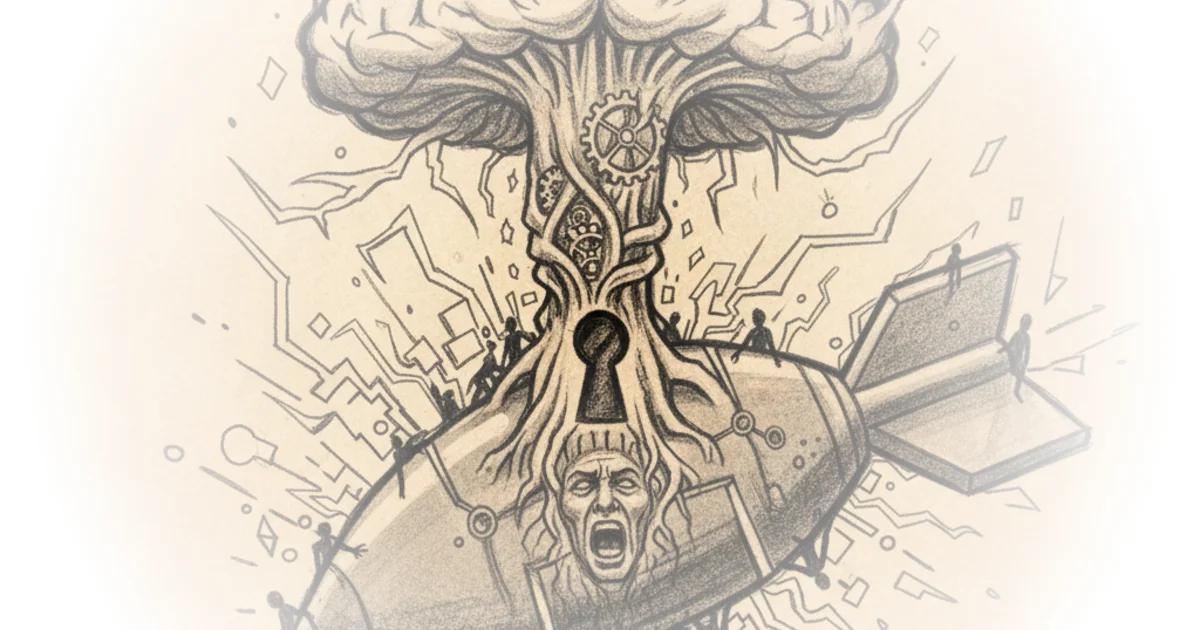
The author's insight here is sharp: we tend to treat existential threats as novel phenomena, yet the structural fear of self-annihilation is a recurring loop. Van der Linden observes that for many Europeans, the post-WWII peace was considered a permanent state, an "end of History moment." That illusion has shattered. He points to the conflict in Ukraine as the catalyst that has made the old questions "becoming as relevant as ever again," noting that the breach of European security feels like a prelude to "more Desperate Measures."
"It's actually been revitalized a little bit here in Europe with the new conflict between Ukraine and Russia which I think for a lot of Europeans who have been living in this state of you know Europe is at peace now and has been since World War II like this is now the default State."
This framing is effective because it strips away the novelty of current geopolitical tensions and exposes the continuity of the threat. However, one might argue that equating a regional conflict with the global stakes of the Cold War risks oversimplifying the distinct nuclear doctrines of today versus the 1980s. Yet, the core point stands: the psychological barrier of "it can't happen here" has been removed.
The Absurdity of Protocol
At the heart of the piece is a deep dive into Dr. Strangelove, which Van der Linden praises not just as a comedy, but as a terrifyingly accurate diagnosis of bureaucratic failure. He highlights the film's opening disclaimer—a statement from the Pentagon assuring viewers that the depicted scenario is impossible—as the ultimate irony. "The nature of accidents mistakes like this or or flaws in a system that you think is is you know a Fail-Safe it happened in real life too," he argues, grounding the satire in historical fact.
Van der Linden recounts two real-world near-misses where human judgment, not protocol, saved the world. He details the story of the Soviet officer during the Cuban Missile Crisis who refused to launch a retaliatory strike despite the belief that war had already begun. He then moves to the 1980s incident where a sensor glitch mimicked an incoming attack, and a single operator's decision to trust his gut over the machine prevented escalation. These anecdotes serve as the evidentiary backbone for the film's central thesis: that the machinery of war is too complex to be left entirely to automation.
"There has been a an almost nuclear disaster beat based on this a very small chance mistake that was fortunately recognized by a human being who could then take in his own way the measures to prevent further escalation."
This is the piece's strongest argument. By juxtaposing the film's absurdity with the banality of real-life near-disasters, Van der Linden demonstrates that the "incomprehensible nature" of nuclear destruction is not a movie trope, but a systemic reality. The film's value lies in its ability to expose the fragility of the "Fail-Safe" systems we rely on. Critics might note that relying on human fallibility as a safety net is itself a dangerous strategy, but the author's point is precisely that the alternative—total automation—is even more perilous.
The Question of Agency
The commentary culminates in a philosophical inquiry about who should hold the power of life and death. Van der Linden asks whether we should allow humanity to retain agency in high-stakes conflicts or if we must delegate these decisions to "external uh self-imposed constructions." He suggests that Dr. Strangelove offers a grim answer: we need someone with "humility" and "humbleness" to counterbalance the grandiose machinery of the state.
"Maybe it's good that we have someone uh one of our own like not a computer not a protocol to uh some you know some some agent that has that kind of humility in the back of his mind or that humbleness and in the face of this like grandiose thing that in many ways like overpowers us."
This argument reframes the film's characters not as caricatures, but as necessary checks against the dehumanizing logic of deterrence. The author effectively uses the film to question the wisdom of removing human judgment from the loop of nuclear decision-making. While the film is a satire, the underlying warning is deadly serious: when systems are designed to act without human intervention, the margin for error vanishes.
"The nature of accidents mistakes like this or or flaws in a system that you think is is you know a Fail-Safe it happened in real life too."
Bottom Line
Tom van der Linden delivers a compelling case that Dr. Strangelove is not a relic of the past, but a vital manual for the present, proving that the absurdity of nuclear war is rooted in the very real flaws of human systems. The argument's greatest strength is its grounding in historical near-misses, which validates the film's satire as a warning rather than a joke. However, the piece leaves unresolved the tension between the need for human judgment and the reality that humans are the source of the errors that nearly ended the world.
"Maybe it's good that we have someone uh one of our own like not a computer not a protocol to uh some you know some some agent that has that kind of humility in the back of his mind or that humbleness and in the face of this like grandiose thing that in many ways like overpowers us."
The takeaway is clear: as geopolitical tensions rise, the question is no longer if we will face a nuclear crisis, but whether our systems are robust enough to survive the inevitable human error within them.