Albert Camus believed that experiencing exile—the shattering of illusions that once gave us security—isn't something you can think your way into. It's something you must arrive at through lived experience. And in an era where most people spend their lives running from this feeling, his insights are more relevant than ever.
What Camus Means by Exile
Camus wasn't just talking about physical exile—being kicked out of a village or forced to leave a country. He was describing something far more pervasive: the moment when the illusions that once provided security suddenly collapse. When your place in the world no longer feels like absolute truth. When what you thought was home turns out to be fragile.
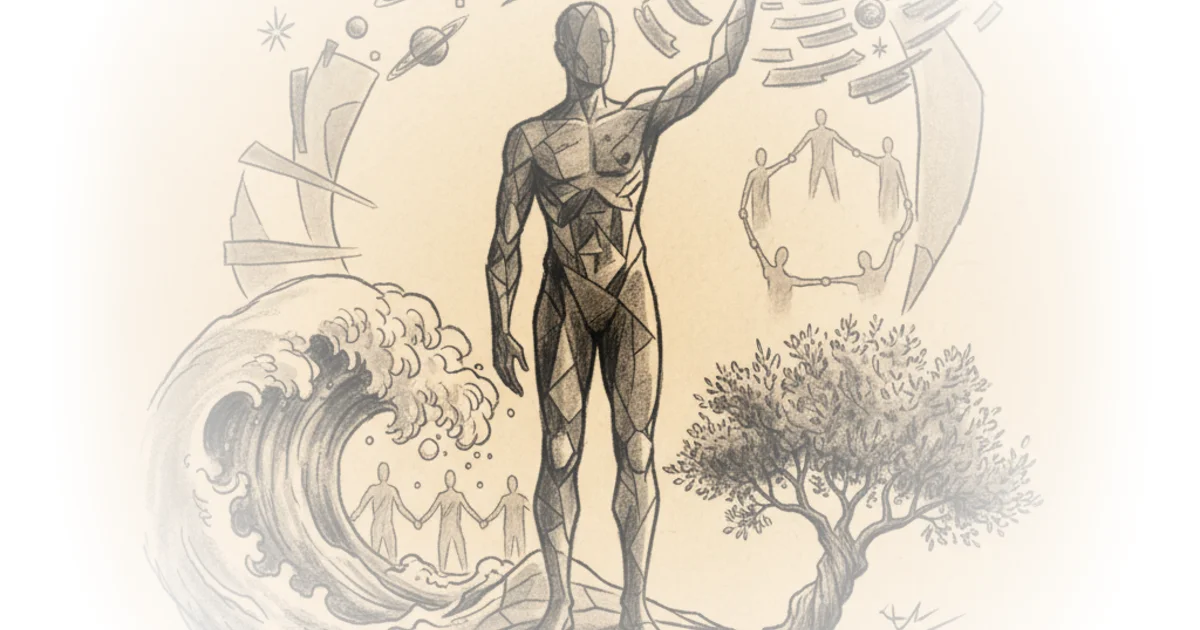
This is what Camus calls metaphysical homelessness—the experience of losing a sense of home, usually against your will, and then finding it impossible to return to the same set of illusions you once lived in.
At the level of the universe, Camus argued, you are not entitled to a permanent state of anything. Not physical safety. Not knowledge. Not love or meaning or belonging. Every form of these things is strictly provisional—subject to change, requiring revision on an almost daily basis.
Most people spend their entire lives running from this feeling. They make arrangements—marriage, career, financial security nets—to see these things as more permanent than they really are. But when you encounter those limitations and your old set of illusions shatters, the realization that there is no promised land in this life becomes unavoidable.
For Camus, this feeling of exile is one of the most important experiences you can have if you want to affirm life at a level that few people ever see.
Exile in Camus's Work
In The Stranger, Merson is a stranger within the very society he lives in—exiled not just from physical location but from understanding. In The Plague, Dr. Rieu, Jean Tau, and others encounter the plague and are quarantined into a state of exile where their cities are cut off from the rest of the world. It's only through being in this state of exile together that they eventually face the absurd head-on and find solidarity.
Exile becomes the uncomfortable thing that points toward reintegration with people in the world itself, away from theoretical abstractions.
But these well-known examples only scratch the surface. Later in his career, Camus turned to a book that creates images of exile highly relatable to everyday life: Exile and the Kingdom, written in 1957, containing six short stories that paint different images of people caught in states of exile—usually a complicated double form.
The Adulterous Woman
The first story in the collection follows Janine, a woman pressured to go on a trip with her husband. He's a salesman who travels to the Sahara desert in Algeria for business—not exactly a vacation. When she imagined this trip, she thought it would be soft sand and palm trees: paradise. Instead, she's hit with reality—heat, cold, sand everywhere in her shoes and hair, rocks and dead grass as far as the eye can see.
More disturbing than the landscape is her encounter with the nomadic people who live in this desert region of Algeria. She finds their behavior abrasive, different from how she's used to seeing people behave in her home country of France.
This context matters. Camus himself was born in Algeria and later moved to France to pursue his artistic career. He feels a special connection to both countries. Algeria during this time was a colony of France struggling for independence—amid a war fighting with France, with horrible violence and power struggles all around.
Janine and her husband are closed-off people who judge everything around them, constantly trying to keep their world as small as possible. But on this trip, Janine begins to notice something important about the arrangement they have in their marriage.
She sees through the game they've been playing more than she ever has before. She hears the way he's talking to people when he tries to sell to them—obvious tactics to get something from people. She looks at him and sees how he complains the second things go outside his comfort zone.
Twenty-five years ago, they got together. He was a law student. She was a young woman. He asked her to marry him. They agreed to be there for each other no matter what happens—when the world gets too hot or cold or sandy, when those annoying nomadic people start coming around too close, they'll have an arrangement so they never deal with any of this alone.
She doesn't hate him. He has good qualities—he's generous with her. He'll always do something when she asks. But there's something troubling in how he reassures her: "Don't worry—if I ever die in some kind of accident, I've made sure you're going to be financially taken care of."
That statement reveals something important about their marriage. Running from the volatility of life is one of their biggest concerns. Financial hardship, having to start over, your back against a wall—these are just parts of what it is to be human. What person structures their entire life around avoiding exile?
Janine finds herself in what you might call a double state of exile. On one hand, she doesn't feel at home even in her own marriage—she sees beyond the set of illusions that allowed her to deny some aspect of her life. But she's also not at home when she's out in Algeria's desert among people who don't play the same social games she does.
She wonders if her husband even loves her anymore. She wonders if it matters, given the nature of this service they provide each other—helping keep their world mutually small.
Critics might note that interpreting every marriage as an arrangement to avoid exile feels reductive. Some couples genuinely find solidarity and meaning together—not everything is a defense mechanism against existential dread. Camus's framework risks turning every relationship into a symptom rather than a choice people make authentically.
Exile is one of the most important things you can ever experience if you want to affirm life at a level that few people see.
Bottom Line
Camus's concept of exile isn't just about geography—it's about the illusions we build to feel secure, and what happens when those collapse. His strongest insight is that avoiding exile through marriage, career, or financial planning isn't living; it's denial dressed up as responsibility. The vulnerability here is practical: if everything becomes a strategy for avoiding discomfort, you miss the very experiences that might actually give life meaning. Camus would argue that's the point—you've got to be in it, even when it's uncomfortable.