In a landscape dominated by climate despair, Emily Atkin's interview with Al Gore offers a jarring, necessary pivot: the argument that the fossil fuel industry's grip on global policy is an illusion of power, even as they successfully scrubbed the latest United Nations climate summit of concrete language. Atkin doesn't just report on the diplomatic failures in Belém; she frames Gore's optimism not as naive denial, but as a strategic assessment of shifting global tides where the "petrostates" are losing the ability to veto real-world action, even if they can still veto diplomatic text.
The Illusion of Hegemony
Atkin sets the scene at COP30 in Belém with brutal honesty, noting the presence of a "literal flood, a literal fire, and a record-breaking 1,600+ fossil fuel lobbyists." Yet, she pivots immediately to Gore's counter-intuitive stance. "[The fossil fuel industry] believes they are the global hegemon dictating policy for everyone else," Gore tells her, "But I don't think they are." Atkin uses this quote to anchor the piece's central thesis: the industry's power is performative, reliant on the paralysis of the negotiation room rather than the momentum of the energy transition.
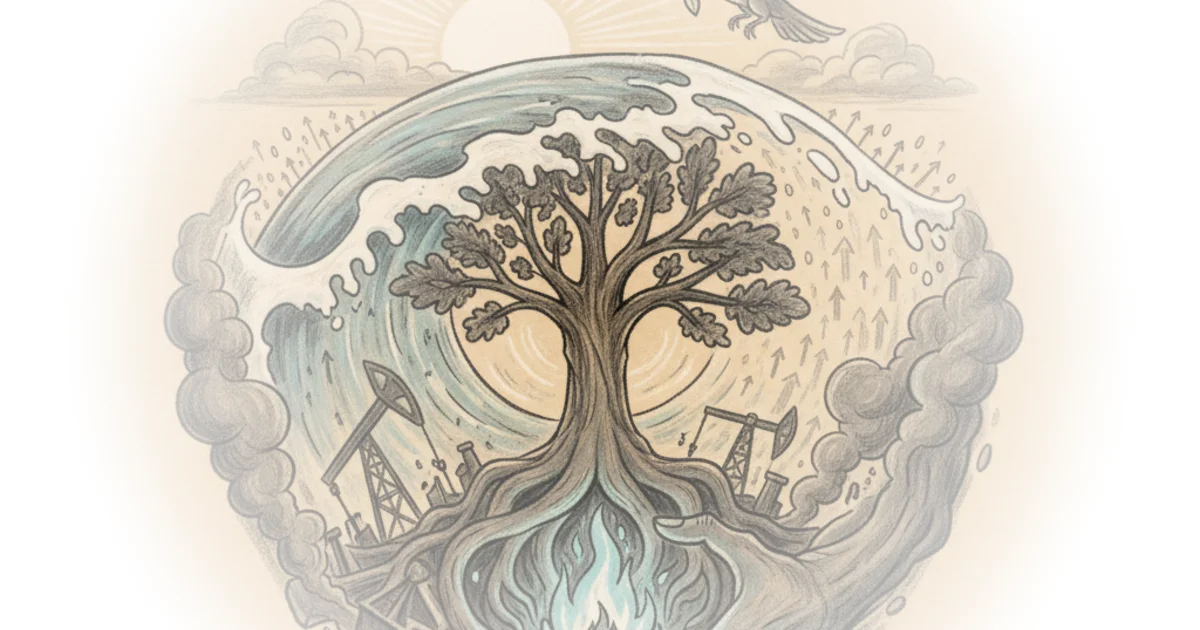
The author highlights how the final agreement, stripped of any mention of "fossil fuels" by oil-producing nations, was a symbolic victory for the industry but a hollow one in practice. Gore acknowledges the deal's inadequacy, calling it "the bare minimum of what the world must do," yet insists that "petrostates, the fossil fuel industry, and their allies are losing power." Atkin effectively captures the tension here: the text was gutted, but the reality on the ground is moving faster than the diplomats can agree to write. This framing is crucial because it prevents the reader from conflating diplomatic stagnation with policy failure.
Ultimately, petrostates, the fossil fuel industry, and their allies are losing power. They may be able to veto diplomatic language, but they can't veto real-world action.
Critics might argue that this optimism underestimates the material damage caused by the lack of a binding phase-out mandate, especially given the historical precedent of OPEC's ability to manipulate global energy markets for decades. However, Atkin supports Gore's view with hard data: last year, 93 percent of all new electricity generation globally was renewable. The argument holds weight because it shifts the metric of success from the final UN text to the actual deployment of technology.
The Autocratic Alliance and the Billionaire Pivot
Atkin then turns her attention to the geopolitical maneuvering that Gore describes as a "global project to create a new autocratic world order." She details Gore's sharp critique of the alliance between petrostates and political figures seeking to entrench fossil fuel dominance. "Saudi Arabia and OPEC, in league with Donald Trump and Vladimir Putin's Russia, are attempting to make the fossil fuel industry hegemonic," Gore asserts. Atkin's choice to include this specific geopolitical framing is bold, connecting the dots between energy policy and a broader struggle for democratic governance.
The interview takes a controversial turn when Atkin questions Bill Gates's recent memo downplaying the urgency of phasing out fossil fuels. Gore's response is scathing, suggesting Gates was motivated by fear of the incoming administration. "I suspect that he's scared of Donald Trump, and that he was bullied," Gore says, noting that Gates fired his climate staff and waited five days to correct his position after receiving praise from the President-elect. Atkin uses this exchange to challenge the assumption that billionaire philanthropy is a neutral or purely benevolent force in climate action.
She writes, "I think that there is an alliance of convenience between the autocrats, the broligarchs, and the petrostates." This line reframes the climate crisis not just as an environmental issue, but as a battle against a coordinated effort to suppress individual freedoms and maintain the status quo. The author's decision to let Gore dismantle the narrative around Gates's credibility is a high-risk move, but it serves the piece's larger goal: exposing the fragility of the opposition's coalition.
The Momentum of Resistance
Despite the grim details of the COP30 outcome, Atkin ensures the piece ends on a note of actionable hope. She highlights Gore's call to action, urging readers to join the "No Kings Day" protests. "People love freedom," Gore argues, "And we're more resilient than he imagines." Atkin captures the emotional core of Gore's argument: the belief that the current political moment is a fleeting anomaly, a "lame duck" phase for the forces of autocracy.
The author notes that Gore sees the recent election results not as a defeat for climate action, but as a turning point where the "spell is being broken." She writes, "Even some Trump supporters are asking themselves, 'Is this really what I voted for?'" This observation adds a layer of nuance to the political analysis, suggesting that the coalition Gore fears is already fracturing from within. The piece suggests that the path forward isn't just about better technology, but about reclaiming the political will to use it.
Bottom Line
Emily Atkin's coverage succeeds by refusing to let the diplomatic failure of COP30 define the entire climate narrative, instead weaving Gore's data-driven optimism into a broader critique of the fossil fuel industry's declining influence. The piece's greatest strength is its refusal to treat the "autocratic alliance" as an unstoppable force, exposing its internal contradictions and reliance on fear. The biggest vulnerability lies in the assumption that political momentum will naturally translate into policy without a massive, sustained mobilization that the piece acknowledges but does not fully detail.