Dan Williams challenges the comforting narrative that algorithms are the architects of our political decay, arguing instead that social media is simply the mirror we refused to look into. While the liberal establishment blames technology for the rise of populism, Williams contends that the real disruption is the sudden, unfiltered democratization of the public sphere, forcing elites to confront the very people they have long excluded. This is a provocative, uncomfortable read for anyone who believes the solution to bad ideas is better code.
The End of the Gatekeepers
Williams begins by dismantling the standard story that social media is a "dysfunctional technology" designed to amplify hate. He argues that this view relies on an "implausibly rosy picture of legacy media and pre-social media history." Instead, he reframes the internet as a "democratising technology" that has finally broken the monopoly of elite gatekeepers. As he writes, "With an affordable device and an internet connection, anybody could hope to influence how people halfway around the world thought about global events." This shift is profound because it moves the blame from the machine to the messenger.
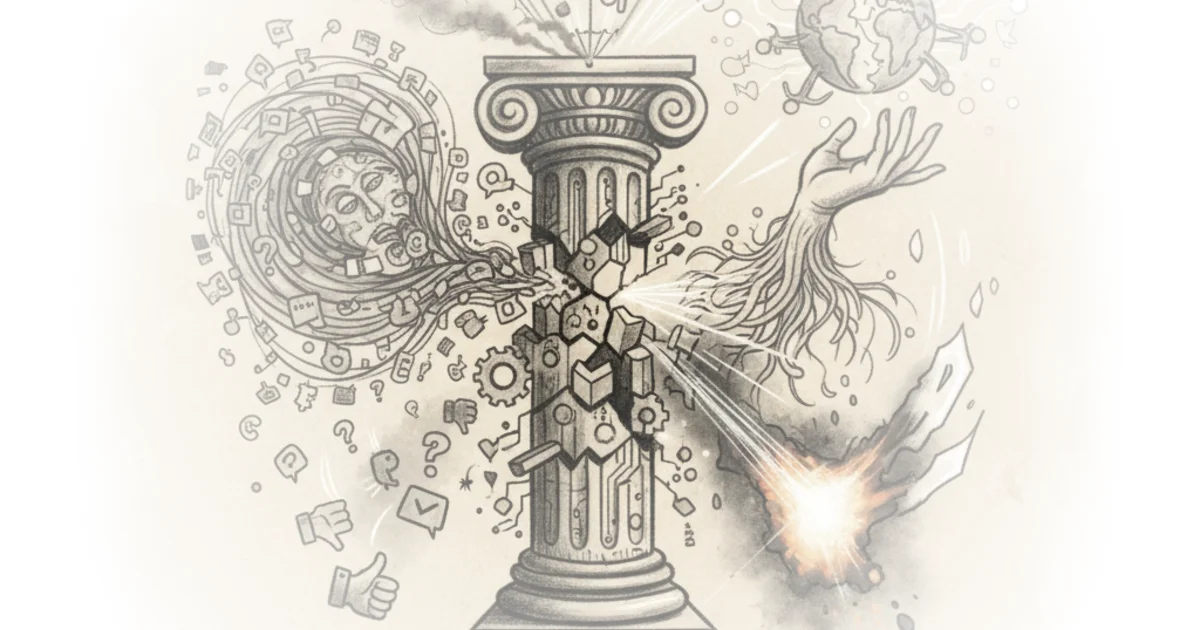
The author suggests that the panic over algorithms is a convenient distraction for the liberal establishment. They prefer to believe that tweaking the code will fix the problem, rather than admitting that the "voiceless have been given a voice." Williams notes that this discomfort stems from a contradiction: elites perform symbolic egalitarianism while privately dismissing large segments of the public. He observes, "The problem is not that social media has broadened access to the public sphere. The problem is that platforms facilitate the spread of 'misinformation', 'malinformation', and 'disinformation'." This framing is sharp, exposing how technocratic language is used to mask a deeper fear of losing control over the narrative.
The problem is not that the voiceless have been given a voice. The problem is that content-moderation policies don't do enough to protect the public from algorithmic manipulation.
Critics might argue that this view lets platforms off the hook too easily. While gatekeeping was flawed, the sheer scale of algorithmic amplification does create a feedback loop that didn't exist in the era of the printing press. Williams acknowledges that algorithms play a role, but insists they are secondary to the fundamental shift in who gets to speak.
The Case for Democratic Pessimism
The piece takes a darker turn as Williams embraces a historical strain of "democratic pessimism." He cites H.L. Mencken to suggest that democracy is the theory that "the common people know what they want, and deserve to get it good and hard." Williams argues that social media doesn't manipulate rational people into believing nonsense; rather, it reveals that many people hold views that were previously suppressed by professional journalism. He writes, "It simply reveals popular perspectives on reality that elites previously excluded from mainstream discourse, often for good reason." This is the article's most controversial claim: that the "deranged conspiracy theories" and "hyperbolic forms of bigotry" found online are not new inventions, but long-held beliefs finally finding a platform.
Drawing on the work of Walter Lippmann, Williams describes the public as a "bewildered herd" and notes that even intelligent citizens drop to a lower level of mental performance in politics. He paraphrases Lippmann's view that the mass of people includes "mentally children or barbarians" who are easily swayed. While Williams admits this language is "outrageous to modern sensibilities," he insists it contains "grains of truth." He argues that social media's ruthlessly democratic nature has given these "shockingly unsober, unreflective, uninformed, and injudicious people" a megaphone. The result is a public sphere flooded with content that was previously filtered out by outlets like the BBC or the New York Times.
The author points out that when liberals encounter figures like Tucker Carlson or Andrew Tate, they assume the platform is broken. But Williams counters, "The more fundamental reason social media features a vast amount of unsober, unreflective, uninformative, and injudicious content is that it gives a platform to large numbers of shockingly unsober, unreflective, uninformed, and injudicious people who were previously excluded from mainstream discourse." This is a brutal assessment that challenges the notion of a "rational voter" central to liberal democratic theory.
Popping the Bubble
Finally, Williams addresses the explosion of conspiracy theories. He cites research suggesting these beliefs are not more prevalent now than in the past, but simply more visible. "When the kinds of people who write think pieces about how we're living through an era of conspiracy theories encounter such ideas on social media, they assume that the platforms created them," he writes. In reality, the platforms are just exposing the elite to the reality that was always there. He concludes that if the world consisted of rational thinkers, algorithms wouldn't matter, but since it doesn't, "bad content maximises engagement is that it resonates with many people's bad beliefs and revealed preferences."
This section effectively dismantles the idea that social media is a unique vector for radicalization. Instead, it posits that the internet has simply removed the filter that allowed elites to ignore the depth of public ignorance and tribalism. The argument is compelling because it forces the reader to confront the possibility that the "bad actors" are not a few trolls, but a significant portion of the electorate.
If the world consisted of Francis Fukuyamas, social media would look radically different, engagement-maximising algorithms be damned.
Bottom Line
Williams delivers a stinging critique of the liberal tendency to blame technology for societal failures, arguing that social media's true impact is the forced democratization of discourse, regardless of the quality of that discourse. The piece's greatest strength is its refusal to offer a technocratic fix, instead forcing a confrontation with the uncomfortable reality of public opinion. However, its biggest vulnerability lies in its potential to justify the abandonment of content moderation, risking a descent into genuine chaos under the guise of "democracy." Readers should watch for how this argument evolves as platforms face increasing pressure to regulate speech without appearing to be elitist gatekeepers again.