Oil prices have surged past $108 per barrel following Israel's strike on what was once considered untouchable: the South Pars gas field, the world's largest, spanning waters claimed by both Iran and Qatar. This marks a significant escalation that previous American warnings had tried to prevent.
The Untouchable Target
For months, the United States discouraged Israel from attacking Iranian energy infrastructure, fearing the effect on global energy markets. That warning has now been discarded. Axios reported that Americans gave approval for this particular attack—one that directly targets natural gas facilities in Iran for the first time.
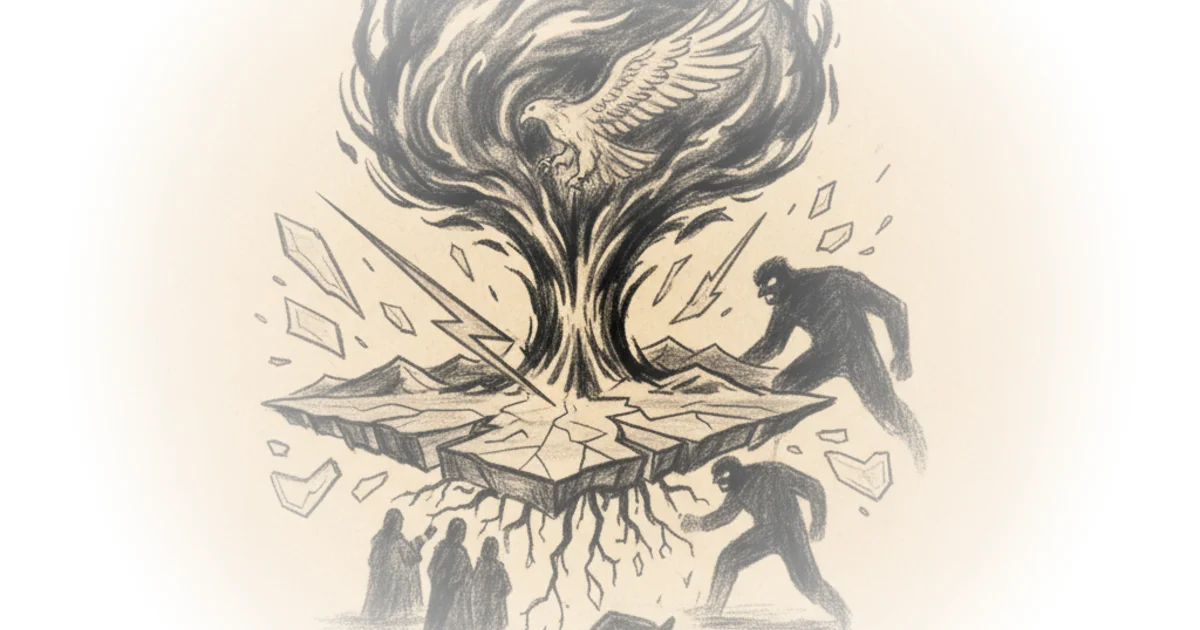
The South Pars field isn't merely Iranian territory. It extends beneath the Persian Gulf into Qatari waters, forming what is essentially a geological continuation of Qatar's North Dome field—the largest gas reservoir anywhere on Earth. Israel struck a processing facility attached to this field, hitting facilities that also generate revenue for Qatar.
Within hours, Gulf states responded with rare public condemnation. Qatar's foreign ministry spokesperson posted on social media, calling the targeting of facilities linked to South Pars "a dangerous and irresponsible step amid the current military escalation." The United Arab Emirates joined in similar warnings, calling for deescalation and restraint.
Iran Threatens Retaliation
Despite attempts by Gulf states to distance themselves from Israel's action, Iran has made clear it will strike back—at energy infrastructure across Qatar, Saudi Arabia, and the UAE. Evacuation orders were issued for citizens and residents near five oil refineries and gas fields across those three states. An IRGC-affiliated Telegram channel posted an announcement that these facilities "have become direct and legitimate targets and will be targeted in the coming hours."
Targeting vital energy infrastructure constitutes a threat to global energy security as well as to the peoples of the region and its environment.
This represents an enormous escalation. If oil and energy facilities across the Gulf are systematically targeted in retaliation, the impact on supply would be immediate and severe.
The Economic Toll
The effect on energy markets has already been immediate. A barrel of oil shot from $101 at the start of the day to over $108 by afternoon—a jump that had been causing significant pressure on the Trump administration until this strike seemingly abandoned that concern.
Israel's strategy appears to have shifted fundamentally. For months, analysts believed Iran would see public protests in support of the Shah—particularly around Nowruz, the Persian New Year. That hoped-for jumping-off point never materialized. Israel seems to have recognized that public displays of dissent with Tehran's government simply aren't happening, so instead, they've doubled down on a violent, aggressive course of action.
The result could be catastrophic for Gulf economies. Data from recent days showed Kuwait and Bahrain projecting GDP declines of roughly 13% over 2026 if this escalation continues for several more months. The UAE, previously expecting an economic contraction of around 5%, was not modeling for attacks of this nature.
A Deeper Strategy?
The killing of Larajani—the Iranian official responsible for nuclear negotiations—was a significant escalation. But analysts suggest his death actually served the Islamic Republic in unexpected ways, providing political legitimacy at a moment when he was preparing for martyrdom after repeated bouts of cancer.
This strike is different. It triggers what one analyst described as "a cascade of events" leading to total war—meaning involvement of Arabic states alongside Iran and Israel. Whether that changes anything for Iran is unclear; they were already fighting Israel, the most powerful military in West Asia, backed by the United States.
What appears clearer is Israel's bet: they are sufficiently invested in the potential collapse of the Iranian economy—or even the Balkanization of Iran—that they don't mind if one, several, or even all of the Gulf Arab states go down with it.
Daniel Levy, a former negotiator, suggested in recent interviews that Israel essentially believes America is in decline and must either use its power or lose it. The strategy involves bringing Americans in to take out Iranians while Israel positions itself to replace the United States as the policeman of the Middle East—ensuring all regional powers become so weak they must accede to Israeli demands.
The vision extends further: a greater Israel that rules over destroyed terrain, with at least two or three failed states in that region. Lebanon is already showing signs of collapse along its northern border near the Latani River—which Israeli nationalists have long viewed as their northern border expansion.
Trump's Warning
President Trump posted on Truth Social shortly after the attack: "Iran is considered by everyone to be the number one state sponsor of terror. We are rapidly putting them out of business." That bombing of oil facilities, he suggested, is an attempt to put Iran out of business entirely.
Later posts grew more pointed: "What if we finished off what's left of the Iranian terror state and let the countries that use it—we don't be responsible for the so-called strait? So this would get some of our non-responsive allies in gear and fast." The Strait of Hormuz handles roughly 20% of global oil consumption, moving through waters claimed by Iran as well as Oman and Emirates.
The suggestion: destroy Iranian infrastructure, withdraw American interest, and let Asian and European consumers clean up the mess. Where approximately 90 million Iranians fit into this scenario remains unaddressed.
Press Secretary Carolyn Levine responded to these posts on Fox News, confirming the administration is in contact with European allies and Arab states to secure the Strait of Hormuz—a situation she described as "more to their benefit than to the United States." She noted that thanks to President Trump, America is now a net exporter of energy and doesn't need the Strait for domestic consumption.
Bottom Line
The strongest argument here is structural: Israel has executed a strategic bet that regional collapse serves its interests better than stability. The vulnerability lies in what comes after—whether this calculation truly leads to total war or whether it collapses under its own weight before reaching that point. Watch whether Gulf states actually retaliate against Israeli infrastructure, and whether oil prices stabilize—or spike further.