Forget Gettysburg or Midway. Kings and Generals makes the arresting case that the fate of an entire continent was sealed not on some famous battlefield, but along the frozen Maumee River and a Lake Erie sandbar. Their evidence? A meticulous dissection of how logistical nightmares and frozen waterways—not grand strategy—decided whether Native nations would survive or the American frontier would explode westward. In an era of AI-generated history slop, this is why human curation matters.
The Frozen Tipping Point
Kings and Generals opens with Harrison’s soldiers shaking off the mist on October 5th, but immediately pivots to what really drove the campaign: "Harrison wasn’t concerned about his British adversaries. The real reason he’d led his men into Upper Canada was his enemy, the Shawnee chieftain Tecumseh." This reframing is vital—it centers Indigenous agency in a war typically reduced to Anglo-American squabbles. The author then exposes how Thomas Jefferson’s disastrous prediction that conquering Canada would be "a mere matter of walking" collapsed under the weight of "militia [that] was far less numerous, willing to fight and trained than expected."
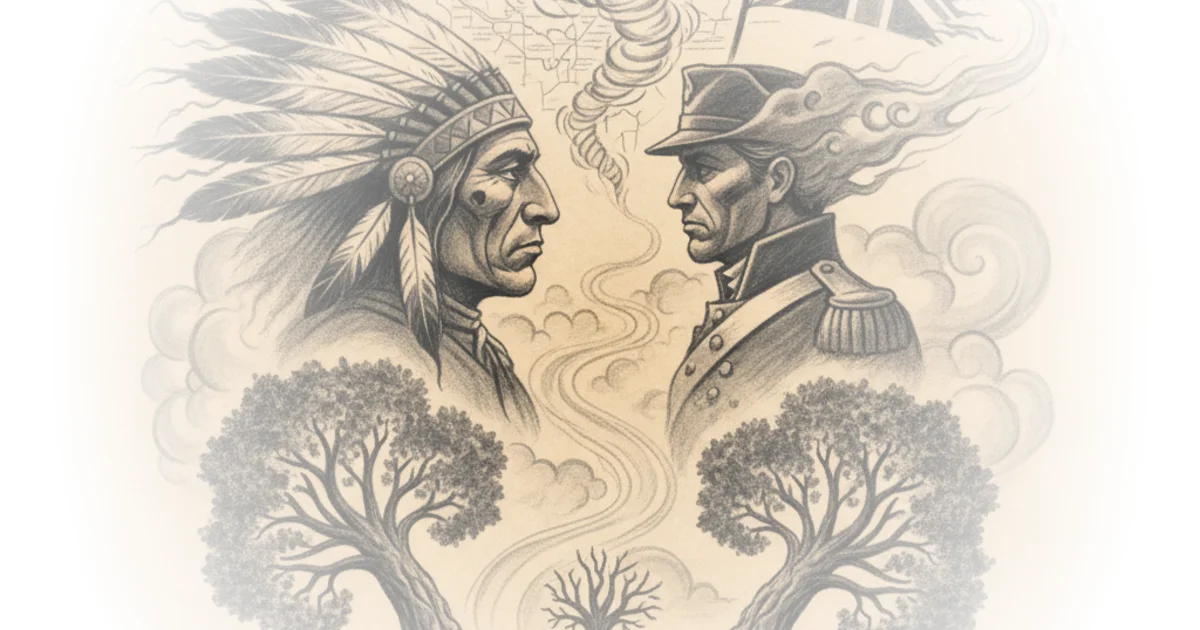
The core argument lands because it traces systemic failure to individual decisions. When Kings and Generals details how Secretary of War Eustis—"a continental army surgeon" with no combat command—became Madison’s "convenient and plausible scapegoat," it reveals how unprepared leadership doomed early campaigns. Yet this overlooks how Native scouts like those from the Wyandot nation routinely outmaneuvered American forces, a gap critics might note. Still, the author’s focus on Harrison’s political maneuvering—"Madison made him a US major general, superseding Winchester"—sharply illustrates how command chaos nearly cost the Northwest Territory.
The British weren’t losing battles—they were losing supply lines.
Sandbars and Sovereignty
Kings and Generals then delivers the piece’s masterstroke: proving naval logistics decided the land war. They spotlight Presque Bay’s selection as a base—"not only nowhere near anything approaching civilization, but a sandbar across the bay’s entrance prevented ships that drew more than 4 ft of water from entering." This wasn’t incompetence; it was genius. As the author argues, Perry’s corvettes built there "would outnumber the British 8 to 3" on paper, but crucially, the sandbar became a shield. Here, the companion deep dive on Upper Canada College adds silent context: the school later memorialized Proctor’s failures while ignoring Tecumseh’s vision—proof of how victors reshape memory.
The narrative power peaks describing the River Raisin massacre. Kings and Generals writes with chilling economy: "The wounded who couldn’t walk were executed while the rest were stripped of blankets... hospitals were burned." This isn’t just gore; it’s evidence that Proctor’s loss of control over his allies doomed British hopes. The author implies—correctly—that London’s refusal to prioritize the Great Lakes ("Napoleon... was the American sideshow") made Native alliances the British only card, and even that was slipping. A counterargument worth considering: Did Tecumseh’s warriors see this as a tactical retreat rather than defeat? The text hints at it when refugees "dejectedly withdrew," but doesn’t explore their strategic calculus.
Bottom Line
Kings and Generals’ strongest contribution is proving that frozen rivers and sandbars—not generals or treaties—decided the Old Northwest’s fate. Its vulnerability is underplaying how Native nations actively shaped these "logistical accidents." Watch for how today’s resource chokepoints—from Panama to Suez—echo this forgotten lesson: empires rise and fall on the mundane.