A music critic known for his sharp industry commentary has a provocative thesis about why political chaos is spiraling out of control. Anthony Fantano argues that the real source of today's political instability isn't social media itself—but the deep dissatisfaction and unmet needs that algorithms are exploiting.
The Family Divide
Fantano grew up in a politically fragmented household. His parents split when he was young, and his political upbringing shifted over time. When he was a teenager, he became deeply anti-Iraq War—and his mother eventually came around to his views after years of debate. She transformed from conservative to leftwing.
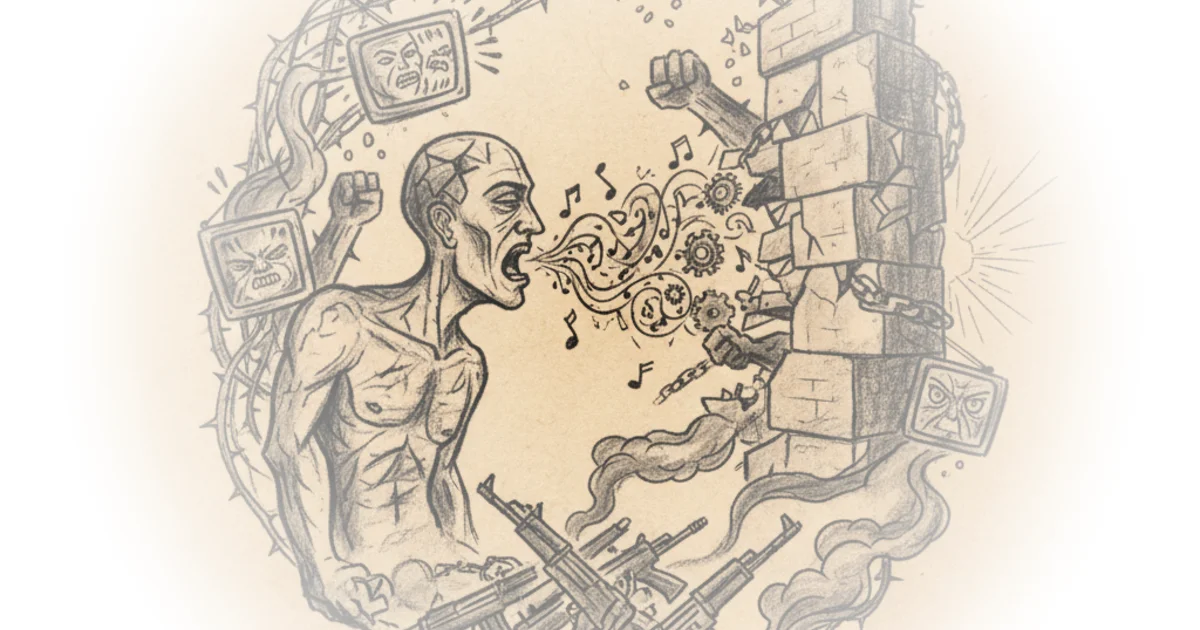
His father presented a different picture. Fantano describes him as politically nihilistic—a man who saw no point in any political action. His dad viewed all politicians as self-serving, dismissed collective consciousness, and distrusted institutions across the board. He hated environmental organizations, hippies, and Black activists equally—seeing complete futility in any form of political engagement.
When 9/11 happened, Fantano recalls his father sitting him down to watch Alex Jones. The day after the attacks, his dad bought guns—as Fantano puts it, "as one does."
Where Chaos Really Comes From
Fantano makes a case that seems to be gaining traction among critics: the political chaos unfolding across society comes from dissatisfaction and unmet needs, not from social media alone. People lack hope for their future. They see no economic pathway. They're frustrated with institutions they view as broken.
Social media isn't the root cause—but it acts as a tool that takes that dissatisfaction and either numbs it or redirects it toward false solutions. It fragments potential collective action by turning people against each other based on competing worldviews rather than uniting them around common problems.
Social media is not the tool but one of many that essentially just takes that dissatisfaction and diverts it into something else entirely.
The real danger, Fantano suggests, lies in how platforms like Twitter have been weaponized—particularly under Elon Musk's ownership—as political billboards that fracture any possibility for unified cultural response. The algorithms don't create the problems; they amplify them by feeding people content designed to keep them silo'd into their own worldview.
The Tech CEO Critique
Fantano reserves particular criticism for tech executives like Elon Musk and Mark Zuckerberg. He argues they're simply bored wealthy people with no real stake in making anything meaningful happen politically—they just want to accumulate more wealth. When they attempt creative work, what emerges is often hollow parody songs or content that reflects nothing from their soul.
The richest man on the planet—Musk—is currently tearing apart multiple parts of government with zero accountability. Fantano argues this applies equally to figures like Hillary Clinton and George Soros. The powerful aren't limited to any single political faction—but they're making decisions that don't benefit ordinary people.
Audience Fragmentation
Fantano describes how his own audience fragments across different platforms. On the Needle Drop channel, people engage almost exclusively with industry commentary—condensed content about artists they already know. But when it comes to music reviews, viewership gets even more granular: some viewers only watch hip-hop reviews, others only pop or rock.
The main Fantano channel receives the most views overall, but who's watching and why differs dramatically by content type. This fragmentation reflects exactly what he critiques—the algorithms have divided people into such specific niches that they rarely encounter perspectives outside their own bubble.
Critics might note that attributing chaos primarily to unmet needs oversimplifies complex factors including algorithmic amplification of genuine extremism and targeted disinformation campaigns. The dissatisfaction framework explains some polarization but not all of it.
Bottom Line
Fantano's strongest insight is that political polarization stems from material grievances—economic insecurity and institutional failure—not merely from bad algorithms. His vulnerability is in the solution space: he identifies what's broken but offers little beyond critique. That said, diagnosing the problem correctly matters even without easy answers—and his audio cuts through where mainstream discourse often fails to even identify the right enemy.