Asianometry cuts through the Silicon Valley narrative that TSMC is intentionally throttling the artificial intelligence boom with a counterintuitive thesis: the bottleneck isn't corporate greed or conservatism, but the brutal physics of semiconductor supply chains. While hyperscalers blame the foundry giant for delaying their path to artificial general intelligence, the author reframes the shortage as an inevitable consequence of the "bullwhip effect" in an industry where lead times span years, not weeks. For busy investors and technologists, this distinction is vital—it suggests that building more foundries won't fix the problem if the underlying equipment and material constraints remain unaddressed.
The Boba Game and Supply Chain Reality
Asianometry introduces a powerful analogy to explain why demand spikes don't translate to immediate supply. Drawing from a supply chain simulation known as the "boba game," the author illustrates how small fluctuations in consumer demand amplify into massive volatility as they travel up the chain. "What we are flippantly labeling as TSMC we really mean is the AI supply chain. And that supply chain is as complicated as you can possibly imagine," Asianometry writes. This framing is effective because it shifts the blame from a single actor to a systemic issue that no amount of capital expenditure can instantly resolve.
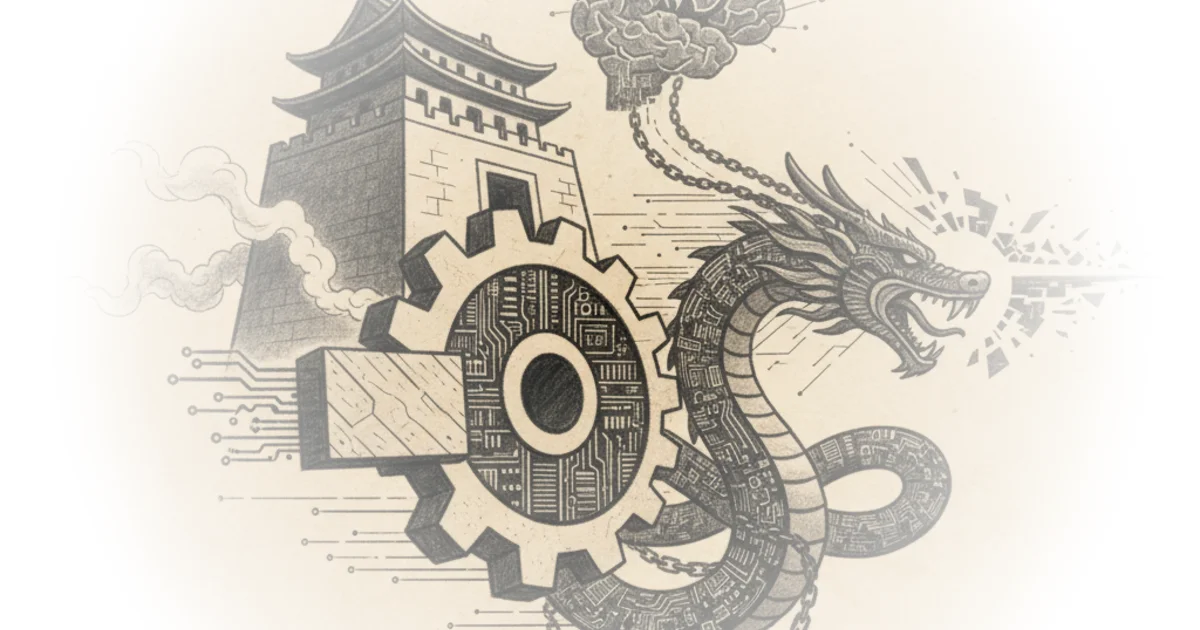
The author details the sheer complexity of the ecosystem, noting that TSMC relies on thousands of non-fungible suppliers for everything from ASML lithography tools to specialized gases. "These are not generalized tools and materials. They are not fungible like AWS compute units," the piece argues. This is a crucial distinction often missed in tech commentary; unlike cloud computing, you cannot simply spin up more capacity when demand surges. The equipment required is bespoke, expensive, and has a multi-year production cycle.
The chip guys are last to know when the party is getting started, but first they get batoned in the face when the police shut things down.
This vivid metaphor captures the precarious position of semiconductor manufacturers. They face the worst of the volatility, swinging from massive gluts to severe shortages. Asianometry points out that while electronics consumption might swing by 20%, the semiconductor industry sees swings of 40%, and equipment makers face swings of 60%. Critics might argue that a more diversified supplier base could mitigate this, but the author counters that all foundries ultimately compete for the same limited pool of specialized equipment, meaning new entrants would simply exacerbate the bottleneck rather than solve it.
The Lag of Capital Expenditure
A significant portion of the commentary addresses the accusation that TSMC was too slow to invest in AI capacity following the release of ChatGPT. Asianometry challenges the timeline, noting that the industry was still reeling from the post-pandemic hangover in 2023. "In the April 2023 earnings call... CC says he noticed ChatGPT's growth, but repeats multiple times that he has no idea what AI's impact on TSMC will be," the author notes. This evidence undermines the narrative of willful negligence; the data simply wasn't there to justify a massive, risky expansion.
The author highlights the financial danger of over-investing in a market that might not materialize. "Having slack advanced node capacity means taking massive depreciation losses," Asianometry writes, referencing the financial hemorrhage TSMC faced when smartphone and PC demand collapsed in late 2022. This context is essential for understanding why TSMC's capital expenditure appeared stagnant in 2023 and 2024. It wasn't a lack of vision, but a rational response to extreme uncertainty.
Furthermore, the piece points out that even when demand became clear, technical hurdles slowed deployment. Issues with CoWoS packaging and server cooling meant that chips were being produced but couldn't be deployed. "So that gated things because you don't scale until you first fix the technical problems," the author explains. This reframes the "shortage" as a temporary friction in the scaling process rather than a permanent blockage.
The Power vs. Silicon Debate
Finally, Asianometry tackles the debate over whether power or silicon is the true constraint. When TSMC's CEO, C.C. Wei, suggested that customers should focus on power first, Silicon Valley interpreted this as deflection. Asianometry offers a different reading: "I read that as basically meaning 'TSMC should be focusing on what they can do and they make chips not power.'" This interpretation aligns with the company's operational reality; they cannot solve grid infrastructure issues, no matter how much they expand chip production.
The author also notes the absurdity of the current expectations, where hyperscalers claim they have solved power issues five years ago but now blame silicon. "If this customer's customer is making electricity parameters based on assumptions from five to six years ago," the author implies, the disconnect is in the planning, not the manufacturing. This is a sharp critique of the short-termism plaguing the AI sector.
The cold hard reality is that shortages are a fact of life in semiconductors as are horrific gluts.
This statement serves as the piece's anchor, reminding readers that the semiconductor industry has always been cyclical. The current boom is no different from the PC boom or the mobile boom; it is just another cycle in a high-stakes game of system dynamics.
Bottom Line
Asianometry's strongest argument is the rigorous application of supply chain dynamics to debunk the myth of TSMC's intentional throttling, effectively shifting the blame from corporate strategy to physical constraints. The piece's biggest vulnerability is its reliance on the assumption that current technical bottlenecks will resolve quickly enough to satisfy the insatiable demand of hyperscalers, a timeline that remains uncertain. Readers should watch for the next phase of this cycle: whether the industry can actually scale equipment production fast enough to avoid the next inevitable glut when the AI bubble inevitably corrects.